Healthcare fail: the diagnosis that wasn’t

May 24, 2015

The details may change, but the gist is the same. The symptoms are there, the request made, the answers not given, the diagnosis left unmade. It’s happened to many of us. It’s happened to me several times, actually. I’m still wondering how it happened with my Celiac Disease. Of course, technically I haven’t been diagnosed with Celiac to this day….

The first doctor ignored me for a while. When I was insistent that I wanted to be tested for lactose intolerance he said there was no test for it. Instead, he had me keep a food and symptom journal. He sent it to a nutritionist, then reported back that I didn’t have lactose intolerance. He didn’t care to investigate further. Last year I found the nutritionist’s letter in my records. She’d said it didn’t seem to be lactose intolerance but there was clearly something going on and she wanted to see me. I never got that message.

Then there was the gastroenterologist who diagnosed me with IBS after 2 minutes of a 10 minute appointment. He gave me a prescription to take before meals. Funny, but those pills never seemed to help. A couple years later I found a guide to an IBS diet on my own and followed it the best I could.

Another doctor took me seriously, at least, but was woefully inadequate. He ordered a colonoscopy to rule out Crohn’s, since an aunt had that. It was ruled out and my symptoms continued to be attributed to IBS. Well, my gastrointestinal symptoms did, anyway. It was assumed my other symptoms were completely unrelated. How convenient for them. How horrible for me.

Then there was another gastroenterologist. She did an endoscopy. I wonder if she checked for Celiac? I would hope so, but she never mentioned it. She said she was checking for reflux. She doesn’t practice any more and I haven’t had a chance to find her notes in my hundreds of pages of records. But I do remember her diagnosis: IBS and reflux, plus something else that she wasn’t sure of, but I shouldn’t be too worried. I’m not kidding! That’s what she said! She said that my symptoms could not be entirely explained by IBS and reflux so there had to be something else. I was sure I didn’t have reflux. My aunt and grandmother had it, and my symptoms weren’t anything like theirs. Still, I took the pills she prescribed. And I got worse. Sigh.

At last my rheumatologist suggested I should get tested for Celiac. In hindsight, I can’t believe no one suggested it sooner! I have classic symptoms. It even took my rheumatologist a while – I’d been seeing her for several years when she brought it up. I resisted, of course. I didn’t want to give up my favorite foods. And I was scared. Anything with food was scary, since I was so sick so much of time. Still, I might have let her run the test. If only she could. Her department didn’t let her run any tests that weren’t part of her specialty. The computer system didn’t even offer it as an option! She could run my blood count and ANA every day of the week, but no Celiac tests.

On the bright side, she put the idea in my head. That meant I was more open to it several years later when I was doing hypothyroid research and came across the link between Hashimoto’s Disease (autoimmune hypothyroid) and Celiac Disease. Many Hashi’s patients have Celiac or gluten intolerance, so some professionals recommend a gluten free diet. Hmm. It made sense. After reading that same advice from several different sources and thinking about my symptoms, I knew I had to give it a try.

I talked to my new PCP (primary care physician), who didn’t think I needed to worry about it. She hadn’t heard of the link and seemed doubtful about the research I had come across. She dismissed my symptoms as being IBS. Going gluten free was the new fad diet. I told her I wasn’t doing it as a trend or to lose weight. I pushed her, and she gave me the necessary referral to see a nutritionist. She didn’t run any tests.

The nutritionist took me seriously. She gave me useful information. I was on my way.

I knew that if it worked, I’d have to eat gluten again in order to be diagnosed. I was looking forward to it; I’d get to eat my favorite foods again for weeks! How great! You see, after being gluten free for a while the antibodies die down and the intestine heals, so there’s no way to run an accurate test. The only way is to eat gluten again. The better way is to be tested before going off gluten in the first place.

Eating gluten sounded great at first, but something changed. I stopped feeling nauseated every day. My diarrhea almost completely disappeared. The cramps were gone. The gas and bloating went away. The pain that put me in agony, pondering if death would be better, was no longer a weekly or bi-weekly occurrence. I was free! I could live! I could go to the park for the day without worrying about not being near a bathroom! I could join friends for meals without worrying about being sick for hours afterwards!

Yes, I occasionally get glutened and it’s all kinds of horrible. That pain and nausea and diarrhea all return with a vengeance, but at least I know that it’s temporary. The worst of it lasts a few hours, and the lesser symptoms linger for a few days. I know from experience that it could be so much worse. And most days, I don’t have any of that! I’m grateful every single day that those symptoms are gone.

It hasn’t been easy. Eating out is all kinds of challenging now. But it’s completely worth it. It’s so worth it, that I have no desire to eat gluten for even one day, never mind for the weeks that would be required for testing. I’m incredibly careful to avoid even a tiny amount of accidental exposure. I’m not about to do it intentionally. So I remain untested. Maybe I have gluten intolerance. Maybe I have Celiac Disease. Does it matter? Either way, I’ll be avoiding gluten. (And yes, the difference matters because of secondary issues, but I’m still not going to get tested.)

Unfortunately, though, damage has been done. After what I suspect was 18 years of undiagnosed Celiac Disease, I got pretty damn sick. I’ve been reading about how some researchers believe untreated Celiac can lead to Hashimoto’s Disease, which I developed. Hmm. And we know that my poorly treated Hashimoto’s led to adrenal insufficiency. And that led to me having to leave work. I don’t think untreated Celiac caused all of my health problems, but it sure led to a lot of them.

I try hard not to dwell on the “what ifs” in life, because it doesn’t help. Still, from time to time, I wonder what would have happened if that first doctor had taken me seriously 20 years ago. Could I have avoided most of this?

Or course, there’s also the flip side: what if I had listened to my doctors and believed that my problems had nothing to do with gluten? How much sicker would I be right now?


I make no apologies

May 19, 2015

Yesterday I wrote about how my entire personality changed because of my need to stand up for myself in medical situations. I want to be clear about one thing: I make no apologies for how I act.

Sometimes I’m wrong. Sometimes I screw up. I’m human, so of course I do things wrong. I try to take ownership and apologize when I’m at fault. Sometimes I screw that up, too, but I do my best. I’m not talking here about any of those things. I’m talking about medical situations where I’m pushy.

Like many of you, I was taught to be apologetic when I push too hard, but I only apologize when I truly cross a line. The rest of the time, I do what I need to do without apology, because if I apologize, then it encourages their low standards.

A couple years ago I had an appointment with a specialist. I waited almost 6 months for the appointment, but it was worth it so that I could see this particular doctor. When I finally showed up, I was taken in 30 minutes late to meet with someone else. My doctor was out and instead of calling and asking if I’d like to reschedule, they had me meet with this one. He was terrible. He said they couldn’t help me and suggested a psychologist. Before I left, I got the name of the person in charge. I called her and expressed my displeasure at the long wait and not being able to see the doctor I had been desperate to see. I was very strong in my expression of displeasure. I was not mean or nasty, I did not swear, but I was strong. Within a week she got me an appointment to see that doctor. Instead of the usual 15 minutes, he spent a full hour with me. Unlike the other, he discussed options, asked my opinion, took my view serious, and ran tests. He found that I had a serious but treatable problem. I called back the woman in charge, told her how well things went, and thanked her profusely. I certainly never apologized.

I asked my doctor to test me for lactose intolerance. He said there was no test for it, but that I should keep a food and symptom journal and he’d send it to a nutritionist. We did that, and he told me that nutritionist said I’m not lactose intolerant and I should just avoid foods that bother me. It didn’t feel right, but I went along with him. After 20 years of frequent diarrhea, nausea, cramping, and pain so bad that I literally wanted to die, I found out that I had Celiac Disease. Last year I was going through old medical records and found the letter the nutritionist had sent back to him. She said that I didn’t appear to be lactose intolerant but that something was definitely wrong and I should see her. I’ve been very sorry about that – sorry that I didn’t push for better treatment.

I have dozens, probably hundreds, of stories like these. I bet you do, too. I regret the times I didn’t stand up for myself but I haven’t once regretted the times that I did. So I’ll make no apologies. And if anyone has a problem with that, too bad for them.

P.S. If I sound defensive and bitter, you can imagine why.

Now it’s your turn. Have you had to be pushy in order to stand up for yourself? Did you regret doing it? Did you regret not doing it? Share one or two of your favorite stories in the comments!


The real reason I became loud and pushy: self-preservation

May 18, 2015

We’re taught to be polite. We’re taught to be respectful. But what happens when being polite and respectful is killing you?

I mentioned to some friends recently that I didn’t used to be loud and pushy. In fact, I was quiet and rather meek for a long time. They were shocked. If you’re a long time reader, you might be surprised, too. They couldn’t imagine me ever being shy about speaking my mind. But they didn’t know me before.

I was a shy child. When an adult, even a well known friend of my parents, spoke to me, I would hide behind my mother’s legs. I got past that, as children do, but I was always shy about expressing my opinions. I hated raising my hand in class, even when I knew I had the right answer. Bit by bit I started raising my hand and volunteering thoughts and ideas. Still, I was never pushy about it. I would tell my boss what I thought, then go with whatever he decided.

There was no one moment when that changed. It was a gradual thing that snuck up on me over time. Then one day, someone else brought up the need to be pushy with doctors, and I had a sudden flash back to the days when I was timid, and I realized I wasn’t like that any more.

I was a child when I had my first symptoms, so I did what my parents and my doctors said to do. It was always some combination of Advil, heat, ice, support braces, etc. None of it worked. Still, complaining made things worse. I learned early on that if I was too insistent about things, I’d be ignored. I was lucky that my parents never ignored me, but certain doctors and teachers did. Several openly suggested I was making the whole thing up.

As I became an adult, I still wasn’t taken seriously. And even when the doctors took me seriously, I still received poor care. I got shuttled between doctors within an insurance-induced maze and continued to get worse and worse. I was told not to come in any more. I learned to speak up for myself in college, where the disability support services were horribly lacking. I pushed for what I needed to succeed in class, but only within the strict bounds of cultural politeness.

In my early 20s I had an unusual ability to see a doctor of my choosing for a short time. I won’t get into the insurance loophole, but I found it and used it. For the first time, I took things into my own hands against the advice of my doctors. And for the first time in 11 years, I got a diagnosis. That was my first taste of how going against the grain could help me.

Somewhere in my late 20s or early 30s, I started to stand up for myself more. When doctors would bend my hand and ask, “Does this hurt?” and I said yes, they would still try to do it again, but unlike a decade before, I pulled away. I argued with insurance representatives, even when it did no good. I tried to get better care. I was still being polite most of the time, but I was pushing that boundary more and more.

Around this time, my health took a dive. The doctors said they couldn’t do anything. I knew I had to take over. If I didn’t, what would become of me? If that wasn’t enough, I was fighting with a disability insurance company and with social security for benefits that I knew I deserved. It felt like my life was falling apart. It was do or die, probably literally. So I did. In an effort for self-preservation, I stood up for myself. When a doctor didn’t want to run a test, I asked why. When they gave a reason, I debated, using the facts I had learned through my own research. When my primary care physician didn’t want to give me a referral to a specialist I suspected could help (and he later did!), I switched doctors. I interviewed doctors at the first appointment to see if I would stay with them. I asked for more tests, more treatments, more of everything that I thought could possibly help me. I was polite when that seemed to be the most likely way to get what I wanted, and I was rude when that seemed the better way to get what I wanted. I argued, pleaded, and even yelled. I stopped short of becoming abusive, but otherwise, I pushed hard.

Pushiness has carried over into other parts of my life. I’m sure some people find it annoying. Others find my forthrightness refreshing. I find it necessary.

I don’t know when being pushy became my default setting, but it did. And it probably saved my life. It’s not the best route for everyone, but for me it was the only way I could find.


What to do when the medication is gone?

May 13, 2015

Like many people with autoimmune diseases, I have a lot of overlapping conditions and many symptoms. My most limiting and disabling symptom right now is fatigue. The fatigue is caused by several things, among them strained adrenal glands. There have been just two things that have helped the fatigue, and I may lose both. Then what will I do?!

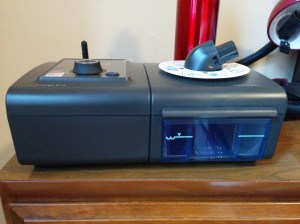
First, I have a form of sleep apnea. I got a CPAP machine that helped a lot!!! I loved that thing! Unfortunately, I 2014-04-23 11.03.16
developed a complication and now I can only use it for about an hour every other night. Don’t even get me started on the frustration with that! I’m still working with my sleep doctor on that, but he admits there are limited options for this particular issue, so I may just be stuck. Treating my sleep apnea would help a lot, and might be good enough that I wouldn’t need the other thing that’s worked.

The other thing is an over-the-counter supplement called Isocort, made to support the adrenal glands. It’s been amazing for me! A tiny pill or two makes me able to function fairly well every day! Sure, I’m not about to go jogging, get a job, or clean the apartment, but I can run errands, socialize, and just feel ok. I love it! Unfortunately, they stopped making it. When they stopped, patient communities online were very upset. It was the go-to nonprescription solution for adrenal insufficiency. The prescription solution is a steroid, which causes all sorts of problems for many of us. When production stopped, everyone floundered. They found alternatives with varying success. I tried a form of the most popular alternative. It helps a bit, but not at all like the Isocort did.

I now have a 4-6 month supply of Isocort left. And then what? Will I have to go back to feeling that constant strain to function?

So now I feel stuck. I have some more options, but they feel unlikely to work at best. If Isocort was still in production I wouldn’t be worried. Sure, I wouldn’t want to be on it for the rest of my life for various reasons, but I’d be glad to use it for a few years if it helped. Oh, if only!

I’ll try more Isocort alternatives. I’ll keep working with the sleep doctor. But what will I do if they all fail?