My improved health: how I got here

February 16, 2015

A friend recently asked me what has helped me the most. I’ve thought about that vaguely from time to time, but this time I really considered what got me to where I am.

Three years ago I had left my job hoping to go back soon, and instead I found myself feeling steadily worse. I was house bound 3-5 days per week, on average. An afternoon with a friend would leave me barely functioning that evening and all of the next day. My memory was lousy, I was nauseated all the time, the fatigue was debilitating, and the pain was getting even worse.

Now, I only spend 1-2 days at home each week, and when I go out, it’s for longer stretches of time. I do more each day. When I’m home, I don’t feel as bad. The GI symptoms are almost entirely gone, the pain is mostly stable and an acceptable (for me) level, my memory is better (but not great yet), the fatigue has improved so much, and I can recover from an afternoon out pretty quickly. It feels like a miracle! But it wasn’t a miracle, it was a lot of hard work and a bit of luck.

I think what helped me was a bit of an insurance doctor, a lot of my naturopath, and a huge amount of me.

The doctor that the disability insurance company made me see encouraged me to see a sleep doctor. I had been thinking about it, but he nudged me more in that direction. I did sleep studies and started using a cpap machine, and it made a huge difference. For the first time in ages I was waking up feeling slightly better than I had when I went to sleep!

My naturopath did a lot for me. I was already gluten free, but she got me off dairy and helped me figure out the other foods I should avoid. She got me on various supplements that have been helpful (and some that weren’t, but that’s ok – it’s all trial and error, right?) She got my vitamin D levels up, improved my zinc levels, and found a multivitamin that didn’t make me feel ill (something have had problems with for many years.) She tested my adrenals and got me on supplements to help them. She guided me through every step of the process.

The luck was that I had medical conditions that could be improved. Not everyone is so fortunate, and I am grateful every single day that I had options, even thought I had to work incredibly hard to find them.

And then there’s me. When I was barely functioning 3 years ago, and the doctors were all telling me there was nothing they could do, I decided to at least learn a bit more about my situation. I picked up a book at the library, and that led to more books, blogs, and online support groups. Reading was slow thanks to the brain fog and fatigue, but I eventually learned that my hypothyroid treatment wasn’t the only option, despite what my doctor had said. I did more research. I learned which kinds of doctors I should see. I made many phone calls. I learned about naturopathy and researched naturopaths, eventually choosing the one that I see now. I went on a gluten-free diet. Later, I stuck to the more restrictive diet that my naturopath recommended. It wasn’t easy, but I did it. More recently, I cut out all trace amounts of gluten, like from lotions and from kissing someone who’s eaten gluten. Again, it isn’t easy, but I’m doing it. I’ve swallowed more pills per day than I’d like to think about. I’ve stressed about the financial cost of it all. I’ve fought with insurance companies and with doctors. When a doctor I’d waited months to see was unexpectedly out of the office and I was given a substitute (who was useless, by the way) I complained to the head of the office and got an immediate appointment with the doctor I wanted (who was incredible!) I pushed myself to do more than I wanted to do. When a doctor didn’t want to give me the hypothyroid treatment I wanted, I found someone new (and the treatment change was a good move!) I found a new podiatrist when I felt my orthodics weren’t right, I restarted physical thearpy, and I learned about trigger points. As I felt better, I moved on to new lines of research. I followed up every lead from books I read and from patients I spoke to. I like to knit, and sometimes, as you’re knitting along, pulling at the yarn, you’ll encounter a knot, and it’s hard to untangle it. I’ve been untangling the knot of my health conditions for the last few years.

The main thing I did was I ignored all of the naysayers. The doctors told me I couldn’t get any better. Friends and family thought I should stick with “traditional” medicine. But I stuck at it. I didn’t do anything that didn’t seem to have some solid research behind it. I listened to patient experience, but I didn’t follow up on anything unless multiple people had had good results, and then I was still careful. And all along, I knew it might be for nothing. I knew the doctors might be right and I might not get any better, but I held out a glimmer of hope, too.

I won’t pretend I’m perfectly healthy now. Or that I ever will be. I know that my health conditions are permanent. The best I can hope for is to go into remission, and even that is a long shot. But I’m trying.

Because I could have given up. I could have accepted what the doctors told me. I would now be bedridden, with no hope of any improvement. That could still happen some day. I know that. But I’m focusing on one thing: today is not that day.

I’m not suggesting that my story is one that can be replicated. I’m not trying to be inspirational or any of that other bullshit. I’m not pushing anyone to do what I did if they don’t want to. I’m simply trying to answer the question I hear over and over from friends and from readers: “How did you manage to improve?” I’ll gladly give more details if anyone wants them, but for now I’ll just say, it was a bit of luck, a fair amount of searching for the right medical providers, and a whole lot of effort by me.


Blizzard days are like chronic illness days, so don’t panic

January 27, 2015

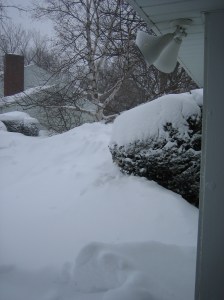
If you’ve looked at the news in the U.S. at all in the last day, you know that the northeast is getting hit with a big blizzard. Even though it’s not unheard of around here, this is of course causing the usual panic. For me, it’s just a Tuesday.

snow

Snowstorm January 2005 – 10 years later and people are still panicking

I wanted to pick up a few groceries yesterday because it was time for my weekly shopping. Everyone else in the long lines was stocking up for The Storm. You see, the idea of being indoors for 2 days due to The Storm causes panic for most people. They suddenly need milk and bread with a kind of desperation that isn’t usually seen on a typical Tuesday. I just don’t get it.

Now, obviously for some people there’s good reason to worry. For example,

  1. If you just moved here and you’ve never been in a snowstorm before, you might be unsure of what to expect.
  2. If you’re physically disabled or otherwise in need of medical attention and rely on assistance from others, you might be worried about people not being able to reach you or vice versa.

That’s about it. I can’t come up with #3. Obviously storms like this can be dangerous. Your house could get flooded if you live near the shore, you might be worried about a flood-related fire, a tree could fall on your house or car. But if you live in an area where these things are likely, then you either know how to prepare, or you know you can’t prepare and you just have to wait it out. The other major danger, of course, is shoveling-related injuries, so I hope that anyone at risk for a heart attack, back strain, or other injury is getting help with their shoveling. And yes, you might lose power. But you should already have plenty of blankets, candles, matches, and bottled water in the house anyway, because that’s just good sense.

Look, we’ve had storms like this many times before. So we know that it will end on Wednesday and by Thursday people will be out and about again. By Friday we’ll have forgotten about The Storm as we prepare for the next one. So why buy a month’s worth of groceries when you’ll only be indoors for 2 days?

I suppose most people don’t like feeling stuck at home. I get that. I don’t like it either. But I know how it really works. You see, I get stuck at home for days at a time on a regular basis. It happened last week. And the week before. And the week before that. And it’s ok.

One big difference is that everyone else is stuck at home too, so you’re not the only one canceling plans. The other big difference is that when you’re stuck at home for a blizzard, you feel ok and can do things. When you’re stuck at home for chronic illness, often you feel like shit and can’t do much beyond stare at a tv screen. Thankfully, I feel ok today, so while I watch the snow outside, I’ll do the kinds of things I think everyone should be doing today. Here are a few ideas for you:

  • Clean up the clutter around the house.
  • Cook.
  • Bake.
  • Have some quiet time with your thoughts.
  • Call a friend you haven’t spoken to in a while. If they’re in the same city and they’re not an emergency worker, chances are good that they’re home too.
  • Read that book you’ve been wanting to read.
  • Work on your creative hobbies – knit, paint, write, etc.
  • Play with your kids and pets (I would if I had any.)
  • Watch a movie.
  • Daydream.
  • Exercise. I’ll do my physical therapy, but you can also do plenty of at-home exercises like lifting weights, sit-ups, push-ups, jumping rope.
  • Finally empty out that email inbox.
  • Take a hot relaxing bubble bath (it’s not my thing, but it might be yours.)
  • Do all of those other things around the house that you say you never have time for.
  • Be incredibly grateful that you’re indoors today and safe.

I do some of these things when my illnesses keep me at home, but many I can’t do. Today is sort of a treat – I’m home *and* I feel somewhat ok!

So the next time you hear someone panicking that The Storm is coming, remember that being stuck at home for a day or two is something many of us go through on a regular basis, and suggest that they relax and enjoy the time at home. And point out that they might want to keep a few bottles of water in a closet all the time, because standing in those long lines is just silly.


Could a new pain be isolated?

January 14, 2015

Sitting at my computer has become more painful, now that I can’t find a comfortable position for my foot. I didn’t fall or trip or do anything else to it, but one day it started hurting. Usually my pain is in joints or in more “common” areas like my back and neck. The top of my foot was a new one. So I waited for it to away.

But it didn’t go away. I meant to mention it to my new podiatrist when I went to get examined for new orthodics, but I was so excited about the orthodics that I forgot to mention it. When I went to pick up the new orthodics 2 weeks later, I still had the pain, and this time I remembered to mention it. She said that the area I’m pointing is actually related to joint. Immediately, alarm bells went off in my mind. A joint?? Could I really have a new joint acting up?? She explained that there was a ligament there that had probably gotten stretched too far some how. She said it should fix itself within a few weeks, but it had already been a few weeks. The next step would be to immobilize the foot. Um, no thanks! Well ok, I might have. But first she wants to see if the new orthodics help. I sure hope they do!

But in the meantime, I’m left to wonder if this new problem is isolated or if it’s part of my connective tissue issues. It’s possible that it’s isolated, right? Right? I mean, if an otherwise-healthy person can have this problem, then I can too, right? Right?

But it’s also possible, even likely, that it’s an extension of the pain that I already have in my wrists, toes, knees, fingers…. Every few years I get pain in a new set of joints and it doesn’t go away. It can’t be “healed.” I haven’t had any new joints join the list in several years so I’ve been lulled into thinking this might be it. But I should know better. Despite all of my hard work and all of my improvements, I still have the same autoimmune diseases, whatever they are, that caused the problems in the first place. I’ve always assumed that sooner or later all of my joints would succumb to this. I just hoped it would be later rather than sooner. And when I pictured it, I didn’t picture this particular spot of pain that I never knew existed in relation to a joint.

This isn’t the end of the world. Actually, in my world, it’s relatively minor. The pain isn’t actually what’s bothering me at this particular moment. What’s bothering me is that I don’t know how to proceed. If the orthodics don’t help (and with my luck, they probably won’t) then should I bother to immobilize the foot? That wouldn’t be good – I wouldn’t be able to wear my new orthodics, it would throw off my balance, it would probably aggravate my hip, and it would be a real bitch to deal with in the cold, snow, and ice that come with Boston winters. And it probably wouldn’t do a damn bit of good. But then again, if there’s even the tiniest chance that it could help, that I might be preventing future pain, don’t I owe it to my future self to try?

Or would I just be deluding myself by thinking there was a chance this could possibly be an isolated condition?

Sadly, it’s a situation that we with chronic illness have to deal with far too often. Every pain, every extra-tired day, every ear infection or sore throat or sneeze or…. we have to question it all. My foot is simply today’s question.


Vagina vagina vagina

January 9, 2015

I ate an incredible chocolate chip cookie today. It gave me a lot of pleasure. It was just delightful.

I’ll get back to the cookie in a bit.

Like many people, I have two hands, two eyes, a mouth, a liver, two lungs, a heart, two legs, and many other body parts including, yes, a vagina. So if I can talk to a doctor, a friend, an acquaintance, or a stranger about pain in one of those other body parts, why is it considered taboo to discuss pain in my vagina or any other body part involved in procreation?

I don’t personally have vaginal pain (aside from the occasional yeast infection, etc.) but if we discussed these things more openly, it wouldn’t have taken me years to find out that the blood clots I got with my period weren’t normal. And while I don’t happen to have pain in my vagina, vulva, or related areas, plenty of others do.

The taboo seems to trace back to pleasure. Apparently, the problem with discussing vaginas and penises has to do with the pleasure we get from them. I got a lot of pleasure from that cookie this afternoon, yet it isn’t socially inappropriate for me to talk about my mouth. There’s just no logic to it. Apparently sexual pleasure is to be shamed while all other pleasure is acceptable, at least in my culture. But who does that help? I see absolutely no reason why that should be the case.

Many people of all genders express discomfort when discussing genitalia. I don’t get it. Every single one of us is here as the result of sexual organs. Think about it: would you exist if no one on the planet had a uterus? The vast majority of us are here because of a penis and a vagina, even if they never came into contact with one another. It amazes me how many men think vaginas are only for sex; unless they were born through C-section, they once came out of one!

Today I learned that a friend has vaginal pain. She had never mentioned it before, referring only to more socially accepted forms of chronic pain. She said she’d probably never discuss it again. But why should that be? And the topic of how pain in other parts of the body affects sex really needs to be a post all its own. If you have chronic pain, has your doctor ever asked if it’s had an impact on your sex life? Mine haven’t. But they should have. Every single one of them (in the appropriate specialties) should have!

So I’m saying it loud and proud: I love my vagina! It is as important a part of my body as any other (and more than some…. I’d give up an appendix or tonsils before I’d give up my vagina!) If you have pain or other symptoms in any body part that’s taboo to discuss, feel free to share it here. I will give it the respect it deserves, and I suspect most of my regular readers will, too. After all, it is as much a part of your body as your shoulder, your skin, and your kidney. So why not discuss it?

Which is why I titled this post the way I did. Let’s start with at least being able to say the word itself!