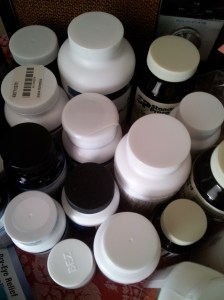
Dreams of winning the hypothetical medical lottery

December 13, 2013

I keep reading and hearing about the big $400 million lottery jackpot. I thought for a minute about what I’d do if I won (unlikely, since I didn’t buy a ticket) and I was surprised by what came to mind.

I used to dream about winning. I figured I’d quit my job, buy a house, travel with friends, get a couple of dogs, and support20120809_220808 charities. Those were the first things that came to mind. Those are all still on my mind, but now something else comes to me first: doing all the health stuff I feel I can’t afford to do right now.

Money doesn’t solve everything, but it sure could help! I wrote about this 2 years ago but life was so different then. And back then, I didn’t know what was causing my health problems. If I had that money now, I’d immediate see the doctors who don’t take insurance, run all the lab tests that the insurance companies don’t want to cover but that I know I need, and take the extra supplements I’ve been avoiding. That’s already thousands of dollars every year. Then I’d go back to physical therapy and start getting therapeutic massage every week. I would pay to see a doctor for a medical marijuana prescription and buy a high-end vaporizer to help with the chronic pain. I would get a dog, which would do wonders for my emotional health (and I could then afford a dog walker for the days I needed someone, which would be most days.) I could get a home with central air conditioning so I wouldn’t feel as horrible all summer long. Of course, I wouldn’t have the stress of worrying about my future finances, and that would really help with my cortisol levels. I would update both my eyeglasses and my orthodics more often. And of course there’d be things like buying only organic produce.

This flashed before my eyes in an instant, and then it was gone. I didn’t win the lottery. I need to save the money I have in case my benefits are pulled away, which could easily happen any time. And I don’t have enough money to make all of that happen anyway.

It’s sad but true: good health costs money. I’m lucky to be doing as well as I am, to be honest. I’m thankful for a safe home, good health insurance, and a supportive family. But $400 million might not be so bad to add to that.


How chronic illness affects my geographical living choices

December 4, 2013

Last year I thought I might not be getting disability payments, and I was looking at cheaper places to live (in case I did get social security payments and could maybe avoid moving in with my parents.) It was the first time I realized just how limited

Boston Public Garden with part of the Boston skyline

Boston Public Garden with part of the Boston skyline

I was, but not for the expected reasons.

I know that some of my living choices will be made based on climate – if I have a choice, that is. Several years ago I considered moving out of state. That plan was squashed when I got sick and needed to stay near my support network, etc. Still, I remember looking for a place that got decent sunshine in the winter, so my seasonal affective disorder wouldn’t be triggered too much. I also wanted a place that didn’t get hot or humid in the summer, since that makes me incredibly ill. It’s hard to find someplace that meets all of those needs, aside from southern California which I’d already tried. I wasn’t thrilled to have to base a lot of my choice on my how my body reacts to different climates, but that’s just how my life is, and I accept it.

But the other geographical limitation is one I don’t accept. Actually, it really pisses me off. I live in the Boston area, which is unfortunately one of the most expensive parts of the country. Social security doesn’t correlate with cost of living, and so my payments just wouldn’t be enough to stay in the same area. That’s why when I worried about money last year, I considered moving a bit farther away from the city. That’s why I’ve been looking this week at what my options for the future might be. I didn’t, and don’t, want to switch doctors or be too far from my family and friends, but I figured I could manage 45 minutes to an hour. The cheapest places north of the city were in New Hampshire. There were some decent ones to the west. The best to the south were in Rhode Island. And east is the ocean, so that’s out. Most of the decent choice were in New Hampshire or Rhode Island, and I think I could be happy in either place. But even though they were closer to my current spot than many other parts of Massachusetts, I couldn’t move there because of health insurance!!! Yup, my health insurance would be a problem.

Back then, and possibly again in the future, I was on MassHealth. That’s our state medicaid. I was very grateful for this. The thing is, I have to be living in MA in order to be eligible for it. If I moved, I wouldn’t be eligible anymore. Maybe I’d be eligible for another state’s medicaid, but then I wouldn’t be able to see my doctors in MA. It wouldn’t matter if they were 5 minutes or 5 hours away, if they were in another state, insurance wouldn’t cover them. I’d be allowed to pay out of pocket, of course, but that would defeat the entire purpose of moving far away to save money on rent and other expenses.

This really pisses me off. There’s been a lot of talk by politicians about letting health insurance cross state lines, but nothing at all has come of it. Plus, they’re only talking about private health insurance. What about medicaid? I’m sure there aren’t a ton of people affected by this, but I can’t be the only one. There must be so many people who live near state borders and who would rather see a doctor in the other state, if only their health insurance would pay for it.

Medicaid is there to make sure people who need it can get good healthcare without going broke, essentially. Well, what if the good healthcare is across the state line? Then what?

Listen up politicians: We Deserve Better!


What to bring to your next medical appointment

October 30, 2013

I have seen way too many doctors in my life. Hell, I’ve seen way too many doctors this year. The point is, I’ve had some practice with medical appointments and I’ve learned a few things along the way. I didn’t think too much of this until I met with my potential new primary care physician on Monday. Twice during the appointment he commented that he wished all of his patients would bring in what I was then handing him. That reminded me that a lot of people don’t know to do these things. So I’m spreading my knowledge. Please share yours in the comments!

Here’s what I bring:

  • Forethought. I think in advance about what I want to get out of this particular appointment. What do I want to learn? What do I want to come away with?
  • Paper and pen, a laptop, or some other means of taking notes. It’s nice to think I’ll remember everything when I leave an appointment but I won’t. There’s just too much new information. By the way, don’t be afraid to ask the doctor how to spell the name of a possible illness or medication. It’s important to get it right so you can look it up later.
  • My list of diagnoses, especially for a new doctor. I have so many diagnoses at this point that I can’t remember them all. Bringing a written list is helpful. You might want to add other relevant notes, such as the year you were diagnosed with each one and how the diagnosis was made.
  • My list of symptoms. Same as above, it’s hard to remember them all.
  • All of my medicine bottles, both prescription and over-the-counter. This way when a doctor asks how many IU of Vitamin D I take, or how much selenium is in my multivitamin, or a what an unknown item contains, I can just hand her or him the bottle to get the answer. After all, saying I take three calcium pills per day doesn’t mean anything unless I know how much calcium is in each pill. Sometimes I leave home the less necessary ones if my bag is too heavy for me to carry comfortably. There are a lot of bottles.
  • A list of questions. It’s nice to think I’ll remember to ask my doctor all of my questions, but when the time comes and I’m busy answering theirs, it’s easy to forget one. I start thinking about this list days in advance of most appointments and I make sure to write down absolutely everything I want to cover.
  • A list of tests I want run. This isn’t necessary for every appointment, but it’s important for many. In this case, the doctor planned to run some of the tests I wanted anyway, but there were several that he hadn’t planned on. When we discussed it, he agreed to run them. It’s a good thing I asked!
  • A list of referrals I need. This is especially important if your health insurance requires referrals in order to cover the expenses of care. Mine does. I brought the list so I’d be sure not to forget anyone.
  • Someone to lend support, ask questions, and later lend insight. I don’t do this for most appointments, but sometimes it’s necessary. I didn’t do it for this last one, but I’ve brought my parents to other appointments. I have also accompanied loved ones to appointments. The doctor never bats an eye – this is normal. And it’s so important.
  • A printout of all labwork from outside their hospital system. Within a given hospital system around here, doctors can see each other’s notes and test results. They can’t see these when they’re from other systems. Since I am seeing doctors in different hospital systems right now, I have to be careful to coordinate everything. Earlier this year I began recording all test results in a spreadsheet. Before Monday’s appointment, I filtered it to show only the labwork run by doctors in other systems and I printed that. My new PCP was thrilled. It included “normal” ranges, the date of the test, and the doctor that ordered the test. However, before I had this spreadsheet I would bring any copies I had of test results with me. If I needed to keep those pages, I would offer to let the doctor photocopy them.
  • Food and water. Some appointments last a long time. It’s good to have a snack for afterwards.

So that’s mainly what I bring. Obviously everyone’s needs are different, but this might be a useful starting point for many people. In case you’re wondering, the two things that made my new doctor especially happy were the pill bottles I’d brought and also my printout of labwork. What do you bring with you to medical appointments?


Should I try to trust doctors?

October 10, 2013

I’m in a bit of medical flux at the moment.

I have a naturopath who’s very helpful and knowledgeable, but thanks to absurd politics, naturopaths aren’t licensed in Massachusetts. That means she can’t order blood tests or prescribe medications. Great. I haven’t had a primary care physician (PCP) that I’ve trusted in many years, and in hindsight, none of them were very good anyway, and some even did harm. I have never had a “good” PCP. I have some specialists who are good, but they aren’t in the specialty that I need right now. In a few weeks I’ll see a new PCP, but I’ve never gotten any value out of PCPs. Still, they are necessary for insurance referrals, so I will see the PCP and grade him based on his willingness and ability to refer me to good specialists. And when he does refer me, should I trust the new specialist?

After many years of bad health, I’m finally ready to try new treatments that could really help me. But these are all based on research that I did myself. I then ran that research by my doctors and naturopath and they all agree this is the way to go, but I had to figure it out for myself. I no longer expect a doctor to give me any answers. That means that right now, I am only looking for doctors who are willing and knowledgeable enough to implement the treatment plan that I have designed for myself, and to help catch any potential problems and fix them.

The thing is, what if something new comes up that I haven’t already researched? I just can’t trust a doctor to catch it and treat it properly. It could be big or small, but I won’t trust them. I know that trust is essential, but I just don’t have it for most in the medical field. I have seen my naturopath quite a bit in the last year+ and I mostly trust her, but not 100%  So then why would I trust someone new?

I don’t trust easily. That goes for friends, lovers, medical practitioners, and anyone else I get close to. I don’t give out trust; it has to be earned. My friends have all earned my trust. If they hadn’t, I wouldn’t consider them friends. So have my lovers. If they hadn’t, I wouldn’t have slept with them. But I don’t have the luxury of visiting doctors a bunch of times and letting them earn my trust. Most of them don’t seem interested in earning it, and the insurance won’t pay for it (nor will my bank account.)

The truth is, I have been screwed over by doctors, health insurances, and medical facilities so many more times than I have covered in this blog. Tests I needed weren’t run. Abnormal test results were ignored. Surgery was performed unnecessarily. I was blamed for my own health problems. I was ignored. I was embarrassed. I was belittled. I was outright lied to. Necessary referrals to specialists weren’t given. Important medications were denied. It’s not that I won’t write about it all, it’s that I can’t. I can’t even remember it all. There’s just too much.

So after all of that, how can I be expected to trust a new doctor? But then, what other choice do I have?

By the way, I set out to write about what I am looking for in my new doctors. I need to think about this before I see them in a few weeks so I really tried to come up with what was most important to me. I couldn’t come up with a damn thing because no matter how I thought about it, it always came back to the same problem: I wouldn’t trust them to help me.