What’s your diagnosis?

December 5, 2014

We’ve all gotten some form of the question from a non-medical person:

What’s your diagnosis? What have you got? What is it? What’s wrong with you?

But how often do we have an answer?

For a “healthy” person it seems easy. The answer is usually something well-known and straightforward that requires no explanation, like the flu, a broke leg, a torn rotator cuff, allergies. You give that as your answer and move on.

If you have a chronic illness, though, there’s no simple answer.

Maybe you have one straightforward diagnosis. So you answer: lupus, multiple sclerosis, ulcerative colitis, fibromyalgia, Hashimoto’s disease. You’re even kind enough to give the full name instead of saying MS, UC, fibro, or Hashi’s. Even so, the other person has no idea what that is, so they ask what it is. But do you really want to spend 20 minutes explaining it? Probably not. I usually don’t.

Of course, you might have multiple diagnoses. Maybe you have 2. Maybe you have 12. I always have to stop and think before I list mine, and that confuses people. They don’t understand that the list is ever evolving. A new diagnosis is added, another is changed to something different, and yet another is removed. And the list is long, so I usually just give the few “big ones” and I have to choose which those are at the moment. Besides, the list is long enough that it’s hard to remember. That’s why I always keep an updated list on my phone: so that I can give an accurate list to new doctors. But non-medical folks don’t want the full list, and they don’t understand it. See the previous paragraph. They don’t know what most, maybe any, of my diagnoses are, so they want explanations. But I don’t feel like giving them over and over and over and….

Then again, maybe you don’t have any diagnoses. That’s hard for a lot of people to understand. In their minds, if you’ve gone to the doctor, then you should know what’s wrong with you and you should have a name for that problem. Simple. If they only knew. Medicine is a science that doesn’t have all the answers. So maybe you’ve seen 15 doctors and don’t have a diagnosis yet. Or maybe you have one of those “almost” diagnoses. You know the type. Like my first diagnosis was “Undifferentiated Connective Tissue Disease” which is just a fancy way of saying “We know you have the indicators for a connective tissue disease but we can’t figure out which one, or maybe it hasn’t been discovered yet, so we’ll just give you this label instead.” Try explaining that to someone who doesn’t even know what connective tissue is! Still, I was glad to have that non-diagnosis because at least I had a label to give people. When I had no diagnosis at all for 11 years, too many people (including doctors) thought I was making up my symptoms or that my problem couldn’t really be serious.

On top of all of that, you could have diagnoses you think are wrong. I have a few of those in my records. For example, I don’t think I really have IBS. Irritable bowel syndrome was diagnosed by multiple doctors, but now I think I had undiagnosed Celiac Disease and leaky gut as well as some food intolerances. Now that I’ve addressed all of those issues, my IBS has magically gone away. If you suspect a diagnosis is wrong, should you even bother to mention it?

Of course, you could have a combination of these. Maybe you have one or more diagnoses, but more that haven’t been diagnosed yet and others you don’t believe. That’s especially hard to explain. Sure, I can tell someone I have Hashimoto’s disease, for example, and maybe even explain what that is. Then they think that’s it. When I say there’s something else that we haven’t figure out yet, they’re confused. I have a diagnosis. That should cover everything. How is it possible there’s something else? Well, it’s possible because the human body is complex and, yes, it’s possible for more than one thing to go wrong at a time. Saying I should only have one diagnosis is like saying you can’t have a flat tire and a dead car battery at the same time. Yes, you can. And yes, I can have Hashimoto’s disease and sleep apnea and whatever-the-hell-else all at the same time.

I just got curious. Writing this, I realized that I was only remembering a few of my diagnoses, so I pulled up the list on my phone. The first in the list was one I’d forgotten about as I was writing this: PCOS. That stands for polycystic ovary syndrome. It was diagnosed ages ago, but I’d forgotten. Hence the list. And a perfect example of why these questions are so hard to answer.

Over the last few years I’ve mentioned several diagnoses in this blog, but I’ve never listed them all in one place. I never thought it was important. But I know some of you have been curious, so here’s a short list in no particular order. Of course, this isn’t the same list I would have given when I started this blog back in 2011. Back then, I hadn’t yet received at least 3 of these diagnoses, and I had others that I’ve removed from the list because I know they’re really part of something else. So, as of now, they are:

Hashimoto’s disease, hypothyroid, PCOS, Scoliosis, Raynaud’s disease, tinnitus, undifferentiated connective tissue disease, seasonal affective disorder, upper airway resistance syndrome (UARS), adrenal insufficiency, MTHFR mutation (homozygous A1298C).

How do you feel when someone asks a version of, “What do you have?” How do you answer?


This never happened: When healthcare is about health

November 24, 2014

We (society) throw around the term “healthcare” a lot in political debates, media, and daily life. We use it to mean all care related to our health, but that’s not what “healthcare” really is.

Occasionally, though, someone flouts convention and choose to focus on actual health. I forget how rare this is until I 11-24-2014 10-18-13 PMregister my own surprise when it happens. Today was one of those days.

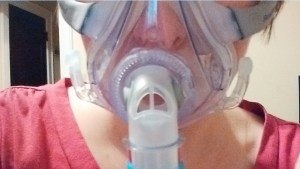
I’ve been having trouble adjusting to my new CPAP setup. The doctor suggested I get fitted for a different type of mask. The CPAP company has a guy, C, who handles this. I met with him for my original mask fitting. He came to my house to set up the CPAP the first time around. He came out to fix the CPAP when I had problems. He came back with the new setup last month. And today I saw him for another mask fitting. We greeted each other like old friends.

C showed me my two options and explained how they worked. He took his time, as if he had no other appointments. He answered every question. He never rushed me or made me feel bad for asking so many questions. Isn’t that how it should always be. But it isn’t.

I chose a new mask, excited, as always, at the prospect of improved sleep. C rummaged through a drawer, searching for the right type and size, and pulled out a new mask. He ripped open the bag, and I commented on how I didn’t expect to walk out with a new mask. He said, “This never happened,” and I grinned and agreed. It wasn’t the first time someone in the medical field had said that to me when giving me proper healthcare, and I doubt it will be the last.

The insurance coverage of a CPAP is incredibly complicated, but at best they replace the mask and tubing once every three months. The filter only gets replaced every 6 months, I think, and the machine should last for several years. I figured I was 6 weeks away from qualifying from a new mask. I asked C about that, and he explained that this never happened, and that he’d submit the paperwork next month, when the insurance would cover it. I suppose I’ll have to make this mask last longer than it should so that my supply schedule will line up with the insurance paperwork. But for now, I’m just so excited to try out the new mask tonight!

C knows his job. He knows what boundaries he can push. That’s clear. But he also clearly wants to help patients. He didn’t have to give me that mask. He gets nothing in return, except the knowledge that he’s helping me. So why did he do it?

No, that’s the wrong question. The question is, why doesn’t everyone else do it?

Nope, wrong again. The real question is, why is it necessary to do it? Why must someone break the rules to provide good healthcare? Why doesn’t our system focus on health as a top priority?

If our system focused on health, a new CPAP mask for me would be covered. So would many other things. I began to list them here, but why bother? We know what they are. I’ve discussed them so many times before. And they aren’t the point, at least not individually. It isn’t simply about what’s paid for, but an attitude. I would like medical appointments that aren’t rushed, doctors who don’t have to worry about malpractice suits at every turn, and practitioners to consult with their colleagues on every case to be sure that nothing is missed. I want to see a system where the goal of every examination, test, treatment, and discussion is optimizing the patient’s health.

Because what’s healthcare, if it’s not about optimizing health?


Sharing too much and not enough

November 19, 2014

I get tired of answering the same questions about my health and insurance woes from my family and friends all time, and they feel awkward about constantly asking. It would easy to just have them follow this blog, but I’m keep this blog anonymous, and only a select few know about it. So I send emails.

I don’t send too many emails, and the last one was several months ago. I always find it tricky. I want to include enough information to answer everyone’s questions, but not so much that the email is cumbersome to read. I want to cover everything, without overwhelming anyone. I want to share enough, but not too much.

There’s no guideline for this. There are online tutorials for writing the perfect business-related email. There are tips on writing difficult emails to a friend. But I’ve never heard anyone mention a group email to update friends on a chronic health condition. I try to keep the tone light, but informative. It’s serious, but not too heavy. I only started this a couple years ago, and most of the earlier updates were insurance-related, so it was easy to make fun of the system. It’s harder to make jokes when I’m writing about my health.

And then there’s the audience to consider. Close relatives and less close friends and everyone in between are all on the list. They’re all people with whom I feel comfortable sharing this info, so privacy isn’t a concern, but their knowledge is. The people who I’m closer to know a lot more about my health conditions in general and often the specifics that I’m dealing with at any given time. A good friend who I speak to less often won’t know these things. I know I need to include enough details for the latter to understand, but I don’t want to bore the former.

Now let’s say I find a balance for all of that. There’s still the issue of my own shyness around this stuff. I’m happy to answer questions, but feels so self-centered of me to send out these emails, as if everyone wants to know this stuff. I know that’s irrational. I know that they want to know – most of them get this email because they asked to be kept in the loop. I guess I’ve just never been good at being the center of attention for any reason.

I’ve been meaning to write this latest email for over a month. I’ve thought about it from time to time, but I just never got around to it. Today’s the day. I’m going to write it right now. I just wish I knew what I was going to say.


September kicked my ass

September 29, 2014

Here’s the thing about chronic illness: it’s unpredictable.

And here’s the thing about life: it too is unpredictable.

And sometimes the unpredictable chronic illness shit coincides with the unpredictable life shit.

That’s what happened to me. That’s why this blog has been so quiet lately. And that’s why September kicked my ass.

It started with my typical CI issues flaring up. Then I had a surprise when I had an unusually large amount of blood drawn and I got light-headed and started to black out. Bad pain made everything a bit worse. The fatigue was really horrible. A sleep study stressed me out. I had to chase doctors more than usual. I had insurance-related financial worries. I had a looming deadline to send in the paperwork for my SNAP (formerly food stamps) application. And then, just when I was completely overwhelmed, a loved one died. I was devastated. I was stressed out. I was running around trying to be with family, attend the funeral, sit shiva, and help clear out his apartment. As you can imagine, my stress, fatigue, pain, and nausea all got even worse.

Now, September wasn’t all bad. I started dating someone and things are going really well. I’m processing my grief. The sleep study went well. The symptoms have been improving. Still, it wasn’t my favorite time. I mean, I wasn’t even blogging regularly! That tells you just how badly the month had gone!

October is just a couple days away, and I’m hopeful that it will be a better month. I’m starting a new sleep apnea treatment, I’ll continue dating the guy, I hope to find time to cook, and the transition to autumn that was probably responsible for a lot of my September symptoms will be complete. It won’t be perfect, but surly it must be better?

The thing about chronic illness is that, like life, there are ups and there are downs. September gave me more than my share of downs. Now I’m really hoping for some ups! So screw you, September! I’m moving on, to bigger and better things!