Knit 1, Purl anything

August 23, 2015

One of the hard parts about being unable to work at a job is feeling like I’m not doing anything substantial. Sure, I do favors for friends and offer advice online and do other intangible things, but it’s rare for me to do anything I can point 2015-07-09 12.01.45to and say “I did that” and be proud of it.

I started knitting as a child. My grandmother made such beautiful things, and she loved knitting so much, that I thought I should try it, too. At the age of 6 I learned the basics. Unfortunately, I never progressed much beyond those basics. Then a few years back a friend taught me to crochet, and I really got the hang of that. Before I knew it, I was making some complex items.

I spend a lot of time sitting on my ass. It’s sort of inevitable when you have chronic fatigue. So while I’m sitting and watching tv, sitting and listening to an audio book, or sitting and talking on the phone, I’m also knitting and crocheting. I always have multiple projects in the works at any given time, and I love creating them. The best part is, I’m making something useful! At the end of each project I have a physical, tangible item that I can say I made, and I can be proud of it. I sell some things and donate others. It feels good to donate hats and scarves to a local homeless shelter and know that I’m helping people.

Last year I taught a friend with chronic illness how to crochet. Like me, she knew how to knit, and wanted to learn something new. Now she feels the same way I do: excited to be able to make something, especially because she can no longer work.

Crocheting and knitting doesn’t solve all of my problems. But it solves one problem. And I’m grateful for that.

What do you do to feel a sense of accomplishment? Please comment below so we can get ideas from each other!


The problem with SSDI’s trial work program

July 28, 2015

When you’re on SSDI (social security disability insurance) the presumption is that your disability prevents you from working. Ok, I get that. But what if you want to return to work part time or full time? Ah, that’s and interesting process.20120809_220808

Everyone gets a different amount of money through SSDI. The formula is based on how much you paid into the system, and that in turn comes from the salary you earned and over how many months you earned it. You might be getting $900 per month or $1800 per month. If you’re on SSDI for more than 2 years then you’re eligible for Medicare, which is health insurance. You’re also more likely to be eligible for other benefits.

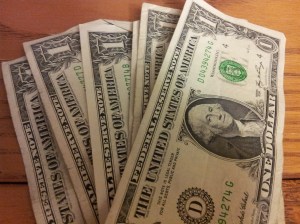
Now, what happens if you start doing some work? Well, at a certain point the SSA (Social Security Administration) decides that you’re able to support yourself. That point is a set number. It’s not a percentage of your benefit. Nope. It’s a set number: $1090 per month right now (this can change each year.) So if your benefit is $900 and you start earning $1100 then you lose SSDI and Medicare, but that might be ok with your extra income if you’re earning $1100 every month. You might only earn it occasionally, though (more on that in a bit.) But if your benefit is $1800 and you earn $1100, then you lose SSDI and Medicare and, unless you have unearned income from some source (like a spouse, alimony, or investments) then you’re probably screwed.

That’s how I feel now: screwed. I’m ready to do some small amounts of work, which is exciting in and of itself! I recently earned around $1100! This is very exciting! If it was all in 1 month, though, it would count towards my return to work trial period of 9 months total. Those total 9 months are spread out over 5 years, so I could work for 2 months per year, and still lose my benefits. That’s not good! Luckily for me, it was spread out over 3 months, at an average of under $400 per month. What a relief!

But wait, isn’t there something wrong with the system if I feel relieved to earn less money? Shouldn’t the goal be to get me back to work so that I don’t need benefits?

What if I make more than $1090 per month for 3 months this year? Then what if the same thing happens again next year? I’d stop working altogether so I wouldn’t risk going off benefits. I can’t afford to have 0 income, and I definitely can’t afford to lose my health insurance!

Instead, the system should encourage me to work part time with the hope that I would build up to more part time work or even full time work! The trial work period should only cover a short timeframe, like a certain number of months worked in a 1 or 2 year period. There should be a grace period for Medicare.

But with the current setup, I’m scared to attempt to go back to work. What if I try to work, lose my benefits, and then fail to continue working? Yes, there’s a grace period where I can get back on benefits, but it’s short. And I’m scared. It took me more than 2 years to get on SSDI in the first place. I can’t take a chance on losing it.

And that’s why the system doesn’t work.

Have you felt the same way about SSDI? How do you handle it? Do you hold back on the amount of work you do in order to stay on benefits?


Too much weight on the seesaw

July 27, 2015

You know those cartoons where someone jumps on one side of a seesaw and the person on the other side goes flying up in the air, over the first person’s head, and finally lands in a puddle of mud? Keep that image in mind.

Being chronically ill requires a careful balancing act. Symptoms, treatments, pills, diets, supportive friends, unsupportive friends, jobs or lack thereof, and everything else in life contributes to this. If were all placed on a seesaw, somehow it would just evenly balance, so that neither side was on the ground or up in the air. Sure, it might totter. You might feel like it was going to tip at any moment. But miraculously, it wouldn’t.

That’s how it feels, most days. Obviously, something big could throw that seesaw out of whack, just like it would for a healthy person. A car accident or death of a loved one will always disrupt life. Usually small things can be absorbed into the heap on either side of a healthy person’s seesaw without any lasting disruption to the equilibrium, and that’s great. Those of us with chronic illness know that our seesaws are a bit different. They have a lot less room for extra weight.

I was chatting with a friend yesterday. She updated me on her recent hospitalizations, then said, “I know this is going to sound silly compared to everything else, but I have an ingrown toenail….” I knew just what she meant. When we deal with severe health problems, it feels like we should let the little things get to us, but I feel like it’s the opposite: because we deal with severe health problems every single day, we just don’t have the capacity to handle anything new, even if it’s small.

I often feel the same way. I could be in excruciating pain, trying to simply breathe through it, and some small new problem sends me into a tailspin. Why? Because I’ve already used up all of my energy dealing with the pain and I just don’t have a damn bit left for anything else. That new thing, tiny though it is, adds just enough weight to one side of my seesaw that everything on the other side flies up and lands in the mud.

Have you experienced this yourself? I’m certain at least some of you have. My friend was relieved to hear that I had. We’re often told by society that we should be able to handle our health problems, and for us chronically ill folks that’s hard enough on the best days, so it feels like defeat to let a so-called “small” problem tip our seesaw. But I’m sure it’s happened to some of you. Please share in the comments; if you don’t want to share details, a simple “Me too!” will let others know that they aren’t alone.


A little support goes a long way

July 24, 2015

I was having a tough day. I was exhausted, fatigued, and in a lot of pain. It all felt overwhelming. I was supposed to spend the night at my parents’ house, but just the idea of driving down to them felt like too much. With my mother’s encouragement, I went anyway. She knew I’d feel better when I arrived, and I was pretty sure she was right.IMG_20150724_195633

I rested for a while and finally got in the car with my things. I hit far too much traffic for 3pm on a Thursday, but after nearly two hours, I arrived at my destination – it took double the time it should have.

As soon as I walked in the door I got a big hug from my mother, a smile from my father, and warm greetings from two wonderful pooches. It shouldn’t have mattered. It shouldn’t have made me feel better. And yet, somehow, it made all the difference. After some cuddling with the guy above, I felt so much better. Some good homemade food, nice conversation, and tv rounded out the day and before I knew it, I was asleep on the futon with this cutie pie stretched out alongside me. There’s just something about cuddling with a dog that makes me sleep so much better.

The pooch has been great medicine, but my parents have been, too. The simple things help more than they know. Helping me to carry things, fetching things for me, and just generally trying to help me feel good showed me how much they care. They made me feel cared for. And that’s why now, just 27 hours later, I’m still in pain, but I’m less fatigued and my soul feels refreshed. I’ll spend an extra night here because I know that no matter how I feel, my parents will always do their best to help me feel better. So thanks Mom and Dad! You’re the best!