Wondering how to date in the Covid era

May 21, 2025

I’m dipping my toe back into the dating waters for the first time in a while. And I’m overwhelmed with trying to navigate this new reality.

When covid* first began, a lot of people did online dates, but those didn’t feel real enough for me. I now wish I’d done it! Eventually it felt safe to be outside with people, so I went on some dates that way. I had a bunch of first dates, and then there was one guy who seemed great, and we went on a couple of outside dates. But things fizzled because he was doing indoor athletics without a mask, so I didn’t feel comfortable being indoors with him and, let’s face it, a relationship can only get so far if you’re never going to feel comfortable being indoors and maskless with someone, and/or kissing them.

Then 2023 came along, and with it, a lot of added fatigue. Dating was out of the question. Just getting by day-to-day was all I could manage. It took a year and a half to feel somewhat better. I’m still struggling with added fatigue, but at least things aren’t as bad as they had been before. So, after a lot of procrastinating over the past several months, I finally set up an online dating profile yesterday.

Now the question is, how do I navigate covid-related risks? I don’t think I need to mention my concerns in my profile, or even in an initial chat – I can suggest a walk for a first date. Honestly, I can’t do coffee dates well anyway, since I worry about gluten in most coffee shops. But then I need to find a way to bring up my concerns. As it is, for many years I’ve had to find a way to mention on first or second dates that I can’t kiss anyone who has been eating or drinking gluten. That’s already sort of awkward, but at least it’s straightforward: if you’ve been eating or drinking gluten, or wearing lipstick or lip balm, then I won’t kiss you. But covid risk is much less direct. Everyone has some risk, including me.

Most people aren’t wearing masks indoors anymore. Should I only limit myself to dating people who mask? Probably. But talk about a small dating pool! Or what if someone doesn’t mask indoors much, but they work from home and don’t have kids and don’t go to big events? Or what if someone masks at home but they have kids who don’t mask at school? The possibilities are endless, and I’m not sure how to navigate them in a way that’s reasonable for myself. And if I don’t know what’s reasonable for myself, then I can’t possibly communicate my needs to someone else. Which makes me feel like I shouldn’t be dating.

I know that figuring things out as I go is probably reasonable in this situation, but it feels unfair to myself and to the other person (whoever that may eventually be.) Sometimes I just want to give up altogether, to stop masking, to stop trying to avoid it. But then, I think about the many people I know with long covid, and I think that I’m better off trying to avoid that.

In the past five years I have managed to not get covid even once. I’m sure that has been good for my physical health, but what about the toll on my mental health? What about the missed parties, the missed outings, the stress, the worry? Has it been worth it? Probably, but maybe it isn’t any more? How much longer can I live like this? I’ve gotten to the point where it’s fairly manageable most of the time, but dating throws a wrench in the works and I just don’t know how to handle it.

If you’ve dated in the covid era, how have you managed it? I’d love some advice!

*I made the decision not to capitalize COVID throughout this post. This is both because it’s easier to type it lower case, and also (mostly) because I find it jarring to read it capitalized in articles and didn’t want that to be a distraction.


“Women’s health” is still health – so why don’t we talk about it?

January 27, 2023

It’s been too long, and I’ve missed you all! After hundreds of posts (this is #799!) you’d think I’d have run out of things to say about living with chronic illness, but not yet. Sadly, there’s always something else. I have something particular on my mind today, and from what I’ve heard, a lot of you have had this on your mind at some point, too, so let’s dive in. Maybe in writing this, I’ll figure out what I should have said yesterday….

I had my big lightbulb moment 8 or so years ago, sitting at lunch with some other folks from my chronic pain support group. We had just finished the meeting, and were generally chatting. One person talked about her endometriosis pain, and the only guy there was uncomfortable and asked that we not discuss it. I was horrified. Why should we not discuss it? It’s what she was dealing with! Why do so many people of all genders feel that it’s ok to minimize or ignore any problems around menstruation, women’s reproductive organs, and women’s genitalia? Ok, I know the answers, and I won’t get into all of that. but let’s talk for a moment about the bigger picture here.

Pain is pain. Her endometriosis pain was as valid and worth talking about as his rheumatoid arthritis pain and my connective tissue disease pain. And by not talking about it, not only are we hurting sufferers by forcing them to be silent, but we are also limiting knowledge for everyone. I had heard at a young age about periods being on a regular cycle, but I was older before I understood that was a real thing for many people. It felt like a myth to me. To be honest, I still find it hard to believe that there are people who can predict when they’ll get their period, how long it will last, and how heavy it will be. Speaking of which, I was also shocked that my amount of bleeding wasn’t normal. Again, we don’t talk about these things, and I hadn’t known.

So often, anything related to menstruation (or even women’s emotions in general) are passed off as being due to hormones, as if (1) everything can be attributed to hormones and (2) anything caused by shifting hormones is invalid. WRONG!

And this is why this topic is on my mind today. Thanks to polycystic ovary syndrome (PCOS) I have a very irregular and often heavy period. Yesterday I was in a lousy mood, and a bit impatient with the person I was working with via Zoom. I wanted to explain that it was because of my period. But I didn’t. This is a relationship where I definitely would have said I was grumpy because of severe knee pain, but mentioning my period felt inappropriate. And I was afraid of being passed off as hormonal.

Sure, sometimes the grumpiness is hormonal, but that’s not what it was yesterday. Yesterday it was that my period disrupted my sleep two nights in a row, every time I stood up I felt myself leaking, I was having to go to the bathroom constantly, my appetite was all messed up, and I had lost a lot of blood, so I was weak from the blood loss on top of the rest. (More than once I have had a doctor send me to the ER due to blood loss so I could be checked out. It wasn’t to that point, but it was still a lot.) I think that anyone who had these symptoms could have felt grumpy, too. If a guy had suffered two nights of bad sleep and then had lost a lot of blood, I doubt anyone would tell him to cheer up, get over it, or “just deal with it.” Yet we give that message to anyone who menstruates. That’s really fucked up.

And frankly, if my moodiness had been due to shifting hormones, that would have been perfectly valid, too! Shifting hormones sucks, and it’s treated as a minor things that women should be able to…. what? Ignore? “Overcome”? I’m not sure what is even expected, but I know that it’s unrealistic. At their worst, those hormones have been all-consuming for me, and it can really suck to live that way for even a day or two. I have struggled with it, and being told it isn’t a real issue is definitely not helpful.

I want us to be able to talk about this. If I’d been talking to a cis woman or a trans or non-binary person who had gotten periods, I might have said something more honest. But since I was talking to a cis man, I simply said that I was tired from two nights of bad sleep. It was a woefully inadequate partial truth. What should I have said instead?

What I want is for “I’m sorry I’m in a bad mood. I have my period and the blood loss and lack of sleep are getting to me” to be as easy to say as “I’m sorry in I’m a bad mood. I have a lot of pain in my knee today and the pain and lack of sleep are getting to me.”

What do you think? Should I have said the former? What would you have said? I’m really curious to hear from others who have been in similar situations. The whole thing is frustrating. We all know that sometimes that hardest part of chronic illness is the lack of understanding and compassion from others. And it’s so much worse, I think, when it’s not considered socially acceptable to even mention what we’re dealing with.


When I’ll feel Covid-safe around people

August 26, 2022

Two-and-a-half years into this damn pandemic, I’m still spending a whole lot of time alone, and it’s hard. I miss people. I miss regular socialization. I miss dating. Actually no, I don’t like dating. But I miss the potential for a relationship. I miss sex. I miss casually hanging out at a friend’s house, going to the theater, visiting to a museum, not having to rely on New England’s unpredictable weather to determine if I’ll get to see people. I miss parties and Meetup groups and all the other random in-person indoor stuff that I took for granted.

Yet, so many people are out in the world, acting like there’s no pandemic anymore, or like getting Covid is no big deal. Most others seem to be somewhere in the middle, being somewhat cautious but still socializing and attending work and school in person. A lot of my family and friends in the middle have been asking me when, if ever, I’ll be willing to go out again. I think they expect this question to trip me up, to prove that my expectations are unreasonable.

But the truth is, I have a mental list going of things that will make me feel safe enough to join my family for Thanksgiving dinner or to go to a play, and they aren’t at all unrealistic. I just wish they would happen sooner than they probably will. Here are some of mine and I’d love to hear yours, so I know what other excellent possibilities are out there.

  1. Widespread mask use. This wouldn’t make me feel comfortable in all situations, but in many. Today I called a dozen hair salons and the only ones that have people wearing masks are out of my price range. The others say they don’t have any protocols, no masks. WHY NOT?!?!? The pandemic is not over and they’re only prolonging things and making it harder for people like me. If everyone wore masks I still wouldn’t go to the theater, but I’d feel more comfortable at the grocery store. Please please please wear masks, people!
  2. Masks that 100% (or maybe 99%) protect the wearer. Speaking of masks, this would be huge. I’d feel much better about the 90% of unmasked grocery shoppers in the store with me if I knew that my own mask would provide all the protection I needed. Then I wouldn’t have to rely on others so much to protect my own health. Of course, these would also have to be affordable and widely available. And if they were reusable, that would be even better!
  3. Accurate tests. If at-home tests gave fewer false negatives, and if they gave positives as soon as someone was contagious, I would 100% be hanging out indoors with family and friends. Would I go to crowded events with strangers? Nope! But at least I’d get to be around people I love. And it would open up dating possibilities, too. I still wouldn’t want to go to restaurants, etc. on dates, but at least as we got to know each other, I’d feel safer being indoors alone and maybe even kissing *gasp!*
  4. Vaccines that prevent contracting Covid and/or transmission of Covid. Back in 2020, we thought vaccines would save us. We talked about herd immunity. The problem was that the vaccines we got don’t prevent anyone from getting Covid or from passing it along to others. Don’t get me wrong, I’m thrilled we got vaccines that reduce the likelihood of hospitalization and/or death. I just want more. If we had vaccines that stopped people from spreading Covid, I’d be hanging out with my vaccinated family and friends, because I wouldn’t have to worried about them giving it to me or about me giving it to them. If we had vaccines that stopped people from getting Covid at all, I’d be feeling much safer as I go out in the world, and then I’d probably go back to being in public spaces again.
  5. Vaccines that prevent long Covid and disease latency. It’s hard for me to explain to most people that I’m not worried about dying from Covid. I’m most worried about getting long Covid. And right now, the vaccines help me avoid dying, but they don’t help me avoid long Covid. I wish they did. Honestly, if long Covid didn’t exist and if we didn’t have a concern about disease latency (when symptoms might appear years or even decades later, like with post-polio syndrome), then I wouldn’t be so concerned and I’d be happy to at least be around family and friends, and I would consider being out in public spaces more. For me, this would be a gamechanger in a way that I find hard to explain to most people.
  6. A near miss: a cure for long Covid. To be honest, I’m not sure how much this would help at this point. Before I was worried about disease latency, a long Covid cure would have been enough to get me out and about again but now, unless it would also cure any future symptoms, I don’t think it would do the trick for me. There’s just too much at stake with the disease latency risk. I watched a loved one deal with post polio syndrome for years and the possibilities with Covid latency feel too real to me.

So that’s my current list. I think that some of these are more likely in the short term than others. #5 would be amazing, but I’m not holding my breath for that one any time soon. #4 feels more likely, but only if we don’t lose momentum in terms of funding research and innovation. The ship has sailed on #1. Let’s face it, too many people are selfish assholes. They don’t believe they’ll get sick and don’t care of others do. But #2 and #3 feel like they have potential, even in the near future.

Experts are already working on creating more accurate tests. Imagine what a gamechanger that would be! Sure, I still wouldn’t want to hang out with a lot of strangers, but it would open the door to feeling comfortable with family and friends. I’m thinking about all of the people I’d want to see who, right now, I’m not visiting with indoors. It would be amazing!

I don’t know if anyone is working on creating masks that better protect the wearer, but I sure hope that they are! I’d love to have more control over my own safety. Not only would I be able to spend more time with family and friends, but I’d feel more comfortable around strangers, too. No, this wouldn’t be the perfect solution, but it would open up the world for me and at this moment, that would be enough.

Even before the pandemic, I struggled with loneliness. I’m an extrovert who lives alone and who, due to health issues, often doesn’t go out for days at a time. I’m at an age where my friends are mostly married and have kids in addition to working full time, so they are understandably busy with their families when they aren’t at work. I get it, but it also makes it harder for me to spend time with them. That left me spending a lot of time home alone, taking walks alone, and doing activities alone. And that was before the pandemic. Now I’m so much more isolated and damn it, I just want to be around people! I want to spend the weekend with friends out of town, hug my mom, kiss a date, go to a party, and feel safe wandering the aisles of the craft store. Is that so much to ask?

For now, though, I’m sitting at home. Today I’m seeing a friend – via Zoom. It’s not the same, but it will have to do. And despite what so many others think, I’m not planning to sit at home alone forever. I am not wrapped up in fear with no foreseeable way out. I see a way out. I just need scientists to make it happen. Please.

What about you? In what ways do you think there could be a safe way for those of us who are at higher risk to socialize again? I’d love to hear your ideas!


The problem with the “don’t make events about food” advice

February 22, 2022

Maybe you have celiac disease or another food restriction like me, or maybe you have another limitation that causes issues for you at social gatherings. If so, you’ll relate to this. And if that’s not you, this may put things in a slightly different perspective for you.

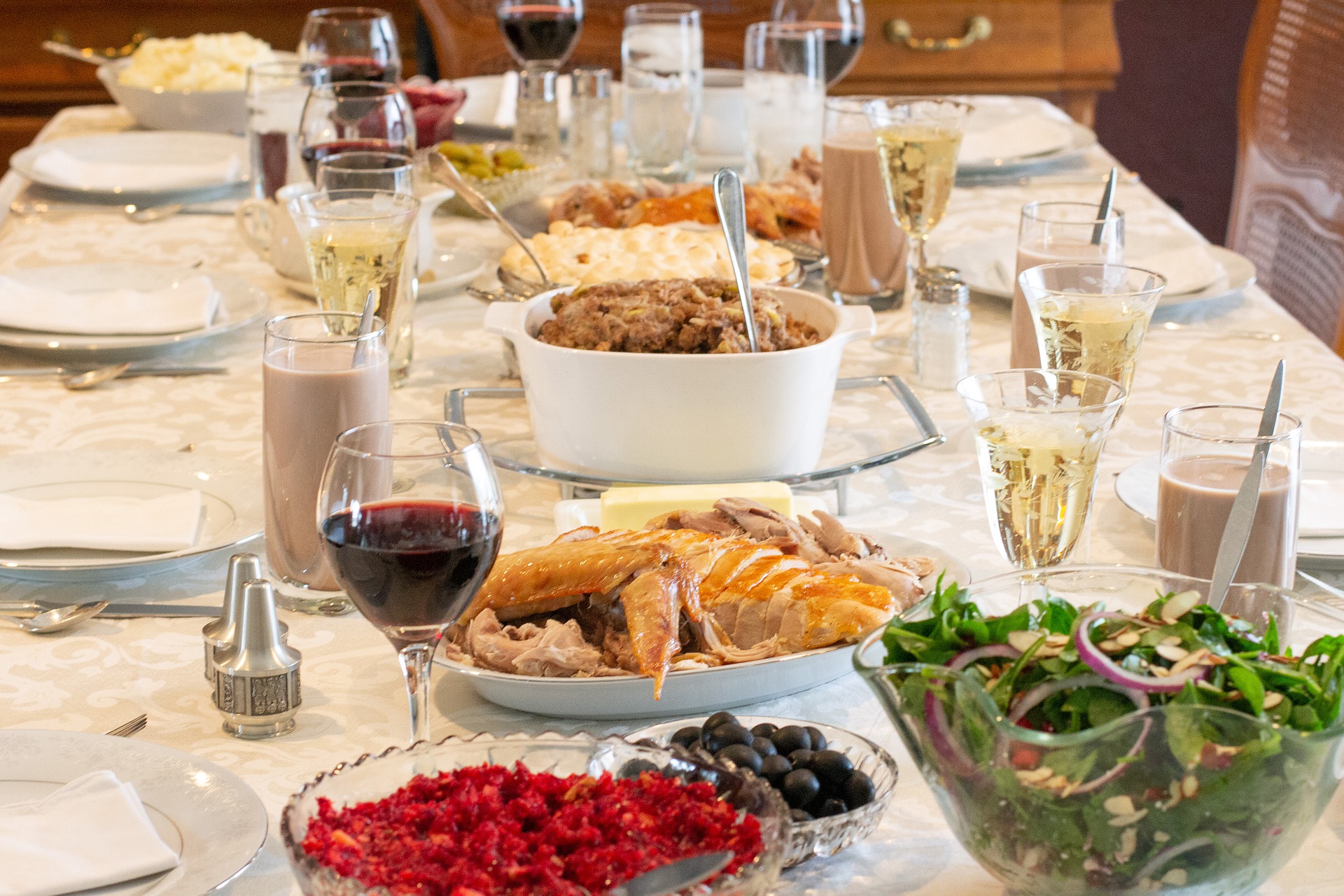
I grew up in a family that made a big deal out of food. Holidays, were always about food. I get it, that’s how Jewish holidays are. Challah, hamentaschen, wine, matzo ball soup, latkes, and kugels were all staples. Thanksgiving had turkey, pies, potatoes, and kugels. When we visited family out of state or they visited us, it was all about the food. We thought about it, talked about it, spent lots of time preparing it, and of course, enjoyed eating it. As I grew up, I often felt sick after (or during) these events, but I often felt sick after (or during) a normal meal anyway, so it’s not like these were any better or worse. It wasn’t until my 30s that I stopped eating gluten.

Image credit Heartland Mom on Pixabay

I have often wondered how my grandmother would have handled things if she’d still been alive when I went gluten-free. She was the stereotypical Jewish grandmother, always cooking and baking, expressing her love through food. We would arrive at her house after a several hours long drive, having stopped for lunch on the way. She would ask if we wanted food when we arrived and we’d say no, we’d already eaten, so she would put out a “snack”. It was a large snack! Then a few hours later dinner would consist of chicken, brisket, at least 2 kugels, challah, salad, and more, along with multiple desserts – for only 6 people! I’d like to think she’d have found a way to adapt her meals for me, but I know she wouldn’t have stopped focusing on them.

The surprising (at first) thing with eliminating gluten is that it doesn’t only effect what we eat, it effects our social lives. Dates are tricky when I can only eat at certain restaurants. Going out with friends is tough when we can’t spontaneously grab food while we’re out. Attending weddings, bar mitzvahs, and other events is frustrating when I can’t eat the food provided. Multiple surveys have shown that the social aspects are the hardest part of living with celiac disease. So the advice that we hear over and over is logical: don’t make events about food, make them about people. And after all, shouldn’t we all be doing that anyway?

I get it. If the focus at Thanksgiving is the people instead of the table of food, then the people who can’t eat all of the food, and who might be nervous about the food, can still have a great time. If the Passover sedar is about the people and the prayers and we let the matzo ball soup and brisket be secondary (or even tertiary) incidentals, anyone with food restrictions will have a better time. It makes sense.

People > Food.

It took me many years to figure out why that advice felt off to me.

I remember a family vacation. We were in a big rented house, and I had been careful to cook food in advance. It was annoying to have to do this, and definitely took away from some of the fun, but it was fine. There was one night when everyone wanted to eat at a fancy restaurant. The family had been to this city many times over many years and loved this place. I’d only been once and, frankly, I hadn’t thought it was so wonderful, but whatever, I’d have been willing to go back. The thing is, they didn’t have anything gluten-free. My choices were to go there and not eat, or not go. I chose to not go. I found another restaurant in town that had gluten-free food and my mom chose to join me. My mom and I had a fantastic time, actually. We walked around town and had one of the best meals we’d ever had together. The food was amazing, the ambience gorgeous, the company perfect. My dad, aunt, uncle, cousins, and cousin’s wife all went to the other restaurant, and I won’t pretend I wasn’t hurt. I understand they liked this place and wanted to go, but it hurt me that they didn’t place my feelings and their desire to be with me above their desire to eat at a specific restaurant. They talked about it a lot in advance and a lot afterwards, too.

Holidays and family gatherings have been different since I went gluten-free. When my mother hosts, she makes sure the meal is either completely or mostly gluten-free, with any gluten foods kept separate and reminders to all to keep their serving spoons away from other foods. Accommodations vary when others host. But either way, it’s still about the food, and food is still stressful. Even when the meal is 100% gluten free, I no longer get any joy from focusing on food. It’s simply associated too much with negative things for me. Plus, the talk about the food isn’t limited to the food on the table, and that’s even more stressful. I am immensely grateful that my mother goes out of her way to make me feel comfortable eating the food at her events, but I still wish we could focus less on the food altogether.

As for me hosting a family event, that’s not likely to happen. For one thing, my apartment is small and I don’t have a lot of space. But for another, I have no desire to host. Some people love to cook, decorate, and have lots of people over for a party. That’s not me, and it never has been. Plus, even if I wanted to do that, I don’t have the energy for it. I can cook a meal OR attend a gathering, but I certainly can’t do both, never mind hosting duties. When I go to someone else’s home and bring food with me, it’s always something that can be prepared a day or two in advance because doing it the same day is too exhausting for me.

But let’s be realistic. Even if I could find a way to host, there would still be the issue that the gathering would be all about the food because I might be able to change the circumstances, but I can’t change the people. As soon as they walked in they would ask what we were eating, and the conversation would often turn back to food throughout the gathering. If I made all of the food then I wouldn’t be worried about that food in particular, but I still don’t like these conversations. Inevitably people talk about other foods and about restaurants, and at best none of this is enjoyable to me, at worst it upsets me, triggering all sorts of past trauma.

I don’t have a solution. This is something I’m continuing to work on for the sake of my own mental health. I can talk to my family about it and maybe they will occasionally make an effort, at least some of them would, but I know that most would not even try, or they would soon forget. This is ingrained and it’s something they enjoy. I just wish the thing they enjoy so much wasn’t the thing that brings me the most grief.