Should I try to trust doctors?

October 10, 2013

I’m in a bit of medical flux at the moment.

I have a naturopath who’s very helpful and knowledgeable, but thanks to absurd politics, naturopaths aren’t licensed in Massachusetts. That means she can’t order blood tests or prescribe medications. Great. I haven’t had a primary care physician (PCP) that I’ve trusted in many years, and in hindsight, none of them were very good anyway, and some even did harm. I have never had a “good” PCP. I have some specialists who are good, but they aren’t in the specialty that I need right now. In a few weeks I’ll see a new PCP, but I’ve never gotten any value out of PCPs. Still, they are necessary for insurance referrals, so I will see the PCP and grade him based on his willingness and ability to refer me to good specialists. And when he does refer me, should I trust the new specialist?

After many years of bad health, I’m finally ready to try new treatments that could really help me. But these are all based on research that I did myself. I then ran that research by my doctors and naturopath and they all agree this is the way to go, but I had to figure it out for myself. I no longer expect a doctor to give me any answers. That means that right now, I am only looking for doctors who are willing and knowledgeable enough to implement the treatment plan that I have designed for myself, and to help catch any potential problems and fix them.

The thing is, what if something new comes up that I haven’t already researched? I just can’t trust a doctor to catch it and treat it properly. It could be big or small, but I won’t trust them. I know that trust is essential, but I just don’t have it for most in the medical field. I have seen my naturopath quite a bit in the last year+ and I mostly trust her, but not 100%  So then why would I trust someone new?

I don’t trust easily. That goes for friends, lovers, medical practitioners, and anyone else I get close to. I don’t give out trust; it has to be earned. My friends have all earned my trust. If they hadn’t, I wouldn’t consider them friends. So have my lovers. If they hadn’t, I wouldn’t have slept with them. But I don’t have the luxury of visiting doctors a bunch of times and letting them earn my trust. Most of them don’t seem interested in earning it, and the insurance won’t pay for it (nor will my bank account.)

The truth is, I have been screwed over by doctors, health insurances, and medical facilities so many more times than I have covered in this blog. Tests I needed weren’t run. Abnormal test results were ignored. Surgery was performed unnecessarily. I was blamed for my own health problems. I was ignored. I was embarrassed. I was belittled. I was outright lied to. Necessary referrals to specialists weren’t given. Important medications were denied. It’s not that I won’t write about it all, it’s that I can’t. I can’t even remember it all. There’s just too much.

So after all of that, how can I be expected to trust a new doctor? But then, what other choice do I have?

By the way, I set out to write about what I am looking for in my new doctors. I need to think about this before I see them in a few weeks so I really tried to come up with what was most important to me. I couldn’t come up with a damn thing because no matter how I thought about it, it always came back to the same problem: I wouldn’t trust them to help me.


I’m no scientist but you can look it up yourself

September 11, 2013

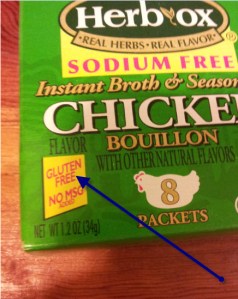
A few months ago I wrote about how annoying and ridiculous it is when people ask me why my body works the way it does. Well, I think it’s even more annoying and ridiculous when people ask me why certain foods contain gluten.

I’m not kidding. This happens all the time. I have no idea why. A friend who’s vegetarian won’t eat marshmallows. She told me there’s animal fat or something in it (I forget exactly what.) I accepted it. I didn’t ask why they use those fats in marshmallows. And yet, people ask me about gluten constantly.

Last week, for example, I went to a small gathering with friends. As usual, M cooked. As usual, I brought my own food. M reviewed what was in the food for the sake of the others, then mentioned how glad she was that I bring my own food, just in case. I’m glad she appreciates it!

Later we were talking about the food, and I took some of the plain steamed veggies. I mentioned how they were the only thing of hers I could eat. M pointed out that I could eat the mashed potatoes, but I pointed out that she’d said earlier it had vegetable broth in it, and that store-bought broth almost always has gluten. She was surprised. Then, I kid you not, M’s wife looked right at me and asked, “Why do they put gluten in broth?” I told her I didn’t know and quickly changed the subject. I mean, I didn’t make the broth! How the hell should I know why gluten is in it? Why should I care? And yet people ask me that all the time! Like a couple weeks ago when I said I couldn’t eat Chinese food because of the soy sauce, and my friend asked me why there’s gluten in soy sauce. Again, how the hell should I know?

 

So to be clear, I don’t give a flying fuck why there’s gluten in broth, soy sauce, some vinegars, salad dressings, or a bunch of other unexpected places. I just know there is. I just know what I need to avoid in order to protect my health. What’s important is that gluten can trigger an autoimmune response, which is why I spend extra time and effort to buy gluten-free versions. I just barely know what it does to my body. I don’t know or care what it does to food. So if you care, you can go find out for yourself.

And that will be my response from now on. The next time someone asks me why a food contains gluten, what it’s purpose is, I will tell them that I’m no scientist, but they are welcome to look it up and let me know. Then I will walk away. It’s just not worth my limited energy to deal with those absurd questions.


The “But you always look so good” comments

August 23, 2013

I’ve heard it far too many times: But you always look so good when I see you. Or along the same lines, My brother doesn’t understand your illness because you always look good when he sees you.

I’ve written before about the masks we wear to hide how we really feel. That’s definitely part of it. I’m good at wearing a smile when I feel lousy, speaking positively when I’m sad, and in general hiding how I feel. Yes, that’s definitely part of it.

But then there’s the other part. It’s so obvious, and yet people seem to constantly miss it. It’s really quite simple: I don’t leave the house when I feel really crappy. That’s why no one sees me when I don’t look ok. When I’m out, it’s because I feel well enough to be out, and if I feel well enough to be out then I feel well enough to present as ok. On the other hand, when I’m so exhausted that I have trouble picking up the tv remote, when my brain fog is so bad that I mess up making a salad (which I actually did yesterday), when the pain is so horrible that walking to the bathroom is excruciating, then I stay home. If I stay home, then no one sees me. See, I told you it was simple.

The funny thing is, as simple as this concept is, it took me a while to realize the pattern myself. When I heard those comments, I just figured people weren’t being very observant. They were ignoring my pale skin, slight limp, occasional wince. It took me a while to realize that even though the symptoms are there and can be noticed, the really bad symptoms, the ones that are just about impossible to miss, are almost never seen by others. There’s been the occasional ex-boyfriend or my mother or a friend who I was visiting with, but that’s it. No one else has seen me when I’m feeling really, really bad. So how can I expect them to understand?

I used to respond to those comments by saying that I’ve learned how to cover things up, or that they just didn’t notice, but not anymore. No. In line with my new policy of honesty, I now tell them the truth: they don’t see me on my truly awful days. And then I offer to describe what those days are like. I feel better, and I think it’s enlightening for them. I hope it makes them think twice before they judge anyone else.

Sometimes it’s what you see. And sometimes it’s the absence.


Must I educate everyone?

August 5, 2013

I went to a party the other night. (As a side note, YAY! I got out of the house and went to a party!) I know the hosts through a former job, and I had met a lot of the other guests through them and through that same job. I hadn’t seen them in years, so while at a normal party one or two people may ask, “What do you do?” at this party everyone asked. I hate that question, but it’s hard to avoid. I mentioned to one guy that I was unemployed. He said he wished he could get that gig. I was about to respond, “Yeah, it’s a great gig except for the lack of any income!” and just laugh it off, but our host overheard and mentioned that I was out on disability.

So here’s the problem: he shouldn’t have said that. I didn’t mind, but in general, it should be up to the person in question to disclose their disability status or not. It’s no one else’s place to do that. So I feel like I should say something so that he knows and won’t do it to anyone else. After all, I don’t mind, but there’s a good chance that someone else will. My guess is that he was trying to help me out but clearing things up, but there many times and many people where I don’t want it mentioned. After all, this was a party. I didn’t want to discuss my health – I wanted to have fun!

The thing is, I’m tired of educating everyone. Yes, I’d like to help him avoid offending someone else, or making someone else uncomfortable, but do I need to do that? I mean, it’s not my job to educate everyone, right? And it’s exhausting to be doing that constantly. I like to think of myself as a health activist, but it doesn’t have to be 24/7. At some point, enough is enough, and I think I just hit the point where I draw the line.

I like to educate others. Really, I do. I help whenever I can. This weekend I offered advice to parents whose teenager recently came out as gay and is having a hard time (I’m bi.) Today I’m helping someone newly dealing with chronic pain figure out the support services that exist in our area. But must I always correct honest mistakes? Maybe not. Maybe I’ll just let this one slide.

And yet, I feel guilty. So maybe I’ll say something after all….?