Chronic illness mentoring

June 5, 2014

“My friend was just diagnosed with multiple sclerosis last week.”

She said it because she’d overheard me telling someone else about some good resources for studies that had been done, but for someone newly diagnosed, I had other advice. I told Amy that a lot of people lose their friends when they get sick and are no longer able to be as social as they had been before. I told her to make it clear to her friend that she’d be there for her, no matter what. And that she then needed to follow through. I told her that a lot of web sites indulge in fear-mongering, and that she needed to tell her friend to ignore those sites. I told her that her friend needed to talk to others with MS, but only the ones who could be realistic and encouraging, not the ones who are in denial or who will tell her that her life is over. Amy asked how her friend could find the right people while avoiding the wrong ones and I told her to do the research herself, to go on Twitter and on blogs, filter out the negative ones, and give her friend links to the better ones. I warned her that it would be scary and discouraging to see some of the writing, but that it was the best way to help her friend from hundreds of miles away. Amy said that her friend was wondering if she should leave her job and I told her to tell her friend not to give up anything before she has to; when she becomes too disabled for her current work then she can find something else, but there’s no reason to act disabled before she really is.

And then I gave her my email and phone number and told her to have her friend get in touch with me. But I doubt the friend will.

When I first started feeling sick, I felt so alone. I didn’t know anyone else with symptoms like mine. I looked in books, but I didn’t find anything. The world wide web was just coming into existence and didn’t have a lot of information. As my symptoms progressed and the internet grew, I tried again, but with no luck. Now it’s the opposite: there are too many places to turn. Someone who is newly diagnosed can easily be bombarded with information, some accurate and some not. There are scam artists and legitimate resources. There are bloggers who talk only about the worst symptoms and others who act like life will never change. There are horror stories scattered across social media like landmines. There are so-called “inspirational stories” leaving most people with unrealistic expectations of what they are expected to achieve. If you look hard enough, you just might find, hidden amongst all of that, a few people talking about the reality. They discuss the good and the bad, the easy and the difficult, and present it as fact.

What’s missing, I realized while I spoke to Amy, is a mentor. There are probably a few hanging around the web, but I haven’t met them, and I imagine they’re even harder for a newcomer to find. We see mentors in business situations all the time, but where’s the mentor for someone newly diagnosed with a chronic illness? Where’s the person to guide you when you’re scared and your family and friends don’t understand? Where’s the person to help you navigate doctors and insurance and nightmares about a scary future? I needed that when I first got sick more than 20 years ago. People need it now.

The other day it was Amy. Last month it was the woman who gave me my tetnus shot. I can’t help everyone, but I’ve decided to label myself a “chronic illness mentor” so that at least the occasional person will feel comfortable calling me. I’ll print up some free business cards and hand them out. I will make no promises. I won’t cure an illness or even make the journey easy, but I hope that I can at least make it a bit easier for people at a very difficult time.

Does this sound like a reasonable approach? How would you offer your help to people? What else do you think I should do? Please comment and let me know.


In search of chocolate and reasonable customer service

June 3, 2014

The thing about avoiding gluten is that it isn’t always obvious where the gluten is hiding. I do web searches, but often there’s no clear indication about the product I’m searching, or there’s something clear but it’s 5 years old. Sometimes a product is well labeled, but often it isn’t. And that brings me to my two-day search for chocolate chips.

A different cake made by my aunt

A different cake made by my aunt

Chocolate itself usually doesn’t have any gluten-containing ingredients (though there are exceptions.) However, flour is often used on conveyor belts to prevent sticking, and that means that the chocolate isn’t actually gluten-free. If the chocolate package isn’t labeled, then, how do you know? The answer is that you call the company.

I decided not to have a birthday cake this year. Just having a party will be exhausting enough and I didn’t want to have to worry about stopping at the gluten-free bakery that day. I didn’t mind. Well, not too much. Then my aunt offered to bake me a cake! She’s always been so considerate of my food restrictions, and she’s one of the few who I trust to cook or bake for me.

The other day, with my party fast approaching, she emailed me a list of ingredients. She said she wanted to use Ghirardelli chocolate chips. Yum! I could find the info on the web site, so I called the company 6 times and each time I heard the same message about how no one was available and I should leave a voicemail and it would be returned. I left a message, but it was never returned. Not helpful.

With Ghirardelli not an option, my aunt suggested Callebaut. Again, the information I needed wasn’t on the web site. The first time I called, I got a message about how no one was available, etc. I didn’t leave a message. When I called later, I got a human being – success! Or so I thought. She needed a product number. When I said I didn’t have one, she said she couldn’t help me because they have multiple products. I asked her to tell me which of their chocolate chips are gluten-free, even if it’s more than one, and she said she couldn’t do that. Well, I’m not about to spend hours standing in a store aisle calling customer service numbers where I may or may not reach someone and reading off product numbers! That’s a #customerservicefail if I ever heard one!

Finally, my aunt said she could use Nestle, though it wasn’t her first choice. Maybe it wasn’t her first choice, but it sure was my favorite! I didn’t even check the web site this time. When I called I got a human right away. She didn’t transfer me. She apologized for making me wait about a minute while she pulled up the information. Then she read through multiple items and told me not only that they didn’t have any gluten ingredients, but that the equipment did not process wheat products. That was it. Simple. Straightforward. Easy. The way customer service should be.

I get that gluten-free folks, those of us with an actual medical condition and not just the ones doing a fad diet, might not be the most powerful demographic for companies to reach out to, but they still should. If they ignored every small group, they wouldn’t have many customers left. And really, it’s the right thing to do. Anyone should be able to find out if a product contains allergens. I understand that having a product number might be more convenient for them, but it’s just not realistic for customers. And it’s not necessary. If Nestle can be so helpful without a product number, then should the other companies have that same capability?

So it looks like I’ll get my birthday cake, and it won’t make me sick. Too bad it was so hard to get the information I needed to begin with!


Feeling too sick to remember how to feel better

May 30, 2014

If I get a cold, I know what to do. I know to drink decaf tea. I know to eat certain foods. I know which medications to take and when and why. But the second I have a fever, all that good knowledge gets lost somewhere in my brain and I forget what I’m supposed to do. When I talk to a friend or my mom, though, they remind me. Too bad they don’t know what to suggest for my extreme fatigue.

Even in my lousy state, I knew it started with all of the extra activity on Saturday. I did a lot that day, moving and being alert almost nonstop from 7am to 3pm, and I assumed that was the cause. Or maybe I ate something I shouldn’t have when I went out to lunch on Saturday. I was careful, but you never know. In the haze, I knew I shouldn’t push myself. I watched a lot of tv, read, watched movies, read, watched more tv, and read some more. I left the house for groceries and for a medical appointment, and felt much worse after each outing. It bothered me so much that no one knew why this was happening.

Except someone did. I did. Or I would have, if only I could have thought clearly. I knew I wasn’t thinking clearly. I knew there was a metaphorical strip of gauze over my brain, obscuring the information inside. Thank goodness I was able to peak under the gauze for just a moment last night. That changed everything.

Last night it occurred to me that I could take an Isocort tablet. Isocort is a supplement that can be used to help treat less severe adrenal insufficiency. At one point I was taking 5 tablets. When I eventually weaned off of it, my naturopath told me to take it occasionally as needed (and we discussed what “as needed” meant.) Thankfully, I had a fair amount left, since it’s since been discontinued. I almost never take it, but last night it occurred to me that I should. However, even in my poor cognitive state, I knew better than to take it at night. Thankfully, I knew enough to take it out and leave it with my other pills where I wouldn’t miss it.

This morning I wanted to try getting by without the Isocort. Ah, what a state I was in to think that could happen. I finally took one tablet around 1pm, knowing I still had time to take more in the afternoon if I needed to. I didn’t need to. By 3pm I was feeling much better, and at 3:30 I went out for a short walk. It felt so good!

More than the physical improvement was the cognitive improvement. The gauze lifted, and it all made sense. I should have taken Isocort preventatively on Saturday. I’ll do that the next time I’m in a similar situation. I overdid things on Saturday and that caused my adrenal gland to go on vacation for a bit. While it was lying on a beach in Malibu, I was suffering. Taking an Isocort or two on Sunday would have helped me to recover more quickly. Resting so much was the right thing to do, but I needed to support my adrenal glands also. Without that support, they weren’t about to return from their peaceful vacation away from my overwrought body. And of course, each extra bit of activity, each outing, only made me feel worse as my adrenals retreated even further.

Today is Friday. It took four days for me to realize that Saturday’s activities were the trigger to my recent downturn. It took another day to realize what I should do about it. And it wasn’t until I felt better that I figured out what really happened. So the question is, what do I do differently next time? Obviously I should take preventative measures, but usually I don’t know I’ll need to. By the time I would figure it out, I’m no longer thinking clearly enough to do it. I can write down a list of things to do the next time I feel fatigued, but that only works if I remember to look at the list. I don’t think I can trust myself, so I’ll do the only other thing I can think of: I’ll tell my parents and a few close friends what to suggest the next time I tell them I’m fatigued. With any luck, at least one of them will suggest the right thing and I’ll take that advice. But if I don’t, and if I write again about a downturn involving fatigue, I hope one of you will point me back to this post!


Looking for the pieces of my health puzzle

May 25, 2014

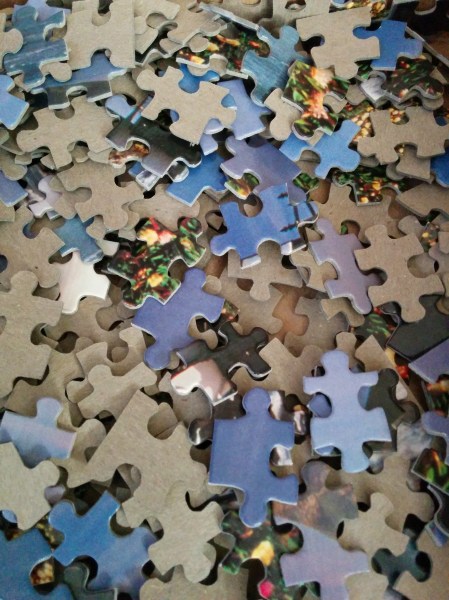
I have great memories of summer vacations in Maine with my family. As a teenager and into adulthood, we shared many wonderful times up there. When the weather was nice, we were constantly outdoors. When it rained, we sat around the dining room table working on jigsaw puzzles. We put together beautiful pictures of ocean views, warm sunsets, and peaceful gardens. Unfortunately, sometimes we reached the end and found that one or more of the pieces were missing. It was frustrating and disappointing to be so close and have no hope of finishing the puzzle.

My health is something like those unfinished puzzles. The difference is, I haven’t given up searching under the furniture and in drawers for the missing pieces yet.

The pieces I’ve found

It’s been a long search for all of those puzzle pieces. We all know some of them: eat healthy, exercise, get lots of sleep. But I’d done all of that and was still so sick. So I did some research and tried new things. Here are the big ones:

  • I went gluten-free.
  • I found a new doctor to treat my thyroid.
  • I changed my thyroid medication.
  • I found a naturopath and began seeing her regularly.
  • I discovered and treated my adrenal insufficiency.
  • I discovered new food intolerances and avoided those foods entirely. My leaky gut healed.
  • I added vitamins and minerals to my pill regimen.
  • I added other supplements as recommended by my naturopath.
  • I began using medical marijuana occasionally.
  • I found a better dose of melatonin and used that regularly.
  • I was diagnosed with a form of sleep apnea and began using a CPAP machine.

I’m sure there are more pieces that I’ve forgotten, but I think these are the big ones. This list sounds straightforward, but it isn’t. It has taken me two and a half years to do all of this. I did the research myself. Except for some of the supplements from my naturopath, every step is one that I researched myself. This was not easy, and at times I felt like giving up, but as I found each piece, I felt slightly better, and that encouraged me to keep searching for more pieces.

The pieces I hope to find

I can’t believe how much better I am feeling now compared to two and a half years ago! There were times when I thought I’d never feel this good again. Still, I’m by no means where I want to be, and I can’t do much more with the pieces I’ve already found. I know I have more pieces still to find.

To be honest, I’m running out of ideas. I have tried almost everything that has been suggested by the books, the websites, and other patients in patient forums. I can feel that at least one piece of the puzzle is still missing. Maybe I’m missing a dozen pieces. There’s no way to know until I try something new. Right now I’m considering doing a genetic test through 23andme. If you’ve done this, I’d love to know what you think of it, either positive or negative, in the comments. I would be looking specifically for a mutation on the MTHFR gene, but of course I would be open to any other useful information I could glean from the test.

Beyond that, I’m feeling stuck. Maybe I’ll try the AIP diet again. Maybe I’ll try a Paleo diet. Maybe I’ll come across something else in my reading. No matter what, I know I’ll keep looking.

My puzzle

We each have our own puzzles. For many of us, the pieces are damaged and will never properly fit together again. I know that will be the case for me. I’m looking for the missing pieces of my puzzle, but I’m under no illusions about the best possible outcome I could achieve. I will always have symptoms. I am just hoping to lessen them.

Your puzzle

I don’t know what your puzzle is. Maybe you’ve found all of your pieces and have fixed them the best that you can. Maybe you’re working on fixing the damaged pieces. Or maybe, like me, you’re still searching for your missing pieces. Whatever the case, I wish you the best of luck to get the best version of your puzzle that you can.