This never happened: When healthcare is about health

November 24, 2014

We (society) throw around the term “healthcare” a lot in political debates, media, and daily life. We use it to mean all care related to our health, but that’s not what “healthcare” really is.

Occasionally, though, someone flouts convention and choose to focus on actual health. I forget how rare this is until I 11-24-2014 10-18-13 PMregister my own surprise when it happens. Today was one of those days.
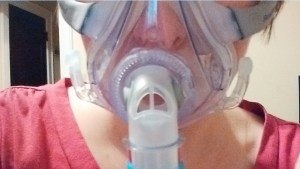
I’ve been having trouble adjusting to my new CPAP setup. The doctor suggested I get fitted for a different type of mask. The CPAP company has a guy, C, who handles this. I met with him for my original mask fitting. He came to my house to set up the CPAP the first time around. He came out to fix the CPAP when I had problems. He came back with the new setup last month. And today I saw him for another mask fitting. We greeted each other like old friends.

C showed me my two options and explained how they worked. He took his time, as if he had no other appointments. He answered every question. He never rushed me or made me feel bad for asking so many questions. Isn’t that how it should always be. But it isn’t.

I chose a new mask, excited, as always, at the prospect of improved sleep. C rummaged through a drawer, searching for the right type and size, and pulled out a new mask. He ripped open the bag, and I commented on how I didn’t expect to walk out with a new mask. He said, “This never happened,” and I grinned and agreed. It wasn’t the first time someone in the medical field had said that to me when giving me proper healthcare, and I doubt it will be the last.

The insurance coverage of a CPAP is incredibly complicated, but at best they replace the mask and tubing once every three months. The filter only gets replaced every 6 months, I think, and the machine should last for several years. I figured I was 6 weeks away from qualifying from a new mask. I asked C about that, and he explained that this never happened, and that he’d submit the paperwork next month, when the insurance would cover it. I suppose I’ll have to make this mask last longer than it should so that my supply schedule will line up with the insurance paperwork. But for now, I’m just so excited to try out the new mask tonight!

C knows his job. He knows what boundaries he can push. That’s clear. But he also clearly wants to help patients. He didn’t have to give me that mask. He gets nothing in return, except the knowledge that he’s helping me. So why did he do it?

No, that’s the wrong question. The question is, why doesn’t everyone else do it?

Nope, wrong again. The real question is, why is it necessary to do it? Why must someone break the rules to provide good healthcare? Why doesn’t our system focus on health as a top priority?

If our system focused on health, a new CPAP mask for me would be covered. So would many other things. I began to list them here, but why bother? We know what they are. I’ve discussed them so many times before. And they aren’t the point, at least not individually. It isn’t simply about what’s paid for, but an attitude. I would like medical appointments that aren’t rushed, doctors who don’t have to worry about malpractice suits at every turn, and practitioners to consult with their colleagues on every case to be sure that nothing is missed. I want to see a system where the goal of every examination, test, treatment, and discussion is optimizing the patient’s health.

Because what’s healthcare, if it’s not about optimizing health?


…and he didn’t run away

October 8, 2014

Usually when I feel especially bad I avoid people, even people who want to help me. Part of it is that I don’t have the energy to deal with being around people. Even talking is too exhausting. Part of it is that I don’t want them to see me in that state. Sometimes it’s unavoidable, and that’s why several people have seen me when I feel especially bad. But I can count that number of people on my fingers. The other night, though, was probably the first time I voluntarily let someone see me that way.

I mentioned last month that I’m seeing someone. And it’s been going well. It’s been a long time since I’ve gotten this far into a relationship. We’d known each other before so he knew I had some health issues, but it was a vague knowledge, acquired from being in the room while I spoke to others about it. But on our first date, I brought it up and answered some questions. Since then, I’ve answered more. I canceled our second date because I felt too exhausted. Our second second date was just hanging out at my place and watching a movie because I didn’t feel up to going out. He was very understanding. We haven’t been seeing each other for very long, and until this week, that was the worst I’d felt.

The other day a lot of stress and activity caught up with me and I had a BAD day. You probably know the kind. It started terrible and then got worse. I was barely getting by. We had a date planned for that night. We were just going to hang out at my place, but I wasn’t doing well. I spent the morning reading, but that became too difficult. I spent the afternoon sitting on the couch watching tv, but that became too much. I spent the evening lying on the couch, alternating between watching tv when I could and just thinking when the tv was too much. I had emailed him to let him know that I might not be up for getting together. He told me that I could let him know at the last minute. He was completely understanding. And for once, I didn’t feel any pressure at all. I knew that if I canceled, he’d understand. This was so unlike most social situations and was a huge relief!

So there I was, lying on the couch, needing to go to the bathroom for about 2 hours but not having the energy to stand up. And I knew exactly what I wanted. So at the last minute we spoke on the phone and I told him the truth: I wanted to see him, but I wasn’t sure he should see me this way. He asked, “Is this the last time you’re going to feel like this?” and I fought my natural instinct to be vague and simply said, “No.” He responded, “If this is going to work, I have to be able to see you like this.” I was floored. He was right, of course, but still…. I pointed out that since this would happen again, he could see me like this another time, maybe in a month or two when we knew each other better, but he insisted there was no time like the present to see me going through this. And he came over.

It was a bad night. I rallied for a bit around the time he arrived, but that didn’t last long. For a little while I was able to sit up while we talked. We cuddled. He held my hand, which was all I really wanted. He asked about how I was feeling and what caused it and things like that. I explained the best I could. It was hard to collect my thoughts, and he kept having to wait while I tried to form sentences. The brain fog was thick that night. We talked about other things, too. It was a good distraction. Most of the time I had to lie down. I wasn’t just fatigued, but weak. So weak. Most of the time my eyes were closed. Keeping my eyes open was too hard. Processing visual stimuli was too exhausting. So I lay there with my eyes closed and we talked. He offered to help me with household stuff, but I told him that all I wanted was for him to be there with me and hold my hand. And it was true.

It was hard for him. I could see it in his eyes, in his face, felt it in the tenseness of his muscles. I kept checking in with him, asking him how he was doing. He just kept saying he didn’t like to see me in pain. I couldn’t tell if there was more to it than that or not. But it was hard for him, I knew that much. It was especially hard when, in the middle of a sentence, I stopped talking, had trouble breathing, and grabbed my abdomen. The pain was intense. In an instant it had jumped from a 3 to a 7 on my pain scale. It came on suddenly, or so it seemed. My guess is that there were warning symptoms that I’d ignored because of the fatigue. I wasn’t able to look at him during that, so I couldn’t see his face, but I’m guessing it was surprising for him. I’d mentioned pain, of course, but he hadn’t seen it have any effect on me. Not until that moment.

He stayed with me until that pain passed and I said I wanted to go to sleep. Then he left.

He didn’t handle it all perfectly, but I doubt anyone would their first time out. He told some stories that were probably meant as a way to make light of pain and discomfort, but just sounded like he was trivializing it. He didn’t hold my hand enough. I would have loved for him to stay until I was in bed. He wasn’t perfect, but he was pretty damn close. And he seemed to handle it all ok. Still, I was nervous.

I woke up feeling significantly better. My thyroid was still swollen, my adrenals were still struggling. I was fatigued, but not weak. I ate something for the first time in 22 hours. I emailed him to let him know I was doing better, and he wrote right back. He’s a good man, a strong man, and I was almost certain he’d stick around, but of course there was that little niggling doubt. There were the voices of all of those who’d had negative experiences of this type. So I held my breath and waited, and then there it was: he casually brought up our plans for Friday night. As if it was no big deal. As if it was assumed we’d keep those plans. And I guess it was. But what a relief.

So we’ll be going out on Friday. I’m doing better each day, and I think that by Friday I’ll be able to keep our plans to go out. But I know that if I need to stay in, he’ll be ok with that too. Actually, I think he prefers to stay in. I’m the one who’d rather go out! I’m looking forward to showing him that I’m back to the way I was when he saw me last week, before that terrible night. And I want to talk to him about everything, to answer his questions, to take his temperature on this. We all have baggage. I know that. He certainly has his, too. It’s just that mine is very visible and very hard to ignore, and he had to face it early on.

Still, it’s hard not to notice that we have a date for Friday night. So far, he hasn’t run away.


When I can’t trust my feelings

September 8, 2014

I’ve noticed a pattern, and I don’t like it.

It starts out when I’m in a lot of pain or extra tired or unusually weak or suffering from some other symptom in the extreme. Sometimes I’m upset or stressed out, sometimes I’m not emotional at all. After all, I’ve been dealing with these symptoms for a long time. Sometimes I’m fairly zen about it. Sometimes not. The pattern plays out either way.

The details vary, but something or other upsets me: a friend’s comment, a lover’s actions, a parent’s advice…. something. I respond by explaining why they upset me. I think I’m being reasonable. I always address issues head-on. Only instead of the usual productive conversation, they’re hurt. They’re upset. They can’t understand why I’m so sad/angry/hurt. Their reaction is just wrong! We talk. I feel bad and I don’t know why. I apologize. And eventually I have to admit that I’m not seeing things clearly.

This happened again today. It happened 2 days ago, also. It happened several months ago. It’s happened sporadically over the years. And I don’t know how to stop it. Because I don’t know that I’m not seeing things clearly until after I say something that someone else finds hurtful or offensive. I don’t realize it until it’s too late.

Until now, the people I care about have been very forgiving. They seem to understand that sometimes I’m just not myself. They know that whatever it is, it’s not intentional. They know that when I feel better, I return to myself. They know that even when I seem irrational, I care about them. But I wonder, will something happen some day when they won’t forgive me? Will it go too far?

This has happened twice in my current flare, so I know how to be extra careful. But what happens during the next flare? Or the one after that? Who will I hurt next? Who will I accuse of doing something terrible, when they were only trying to help me? I know it will happen, sooner or later. I just wish I knew how to stop it.


Chronic illness mentoring

June 5, 2014

“My friend was just diagnosed with multiple sclerosis last week.”

She said it because she’d overheard me telling someone else about some good resources for studies that had been done, but for someone newly diagnosed, I had other advice. I told Amy that a lot of people lose their friends when they get sick and are no longer able to be as social as they had been before. I told her to make it clear to her friend that she’d be there for her, no matter what. And that she then needed to follow through. I told her that a lot of web sites indulge in fear-mongering, and that she needed to tell her friend to ignore those sites. I told her that her friend needed to talk to others with MS, but only the ones who could be realistic and encouraging, not the ones who are in denial or who will tell her that her life is over. Amy asked how her friend could find the right people while avoiding the wrong ones and I told her to do the research herself, to go on Twitter and on blogs, filter out the negative ones, and give her friend links to the better ones. I warned her that it would be scary and discouraging to see some of the writing, but that it was the best way to help her friend from hundreds of miles away. Amy said that her friend was wondering if she should leave her job and I told her to tell her friend not to give up anything before she has to; when she becomes too disabled for her current work then she can find something else, but there’s no reason to act disabled before she really is.

And then I gave her my email and phone number and told her to have her friend get in touch with me. But I doubt the friend will.

When I first started feeling sick, I felt so alone. I didn’t know anyone else with symptoms like mine. I looked in books, but I didn’t find anything. The world wide web was just coming into existence and didn’t have a lot of information. As my symptoms progressed and the internet grew, I tried again, but with no luck. Now it’s the opposite: there are too many places to turn. Someone who is newly diagnosed can easily be bombarded with information, some accurate and some not. There are scam artists and legitimate resources. There are bloggers who talk only about the worst symptoms and others who act like life will never change. There are horror stories scattered across social media like landmines. There are so-called “inspirational stories” leaving most people with unrealistic expectations of what they are expected to achieve. If you look hard enough, you just might find, hidden amongst all of that, a few people talking about the reality. They discuss the good and the bad, the easy and the difficult, and present it as fact.

What’s missing, I realized while I spoke to Amy, is a mentor. There are probably a few hanging around the web, but I haven’t met them, and I imagine they’re even harder for a newcomer to find. We see mentors in business situations all the time, but where’s the mentor for someone newly diagnosed with a chronic illness? Where’s the person to guide you when you’re scared and your family and friends don’t understand? Where’s the person to help you navigate doctors and insurance and nightmares about a scary future? I needed that when I first got sick more than 20 years ago. People need it now.

The other day it was Amy. Last month it was the woman who gave me my tetnus shot. I can’t help everyone, but I’ve decided to label myself a “chronic illness mentor” so that at least the occasional person will feel comfortable calling me. I’ll print up some free business cards and hand them out. I will make no promises. I won’t cure an illness or even make the journey easy, but I hope that I can at least make it a bit easier for people at a very difficult time.

Does this sound like a reasonable approach? How would you offer your help to people? What else do you think I should do? Please comment and let me know.
