Where’s my apology?

November 29, 2014

Apologies are powerful. They convey regret and an acceptance of responsibility. They are also hard to come by, especially, in my own experience, with doctors.

Over the years I have seen many doctors. Some have treated me well. Others did not. Some were dismissive, some were ignorant. I was told I was just trying to get attention or that I was imagining my symptoms. I was given misdiagnoses. I was dismissed. I was given unnecessary surgery, surgery that could have been avoided completely if the doctor hadn’t ignored some test results.

I received prescriptions, judgments, proclamations, criticism, and referrals. What I never got was an apology.

A simple example: I asked my doctor to run a test for something specific. He insisted on running a less expensive test. When I got home, I researched and saw that the test he ran was inaccurate for the problem I suspected. It came back negative. I paid out of pocket to have the test run myself and it came back positive. He accepted my test results but never admitted that he should have run the test in the first place. Where’s my apology? I spent my own money, did my own research, and spent many hours fretting over this. He could have just ordered the test, but didn’t.

And then there’s that doctor who did the unnecessary surgery. Where’s my apology from him? That was many years ago, but I’m still resentful that he was so pompous about the whole thing, insisted that it was still informative. I read the records. It gave no new information, but it did succeed in increasing my pain, weakness, and instability in that joint. He never apologized.

I know the medical field is wrought with lawsuits that cost doctors a lot of money and their reputations. So they need to be careful.

But we’re human beings, damn it! Patients are not just puzzles that, when you make a mistake, can be taken apart and put back together again. And if you break a piece, you can’t just throw out the whole box. And yet, that’s often how I feel I’m being treated.

I’m not looking for a 20 minute speech for each and every misstep. But when someone clearly makes a mistake that causes harm to another human being, the appropriate thing is to apologize. This is no less true for doctors. They should learn in medical school that saying, “I’m sorry” for their mistakes isn’t a mistake and it isn’t a weakness. Personally, it would make me respect them a whole lot more.


More things your doctor doesn’t tell you: temporary handicapped parking permits

October 31, 2014

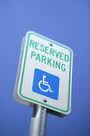
I can’t believe how many times I’ve had different versions of the same conversation. First there was this one:Handicapped Parking

Me: There is absolutely no excuse for parking in a handicapped parking space without a permit.

Him: Well, maybe there are some.

Me: No. None. There’s just no excuse at all. If you need the space, get a permit.

Him: What do you think about pregnant women using those spaces?

Me: I have had plenty of pregnant friends who could walk around just fine up to the time they delivered. They sure did better than me!

Him: Well, my sister had some complications.

Me: Then she should have gotten a temporary permit from her doctor.

Him: Oh, I didn’t know those existed!

Then came this one:

Me: There is absolutely no excuse for parking in a handicapped parking space without a permit.

Her: I totally agree. Usually. I mean, I did park in them last month when my foot was healing. But that was different. I needed it.

Me: If you really needed it then you should have gotten a temporary permit from your doctor.

Her: Oh, I didn’t know those existed!

And there have been others. Why is it so hard to understand that there is no excuse whatsoever for parking in a handicapped parking space without a permit? Why don’t people realize that if they have a legitimate need then they should get a temporary permit? Oh, that’s right, because doctors never offer them! Shouldn’t a doctor suggest to a patient with a broken foot or some other temporary condition that they get a temporary permit? I don’t know if temporary permits are available in every state, but they definitely are in Massachusetts. (If you want proof, check out #6 on this site.) But the average ambulatory person does not know this. Why would they?

Doctors should know it, though. They should know it, and they should tell their patients. I am not suggesting that these temporary permits be handed out like candy on Halloween. However, like so many other issues in the world of illness, education will help everyone. People who need temporary permits would be helped so much if they could actually get them. And people with a legitimate need to park in those spaces would be helped by people not assuming it’s ok to park there if they themselves judge their own need to be worthy.

So I will continue to say this to people, and I hope you do, too:

It’s not up to you to decide if you “need” or “deserve” to park in those spaces. If you have a legitimate need, get a permit. Otherwise, leave those spaces for people who really do need them!

Have you had similar conversations? Please share some in the comments below!


Why do you judge how I use my food stamps? An open letter to “news” writers

October 29, 2014

Dear Judgmental “News Writer,”

Since I’m too sick to work, my financial situation isn’t so great. So I applied for SNAP, formerly called food stamps. A couple weeks ago I got the letter stating I’d received the benefit. I went to the grocery store and, lo and behold, food stamps covered everything I bought, just like they’re supposed to!

But apparently, this is evil and will destroy our society. Or at least, that’s what you seem to think.

As I mentioned a couple weeks ago, I wasn’t sure what I could buy with food stamps. Toilet paper? Toothpaste? Vitamins? No, no, and no, as it turns out. The SNAP web site answered some of my questions, but not all of them. So I turned to Google and typed in a few search terms. What I found was horrifying.

10-29-2014 10-58-16 AM

This screenshot is from the first page of search results. The first few items were all government web sites. The last one here is a very useful post by a blogger. And the three in between from “news” sources? Oy! I clicked on “11 Things You Didn’t Know You Could Buy With Food Stamps” thinking, oh-so-foolishly, that I’d find some helpful tips. Instead, what I found was an insulting, arrogant, judgmental article about the horrible things people like me buy with food stamps. “5 Surprising Things You Can Buy With Food Stamps” was more of the same. So were several other articles I clicked on. Apparently, it’s everyone else’s business what I buy and what I eat.

I want to pause for a moment to note that “10 Things You Can’t Buy With Food Stamps” is wonderful. It points out that, yes, SNAP benefits are meant for food, but things like toilet paper and toothpaste are necessities that aren’t covered. Take a look when you’re done reading this.

Now, I know that people feel they have a right to say what “their” tax dollars are used for. But that’s not how society works. I don’t get to choose whether “my” tax dollars are used to pay for a war, local schools that I don’t use, or road maintenance that I don’t particularly care about (actually, I do care, but that’s another story.) The idea is that society supports society, and then everyone benefits. So yes, my tax dollars support local schools even though I don’t have children, and that’s ok because one day the children who are educated in those schools will be our police, scientists, doctors, and teachers. You see how that works? Again, we all support each other, and then everyone benefits.

Unless someone is on food stamps or getting social security or receiving some other “benefit,” at which point they’re demonized by society. By you.

Apparently writers like you feel justified in calling out someone who buys a bag of chips or a pastry with their food stamps. Oh the horror! They aren’t being healthy enough! And the “N” in SNAP stands for “Nutrition” so this can’t be allowed! You get that this is sarcasm, right?

So who defines what’s nutritious? Is that sugary cereal you feed your child nutritious? Do you know how much sugar is in a glass of milk? Is there too much salt in a frozen dinner? What about a freshly cooked rotisserie chicken? Oh wait, that chicken isn’t covered by food stamps. Ok, well what about that carton of ice cream you like to dig into after dinner on a hot summer night? Oh, it’s ok when you eat junk food because you pay for it with your hard-earned money, but I can’t eat it because I’m on food stamps? Really? What if you’re a government employee and my taxes pay your salary? Then do I get a say?

And again, who decides which foods are nutritious? Maybe you have hypertension and need to stay off salt, so a mildly salted food is bad for you. But I have hypotension and multiple doctors have told me to increase my salt intake, so for me those foods are better. Then again, sugar is a problem for me, so I need to avoid that, while a small amount of sugar might be ok for you. They say red wine has health benefits, but it’s not covered by food stamps. Maybe that should change. And dark chocolate is good for you so does that mean food stamps should cover chocolate bars? What about chocolate cake? Who draws that line? Should it be you, cocky “news writer”? A doctor? A medical board?

Or, I don’t know, maybe me, the person who is eating this food?

And by the way, what happens when, after years of gorging on unhealthy foods with your hard-earned money and righteous attitude, you get sick? Who will pay for your medical care? Who will support you if you can’t work? And how will you buy food if you can’t work? You better come up with a plan that doesn’t involve any government support or “benefits” because you’ve made it quite clear how you feel about those!

Now if you’ll excuse me, I’m off to have some homemade chicken with apricots, rice, and steamed green beans. Followed by a bag of Cheetos. Because I want them and it’s my choice, not yours.


Period period period period. Period.

August 11, 2014

Approximately half of the population on this planet gets, has gotten, or will get a period. And yet for some reason no one talks about it. What the fuck is up with that?

A couple weeks ago I was eating lunch with some follow chronic illness folks. Between us we had two cases of hypothyroid, Hashimoto’s disease, endometriosis, neuropathy, herniated disks, PCOS, 2 cases of Celiac Disease…. and a bunch of other diagnoses. We were 4 women and 1 man. At one point I turned to my friend with endometriosis and excitedly told her that I’d gotten my period the week before. She congratulated me. Then I explained to the others that I was excited because before that I hadn’t gotten it for 7 or 8 months. The women congratulated me. The man squirmed. Now, I can understand a teenager being uncomfortable, but a man in his 50s or 60s who’s been married for years? I just don’t get it.

There are plenty of situations where it’s not appropriate to discuss my period. I’m ok with that. But if it’s ok to talk about my chronic pain, then I can talk about my period. If it’s ok to talk about my nausea, then I can talk about my period. If it’s ok to talk about being pregnant, then I can talk about my period. And I will if it’s relevant. I won’t censor myself on this.

There are cultures where a woman* is shamed for having a period, where she’s considered dirty. In some cultures, men can’t touch women while they’re having their periods, even married couples. In some cultures, girls have to cover their bodies from head to toe when they get their periods. In my culture here in the U.S. it simply isn’t discussed except in the patronizing and dismissive form of an upset woman being referred to as being “in her time of the month.” Now, it’s true that some women get more emotional around the time of their periods. Not all women do. And women, like men, can feel emotions at other times as well. Imagine that!

The squirmishness can’t be from the blood. Sure, some people have issues with blood, but that usually involves seeing the blood. Most people don’t get as squirmish when I mention a bloody nose as they do when I mention my period. Hmm. So maybe it has to do with discussion of women’s bodies. No, it can’t be that general. No one seems to mind if I mention something about my arm. So maybe it has to do with women’s reproductive systems? Could be. Legislators are regulating birth control pills and abortion but not condoms or Viagra. Many citizens think this is ok. Others may be against it, but won’t discuss it. The Vagina Monologues came about because many people won’t speak the word vagina. I admit, there was a time when I was embarrassed to say the name of the show. But by my early 20s I was over it. I wish everyone else would get over it. Because women have vaginas. And, oh-so-shockingly, women have periods!

Let’s get something straight: every single person on the planet came into being because of a woman’s fertility. Think about that for a moment. Has it settled in? Are you ready for the next revelation? Part of a woman’s fertility cycle almost always involves getting a period. Think about that a bit. Makes sense, right? A woman’s period, after all, has to do with an unfertilized egg shedding the uterine lining. They’re connected. So everyone should be grateful for women’s periods! Would you have been born if your biological mother had never had a period? Maybe. It’s possible. But it’s not likely. So be glad that women get periods! Period.

Ok, it’s your turn. Speak up! How do you feel about this subject? Do you think women should be able to openly mention their periods, especially in medical contexts, without people saying it’s gross? If you have two x chromosomes, do you discuss your period if it’s relevant? If you have a y chromosome, how do you feel when women discuss their periods?

*I’m referring to cisgender women, for the sake of simplicity. Obviously trans women don’t always have vaginas. And trans men might have vaginas. And there are plenty of genderqueer folk who don’t identify as either men or women.