The real reason I became loud and pushy: self-preservation

May 18, 2015

We’re taught to be polite. We’re taught to be respectful. But what happens when being polite and respectful is killing you?

I mentioned to some friends recently that I didn’t used to be loud and pushy. In fact, I was quiet and rather meek for a long time. They were shocked. If you’re a long time reader, you might be surprised, too. They couldn’t imagine me ever being shy about speaking my mind. But they didn’t know me before.

I was a shy child. When an adult, even a well known friend of my parents, spoke to me, I would hide behind my mother’s legs. I got past that, as children do, but I was always shy about expressing my opinions. I hated raising my hand in class, even when I knew I had the right answer. Bit by bit I started raising my hand and volunteering thoughts and ideas. Still, I was never pushy about it. I would tell my boss what I thought, then go with whatever he decided.

There was no one moment when that changed. It was a gradual thing that snuck up on me over time. Then one day, someone else brought up the need to be pushy with doctors, and I had a sudden flash back to the days when I was timid, and I realized I wasn’t like that any more.

I was a child when I had my first symptoms, so I did what my parents and my doctors said to do. It was always some combination of Advil, heat, ice, support braces, etc. None of it worked. Still, complaining made things worse. I learned early on that if I was too insistent about things, I’d be ignored. I was lucky that my parents never ignored me, but certain doctors and teachers did. Several openly suggested I was making the whole thing up.

As I became an adult, I still wasn’t taken seriously. And even when the doctors took me seriously, I still received poor care. I got shuttled between doctors within an insurance-induced maze and continued to get worse and worse. I was told not to come in any more. I learned to speak up for myself in college, where the disability support services were horribly lacking. I pushed for what I needed to succeed in class, but only within the strict bounds of cultural politeness.

In my early 20s I had an unusual ability to see a doctor of my choosing for a short time. I won’t get into the insurance loophole, but I found it and used it. For the first time, I took things into my own hands against the advice of my doctors. And for the first time in 11 years, I got a diagnosis. That was my first taste of how going against the grain could help me.

Somewhere in my late 20s or early 30s, I started to stand up for myself more. When doctors would bend my hand and ask, “Does this hurt?” and I said yes, they would still try to do it again, but unlike a decade before, I pulled away. I argued with insurance representatives, even when it did no good. I tried to get better care. I was still being polite most of the time, but I was pushing that boundary more and more.

Around this time, my health took a dive. The doctors said they couldn’t do anything. I knew I had to take over. If I didn’t, what would become of me? If that wasn’t enough, I was fighting with a disability insurance company and with social security for benefits that I knew I deserved. It felt like my life was falling apart. It was do or die, probably literally. So I did. In an effort for self-preservation, I stood up for myself. When a doctor didn’t want to run a test, I asked why. When they gave a reason, I debated, using the facts I had learned through my own research. When my primary care physician didn’t want to give me a referral to a specialist I suspected could help (and he later did!), I switched doctors. I interviewed doctors at the first appointment to see if I would stay with them. I asked for more tests, more treatments, more of everything that I thought could possibly help me. I was polite when that seemed to be the most likely way to get what I wanted, and I was rude when that seemed the better way to get what I wanted. I argued, pleaded, and even yelled. I stopped short of becoming abusive, but otherwise, I pushed hard.

Pushiness has carried over into other parts of my life. I’m sure some people find it annoying. Others find my forthrightness refreshing. I find it necessary.

I don’t know when being pushy became my default setting, but it did. And it probably saved my life. It’s not the best route for everyone, but for me it was the only way I could find.


What to do when the medication is gone?

May 13, 2015

Like many people with autoimmune diseases, I have a lot of overlapping conditions and many symptoms. My most limiting and disabling symptom right now is fatigue. The fatigue is caused by several things, among them strained adrenal glands. There have been just two things that have helped the fatigue, and I may lose both. Then what will I do?!

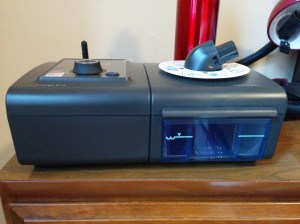
First, I have a form of sleep apnea. I got a CPAP machine that helped a lot!!! I loved that thing! Unfortunately, I 2014-04-23 11.03.16
developed a complication and now I can only use it for about an hour every other night. Don’t even get me started on the frustration with that! I’m still working with my sleep doctor on that, but he admits there are limited options for this particular issue, so I may just be stuck. Treating my sleep apnea would help a lot, and might be good enough that I wouldn’t need the other thing that’s worked.

The other thing is an over-the-counter supplement called Isocort, made to support the adrenal glands. It’s been amazing for me! A tiny pill or two makes me able to function fairly well every day! Sure, I’m not about to go jogging, get a job, or clean the apartment, but I can run errands, socialize, and just feel ok. I love it! Unfortunately, they stopped making it. When they stopped, patient communities online were very upset. It was the go-to nonprescription solution for adrenal insufficiency. The prescription solution is a steroid, which causes all sorts of problems for many of us. When production stopped, everyone floundered. They found alternatives with varying success. I tried a form of the most popular alternative. It helps a bit, but not at all like the Isocort did.

I now have a 4-6 month supply of Isocort left. And then what? Will I have to go back to feeling that constant strain to function?

So now I feel stuck. I have some more options, but they feel unlikely to work at best. If Isocort was still in production I wouldn’t be worried. Sure, I wouldn’t want to be on it for the rest of my life for various reasons, but I’d be glad to use it for a few years if it helped. Oh, if only!

I’ll try more Isocort alternatives. I’ll keep working with the sleep doctor. But what will I do if they all fail?


Is it possible to rent an apartment near Boston with a therapy dog?

May 6, 2015

I have always wanted a dog. I grew up with a dog, and ever since he died when I was 11 years old, I’ve wanted another.

3-27-2015 4-01-42 PM

Sometimes I’m lucky enough to get to babysit for this cutie!

In my 20s I knew I didn’t have the right lifestyle for a dog. I worked long hours and traveled a lot and, if I’m being honest, the truth is that I just wasn’t ready for the responsibility. Then when I got so sick I had to leave my job, I was home a lot. I stopped traveling. But I was so sick that I could barely take care of myself, never mind another being.

Now it’s different. I’m still too sick to work, but I’m doing a lot better. I’m more stable. I’m taking care of myself ok. And I really really really want a dog. I ache to have a dog. Literally. When friends talk about their dogs, I ache to be in their shoes. When friends post photos on Facebook of dogs that need adoption, I ache to take those dogs home. I’m so ready to have a dog. And I’ve been mostly sure I could handle taking care of a dog, except for the walking part. Dogs need exercise, but some need more than others. I could get a dog that doesn’t need much exercise. I’ve been working hard at walking most days, and I’m taking short walks about 6 days a week! (Woo hoo! Those of you who’ve been reading this blog for a while know how big this is!) But dogs need to pee and poop more than once a day.

So I felt there were three big obstacles to me getting a dog:
1) Walking.
2) Money.
3) My landlord.

Then something changed. I was talking to a friend this week about how much I want a dog and my concerns about walks, and she suggested training one to use a litter box. Many people have suggested that, but it sounds ridiculous. The thing is, she did it! She had a dog that used a litter box! She also had a friend who did it. So maybe it wasn’t that ridiculous after all? I looked it up online and found some great resources. There’s even special litter for dogs! This totally solves problem #1!!!

Now, let’s assume I can handle the money aspects. Those are a real concern, but I’m working on them.

That leaves my landlord as the final obstacle, and I can’t imagine how I can possibly overcome that problem. You see, Boston is a pricey city. (When I say “Boston” I mean the neighboring towns, too. Just fyi.) There’s also a very low rental vacancy rate. This means that rents are high and landlords have a lot of power. I won’t get into all the details of the effects of the Recession on the housing market, etc. Just believe me when I say this is a tough place to be a renter. And the vast majority of landlords don’t allow dogs. Including mine. (My landlord doesn’t allow cats, either. And I believe birds are also off limits.)

Remember back in February when I said I was looking for an apartment? Well I did. I looked. And I gave up. I’ve been in my current place for many years, and my landlord hasn’t been raising my rent as much as they could. I pay a lot less than new tenants in my building. So even though I was looking in a less expensive area (where I’d rather live anyway) I couldn’t find anyplace as nice as mine. And I wasn’t even looking for a place that allowed dogs!

“Wait, what if it was a therapy dog?” you might ask. A lot of people have asked that. And yes, by law all landlords have to allow therapy pets. I would have no trouble getting my doctor to write the necessary letter. In fact, she has previously said that I should consider getting a pet because it would help me. So let’s assume I got the letter and I had a therapy pet. Now by law my landlord can’t kick me out, right? Sure, but they can “forget” to fix things in a timely manner. And when my lease comes up for renewal, they can raise my rent to what my neighbors pay – $300 a month more! I wouldn’t be able to claim discrimination if others pay that much. And future landlords might be just as difficult…. if I could even find a new place to live! Remember, I already looked at apartments last winter. Yes, there were places, but do I really want to live someplace smaller, darker, and louder just so I can have a dog? I’m not sure.And what if that place didn’t work out either? I really don’t want to move constantly.

So now I’m wondering, what’s the reality of living with a therapy dog when you rent an apartment? Do landlords retaliate? Or do they actually accommodate you the way they should? I know that no one person can speak for all landlords, but I would really love to hear about people’s experiences to find out if this is even possible. If you have a therapy dog and you rent an apartment, how has it been for you?


What doctors learn from us

April 19, 2015

Most of my doctors work at one of Boston’s teaching hospitals, so I sometimes have a student or intern in the room during my appointments. This past year, there was a fellow, Dr. N, working with the doctor who I see for my sleep problems. The fellow has been really great, and I’m sad that he’s leaving in June when the fellowship ends. Before he leaves for an exciting new position, I wanted to tell him how great he’s been. But he beat me to it!

At my last appointment, I pointed out that I probably wouldn’t see him again, and he looked sad and reached out to shake my hand. Then he said, “I’ve learned a lot from you.” I was completely shocked. He was being very sincere. I could tell that he really meant it, that he had learned a lot from me. I was truly touched.

I hadn’t thought much about him learning from me. I had been thinking about all I wanted to say to him about what a great doctor he is. I still told him, and I gave him specific examples. I asked that he try not to lose his enthusiasm and caring over time.* He blushed deeply and said he wouldn’t. I hope what I said sticks with him. What he said sure sticks with me. But in that moment, as I was thinking about what I wanted to say to him, I was caught off guard and didn’t know how to respond to his statement. Now I’ve had some time to consider it.

I try hard to convince doctors to be open-minded and understanding, but I forgot what an impression I might make on doctors who are completely new to the field. With Dr. N, it wasn’t just about open-mindedness and understanding. That was part of it, but I think I showed him what a chronic illness patient really looks like. I’m guessing he hadn’t seen many yet, and probably few like me who are so proactive no-nonsense. He saw my resilience and determination. He also saw my fear and anxiety. He heard me say I was willing to try anything, but push hard to prioritize non-pharmaceutical options. He saw me work incredibly hard and try many options, even the ones I clearly disliked or feared. He received many emails from me as I tried to improve my health, emails that were always short, to the point, and respectful. He saw me struggling to stay awake in appointments while trying to joke and keep the atmosphere friendly. He heard me state my symptoms methodically, without complaining about them. He heard me emphasize the disabling aspect of my symptoms in an effort to be taken seriously, even when no one expressed doubt, and I’d like to think he understood why I felt the need to do that. In a short time, he saw and heard so much.

I don’t know what exactly Dr. N meant when he said he’d learned a lot from me. I can only guess. But I would like to think that at least one new doctor now understands more about what chronic illness patients deal with, and will show them the compassion and understanding that we all deserve.

*Note: Dr. N really was fantastic. He went out of his way to do everything he could to improve my health. On top of his magnificent efforts and attitude, he was also very knowledgeable without being arrogant. I hope he goes on to be the amazing doctor that I suspect he’ll be.