I’m allowed to wallow in self-pity

May 28, 2015

I resent the idea that I should never spend a few days feeling sorry for myself. I see no reason why I shouldn’t be able to do that without judgement.

First, I’ll say that this is how I feel about my own self-pity. It’s different for everyone. I make no judgement on you just like I want no one else to make a judgement on me.

I set a few rules for myself. If I ever seriously consider suicide, I need to seek help. If it lasts more than 3 days, I need to pull my way out of it. If it leads to me not taking proper care of my health in a way that will have effects that last beyond those few days, I need to stop. I need to not feel bad or guilty about it. I need to let myself have my feelings.

That’s it. Those are my only rules.

Yesterday was one of those days. I was having pain in a new joint. Every 3-5 years this happens, and the pain is permanent. A long time ago I stopped hoping it wouldn’t be. So when I felt that all-new-yet-totally-familiar pain, I knew exactly what it was. And I was devastated. On top of that, it’s been humid lately, which means I just feel shitty in general. My pain is worse, my fatigue is worse, it’s all terrible.

Just 2 hours after the pain started I was sitting in my naturopath’s office describing it. The timing of that appointment was a tough coincidence. I started crying. One thing led to another, and she started offering me a homeopathic remedy to calm me down. She was careful with her words. She never mentioned “anxiety” or “depression” or anything similar, but obviously that’s what we were talking about.

Now, I understand why she wanted to calm me down. My adrenals are struggling. My pulse was low. My blood pressure, which is normally low, was so low that she couldn’t even get a reading after three tries. It wasn’t good. Crying like that would only make my adrenals worse. I get that.

But I also felt judged. Maybe it was all in my head. Maybe not. But that’s how I felt. The way she talked about my need to calm down and not lose hope didn’t sit right with me. And I resented it. Because I had every reason to feel bad.

Most days, I’m pretty happy and cheerful. On the bad days I’m less so. Occasionally I’m in a bitchy mood, but not too often. But every now and then, I just need a day or two of wallowing in self-pity. I’m dealing with life-long pain, fatigue, and disability. I spend hours every day dealing with my health in one way or another. My social life is planned around medical appointments, timing of medication, and how I think the weather will make me feel on any given day, among a dozen other things. Dates are too difficult to be fun. Making new friends feels like climbing a mountain, because they just don’t understand my limitations. I will be dealing with for this the rest of my life. It will most likely get worse over time, not better. I can’t work, and I can’t afford to live without a job. I don’t have the money to move to a nicer apartment, to get a dog, or to go to the theater. Technically I don’t have the money to pay my electric bill right now, either. I can no longer travel. I miss my friends who live farther away. My memory sucks. I have trouble remembering big events in my life, what I did last week, and the plot of the book I’ve been reading. I spend hours dealing with doctors, insurance companies, and pharmacies. I sit around the house wanting to be productive and get things done, and I just can’t do it.

Oh, and by the way, I also happen to feel like absolute shit.

So I give myself a few days to feel crappy. I feel sorry for myself. I feel like none of the treatments that I work so hard on will ever help me improve. I cry if I want to, I don’t cry if I don’t want to. I avoid going out. I avoid talking on the phone. I feel pissed off at the doctors, at my body, at the world. My anger and bitterness are so strong, you can practically see them vibrating off of me.

And that’s ok. I see absolutely nothing wrong with it. I know it won’t last. I just need to get it out of my system. I need to have a few cumulative weeks every year where I feel this way so that the rest of the time I don’t. That’s what works for me. And if it bothers others, well, then they need to deal with that themselves. They can’t put it on me. Because that’s not my problem. I have enough problems of my own to deal with, as it turns out.


Healthcare fail: the diagnosis that wasn’t

May 24, 2015

The details may change, but the gist is the same. The symptoms are there, the request made, the answers not given, the diagnosis left unmade. It’s happened to many of us. It’s happened to me several times, actually. I’m still wondering how it happened with my Celiac Disease. Of course, technically I haven’t been diagnosed with Celiac to this day….
The first doctor ignored me for a while. When I was insistent that I wanted to be tested for lactose intolerance he said there was no test for it. Instead, he had me keep a food and symptom journal. He sent it to a nutritionist, then reported back that I didn’t have lactose intolerance. He didn’t care to investigate further. Last year I found the nutritionist’s letter in my records. She’d said it didn’t seem to be lactose intolerance but there was clearly something going on and she wanted to see me. I never got that message.

Then there was the gastroenterologist who diagnosed me with IBS after 2 minutes of a 10 minute appointment. He gave me a prescription to take before meals. Funny, but those pills never seemed to help. A couple years later I found a guide to an IBS diet on my own and followed it the best I could.

Another doctor took me seriously, at least, but was woefully inadequate. He ordered a colonoscopy to rule out Crohn’s, since an aunt had that. It was ruled out and my symptoms continued to be attributed to IBS. Well, my gastrointestinal symptoms did, anyway. It was assumed my other symptoms were completely unrelated. How convenient for them. How horrible for me.

Then there was another gastroenterologist. She did an endoscopy. I wonder if she checked for Celiac? I would hope so, but she never mentioned it. She said she was checking for reflux. She doesn’t practice any more and I haven’t had a chance to find her notes in my hundreds of pages of records. But I do remember her diagnosis: IBS and reflux, plus something else that she wasn’t sure of, but I shouldn’t be too worried. I’m not kidding! That’s what she said! She said that my symptoms could not be entirely explained by IBS and reflux so there had to be something else. I was sure I didn’t have reflux. My aunt and grandmother had it, and my symptoms weren’t anything like theirs. Still, I took the pills she prescribed. And I got worse. Sigh.

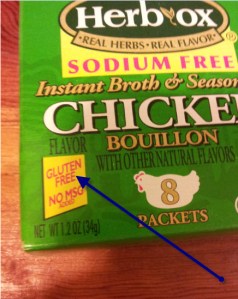
At last my rheumatologist suggested I should get tested for Celiac. In hindsight, I can’t believe no one suggested it sooner! I have classic symptoms. It even took my rheumatologist a while – I’d been seeing her for several years when she brought it up. I resisted, of course. I didn’t want to give up my favorite foods. And I was scared. Anything with food was scary, since I was so sick so much of time. Still, I might have let her run the test. If only she could. Her department didn’t let her run any tests that weren’t part of her specialty. The computer system didn’t even offer it as an option! She could run my blood count and ANA every day of the week, but no Celiac tests.

On the bright side, she put the idea in my head. That meant I was more open to it several years later when I was doing hypothyroid research and came across the link between Hashimoto’s Disease (autoimmune hypothyroid) and Celiac Disease. Many Hashi’s patients have Celiac or gluten intolerance, so some professionals recommend a gluten free diet. Hmm. It made sense. After reading that same advice from several different sources and thinking about my symptoms, I knew I had to give it a try.

I talked to my new PCP (primary care physician), who didn’t think I needed to worry about it. She hadn’t heard of the link and seemed doubtful about the research I had come across. She dismissed my symptoms as being IBS. Going gluten free was the new fad diet. I told her I wasn’t doing it as a trend or to lose weight. I pushed her, and she gave me the necessary referral to see a nutritionist. She didn’t run any tests.

The nutritionist took me seriously. She gave me useful information. I was on my way.

I knew that if it worked, I’d have to eat gluten again in order to be diagnosed. I was looking forward to it; I’d get to eat my favorite foods again for weeks! How great! You see, after being gluten free for a while the antibodies die down and the intestine heals, so there’s no way to run an accurate test. The only way is to eat gluten again. The better way is to be tested before going off gluten in the first place.

Eating gluten sounded great at first, but something changed. I stopped feeling nauseated every day. My diarrhea almost completely disappeared. The cramps were gone. The gas and bloating went away. The pain that put me in agony, pondering if death would be better, was no longer a weekly or bi-weekly occurrence. I was free! I could live! I could go to the park for the day without worrying about not being near a bathroom! I could join friends for meals without worrying about being sick for hours afterwards!

Yes, I occasionally get glutened and it’s all kinds of horrible. That pain and nausea and diarrhea all return with a vengeance, but at least I know that it’s temporary. The worst of it lasts a few hours, and the lesser symptoms linger for a few days. I know from experience that it could be so much worse. And most days, I don’t have any of that! I’m grateful every single day that those symptoms are gone.

It hasn’t been easy. Eating out is all kinds of challenging now. But it’s completely worth it. It’s so worth it, that I have no desire to eat gluten for even one day, never mind for the weeks that would be required for testing. I’m incredibly careful to avoid even a tiny amount of accidental exposure. I’m not about to do it intentionally. So I remain untested. Maybe I have gluten intolerance. Maybe I have Celiac Disease. Does it matter? Either way, I’ll be avoiding gluten. (And yes, the difference matters because of secondary issues, but I’m still not going to get tested.)

Unfortunately, though, damage has been done. After what I suspect was 18 years of undiagnosed Celiac Disease, I got pretty damn sick. I’ve been reading about how some researchers believe untreated Celiac can lead to Hashimoto’s Disease, which I developed. Hmm. And we know that my poorly treated Hashimoto’s led to adrenal insufficiency. And that led to me having to leave work. I don’t think untreated Celiac caused all of my health problems, but it sure led to a lot of them.

I try hard not to dwell on the “what ifs” in life, because it doesn’t help. Still, from time to time, I wonder what would have happened if that first doctor had taken me seriously 20 years ago. Could I have avoided most of this?

Or course, there’s also the flip side: what if I had listened to my doctors and believed that my problems had nothing to do with gluten? How much sicker would I be right now?


What to do when the medication is gone?

May 13, 2015

Like many people with autoimmune diseases, I have a lot of overlapping conditions and many symptoms. My most limiting and disabling symptom right now is fatigue. The fatigue is caused by several things, among them strained adrenal glands. There have been just two things that have helped the fatigue, and I may lose both. Then what will I do?!

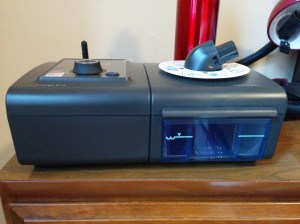
First, I have a form of sleep apnea. I got a CPAP machine that helped a lot!!! I loved that thing! Unfortunately, I 2014-04-23 11.03.16
developed a complication and now I can only use it for about an hour every other night. Don’t even get me started on the frustration with that! I’m still working with my sleep doctor on that, but he admits there are limited options for this particular issue, so I may just be stuck. Treating my sleep apnea would help a lot, and might be good enough that I wouldn’t need the other thing that’s worked.

The other thing is an over-the-counter supplement called Isocort, made to support the adrenal glands. It’s been amazing for me! A tiny pill or two makes me able to function fairly well every day! Sure, I’m not about to go jogging, get a job, or clean the apartment, but I can run errands, socialize, and just feel ok. I love it! Unfortunately, they stopped making it. When they stopped, patient communities online were very upset. It was the go-to nonprescription solution for adrenal insufficiency. The prescription solution is a steroid, which causes all sorts of problems for many of us. When production stopped, everyone floundered. They found alternatives with varying success. I tried a form of the most popular alternative. It helps a bit, but not at all like the Isocort did.

I now have a 4-6 month supply of Isocort left. And then what? Will I have to go back to feeling that constant strain to function?

So now I feel stuck. I have some more options, but they feel unlikely to work at best. If Isocort was still in production I wouldn’t be worried. Sure, I wouldn’t want to be on it for the rest of my life for various reasons, but I’d be glad to use it for a few years if it helped. Oh, if only!

I’ll try more Isocort alternatives. I’ll keep working with the sleep doctor. But what will I do if they all fail?


There’s no cure for me and you need to accept that

April 29, 2015

It used to happen more often. A well-meaning family member or friend would mention something about a cure “one day” and about me staying hopeful. Over time, those comments gradually ceased. I made it clear I didn’t want to hear it and they probably began to accept that it was unlikely.

Last week, though, a well-meaning relative made one of those comments. I was caught off guard, since I hadn’t heard it in so long. I tried to explain there won’t be a cure. In fact, no one is even researching a cure right now! And even if they were, and even if they were on the right track, it would be a long time before that cure was commercially available. Hell, few of my conditions are even being researched for potential treatments, never mind cures! But he kept trying to say it could happen, I couldn’t be sure, it was possible, etc.

Now here’s the thing about hoping for a cure: it makes the other person feel better. They can see how poorly I’m doing at a given time, and think that one day down the road I’ll be better, and it comforts them. I get that. And if they want to believe it, they can go ahead. What I don’t want is for them to discuss it with me. If I believed there was a cure coming then yes, I might be comforted, but I don’t.

My pain started when I was a kid. For many years my family, friends, and doctors told me that it would be ok, that I would get better, that the pain would go away. It didn’t. It’s been more than 2 decades and the pain is even more prevalent now than it was then, plus I have even more symptoms. “It will be ok” became a lie to my ears. I couldn’t believe it any more. I still don’t.

So talking about a cure isn’t helpful for me. Yes, I admit there might be a cure in 20, 30, or 40 years. But in the near future, no, there won’t be a cure. I’ve come to terms with that. I’m ok with it. Well, sure, I’m not thrilled. Yes, I want to feel better and travel and ride a bike, and pick up my nieces and nephews and do all those other joys in life that I can’t do any more. But I have accepted my reality. Now I just need everyone else to accept it. Or to at least not talk about cures when I’m around.