When I can’t trust my feelings

September 8, 2014

I’ve noticed a pattern, and I don’t like it.

It starts out when I’m in a lot of pain or extra tired or unusually weak or suffering from some other symptom in the extreme. Sometimes I’m upset or stressed out, sometimes I’m not emotional at all. After all, I’ve been dealing with these symptoms for a long time. Sometimes I’m fairly zen about it. Sometimes not. The pattern plays out either way.

The details vary, but something or other upsets me: a friend’s comment, a lover’s actions, a parent’s advice…. something. I respond by explaining why they upset me. I think I’m being reasonable. I always address issues head-on. Only instead of the usual productive conversation, they’re hurt. They’re upset. They can’t understand why I’m so sad/angry/hurt. Their reaction is just wrong! We talk. I feel bad and I don’t know why. I apologize. And eventually I have to admit that I’m not seeing things clearly.

This happened again today. It happened 2 days ago, also. It happened several months ago. It’s happened sporadically over the years. And I don’t know how to stop it. Because I don’t know that I’m not seeing things clearly until after I say something that someone else finds hurtful or offensive. I don’t realize it until it’s too late.

Until now, the people I care about have been very forgiving. They seem to understand that sometimes I’m just not myself. They know that whatever it is, it’s not intentional. They know that when I feel better, I return to myself. They know that even when I seem irrational, I care about them. But I wonder, will something happen some day when they won’t forgive me? Will it go too far?

This has happened twice in my current flare, so I know how to be extra careful. But what happens during the next flare? Or the one after that? Who will I hurt next? Who will I accuse of doing something terrible, when they were only trying to help me? I know it will happen, sooner or later. I just wish I knew how to stop it.


I lost thousands of dollars of financial assistance because I didn’t understand the system

August 30, 2014

I grew up in a middle class family and lived a middle class lifestyle after I left my parents’ home. I earned a decent enough living. There was a lot I couldn’t afford, but I never worried about paying rent or buying food.

Then I got sicker.

It’s been a roller coaster since I left my job almost 3 years ago. I had short term disability benefits, then nothing, then long term disability benefits, then nothing, then social security disability benefits. During the long periods of “nothing” I knew there was the possibility of getting long term disability benefits and/or social security disability benefits (SSDI.) I didn’t know what I’d end up with, so I didn’t know how to plan. And besides, I kept hoping that I’d return to work soon.

Now I have SSDI and no thoughts of returning to full time work very soon. I hope to do some part time work to supplement SSDI, but even that has to wait until I feel a bit healthier. And I just can’t live on my current benefit and keep my current lifestyle. After paying for food, transportation, utilities, and, especially, medical expenses, I have about $100 per month left for rent. Obviously, that won’t work. Even if I got roommates. So what are my options?

  • I could move in with my parents. They’d take me in. I’d have to move an hour away from all of my friends and doctors and be a 30-something living with my parents, but it’s an option.
  • I could buy a condo. I still have savings from back when I worked. Unfortunately, I’m spending them on rent now. Instead, I could buy a condo. But then I’d have HOA fees ($200-300/month) and upkeep, and I don’t have the budget for that.
  • I could buy a house. But then I’d have a mortgage and upkeep. No good.
  • I could buy a 3-family house. I could live in one apartment and rent out the other two and use the rental income to pay the mortgage and upkeep costs. This has some appeal. I’ve looked into it. But 3-family homes are really expensive around here, and even if I felt comfortable taking on such a big mortgage, I wouldn’t qualify for it. And I’m not ready to move out of the Boston area.
  • I could push myself to go back to work before I’m ready. But obviously that has disaster written all over it.
  • I could just keep on spending my savings and hope I’m well enough to return to work before they run out.

I’ve been sort of stressing about this. I feel like there should be another option. And then talking to a fellow disabled friend yesterday, I found it: financial assistance! When I left my job two years ago I looked into my options for help, but I was stuck trying to interpret things online myself. I didn’t know who to ask for help. I checked around with friends, but it wasn’t helpful. And since I didn’t know what my financial position would be going forward, I gave up. Bad move.

On Tuesday, as soon as the long weekend is over, I’m going to visit my local house authority and sign up for section 8 housing. The waiting list is long, and I’m pissed as hell that I didn’t sign up 2 years ago. I could have already been on the waiting list for 2 years! Since the wait is longer than that, I should have done it. But I didn’t realize. I thought that if I got long term disability benefits, I’d get kicked off the list. And I didn’t want to have to live in section 8 housing. As it turns out, those LTD benefits would have still had be below the income limit. Who knew? And many section 8 vouchers allow you to live in any housing, as long as it meets certain requirements (generally that it’s around the median rental rate for your area, and not some huge luxury unit, and that it’s well maintained and habitable.)

And then my friend told me more: I qualify for fuel assistance! Having heat isn’t optional in Boston. Without it, pipes freeze and burst. Even more, you can freeze to death. You must have heat. And apparently I can get help paying for it, even though it’s included in the cost of my rent! She also said she gets help paying her electric bill – that had never occurred to me! Best of all, she told me where to go to find out more about these resources.

Since it was a Friday evening, I couldn’t call any of the offices, so I went online. Now that I knew where to look and what to look for, there was so much information! She got the information from her local housing authority, so I found their web site, then the site for my town’s housing authority, and I just followed the links from there. I still need to talk to someone to get questions answered, but boy do I feel better. If only I’d done all of this two years ago, though! I’m kicking myself that I didn’t.

I’m including below some of the useful links I’ve found so far. Clicking these links will open up new windows. As I find more, I’ll add them later. These are for Massachusetts. If you’re in the U.S., maybe these will help you find similar resources in your own state.

I’ve already missed out on thousands of dollars of financial assistance by not signing up for all of this two years earlier. What about you? If there’s financial assistance you could be getting, don’t make my mistake! Sign up now! And please help me make further mistakes by telling me what else I should be doing!

What other financial assistance should I be looking for? I welcome any and all advice!!

~~~~~~~~~~~~~~~~

Section 8 centralized waiting list: https://secure.massnahro.org/Section8LHA_Internet/WebPages/Registration/Home.aspx

Types of rental assistance: http://www.mass.gov/hed/housing/rental-assistance/

Fuel assistance agencies: http://www.mass.gov/eohhs/docs/dta/c-dta-fuelassist.pdf

Fuel assistance overview: http://www.massresources.org/liheap.html

Section 8 explanation: http://www.masslegalhelp.org/housing/types-vouchers

SNAP food assistance: http://www.mass.gov/eohhs/gov/departments/dta/food-assistance.html


Sometimes health giveth, and sometimes health taketh away

July 26, 2014

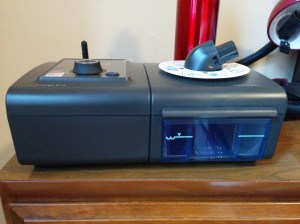
My CPAP machine broke. It’s not the worst thing that has ever happened to me health-wise, not the worst by far, but it sucks.

For a long time, probably years, I had undiagnosed and untreated UARS. It’s a form of sleep apnea. And it sucks. Oh wait, did I say that already? Oops. Anyway, when I started using a CPAP machine several months ago, I noticed a difference very 2014-04-23 11.03.16quickly. Within a week I had more energy. Over time I found I was sleeping deeper and feeling better. I was even breathing better during the day!

That why I was so disappointed when my CPAP wasn’t working as well last month. I thought I needed a new mask (I probably did – they only last about 3 months.) Thanks to insurance issues, it took a while to get a new mask, but by then, the machine didn’t seem to be working well at all. The company that provides the CPAP said they’d reset the settings. Problem solved! Or so I thought. Basically, the damn thing seems to be broken.

The CPAP is under warranty, so I’ll get a new one on Monday. I have an appointment. But in the meantime, I’m a wreck. After the first few nights of poor sleep I was definitely more tired than usual, but I was still functioning fairly well. Then last night it hit me. I’m completely fatigued. It’s hard to breath. My throat hurts. Sitting up to read takes too much energy, and typing this is a Herculean effort. As soon as I hit publish, I’ll need to lay down. I feel like I’m coming down with the flu, but I know I’m not. I know I’m not because I used to feel this way when I slept especially badly in the pre-CPAP days.

Thankfully, I don’t have anything too big happening in the next few days. I had to cancel some plans today. Friends have graciously agreed to come to my apartment tonight so I don’t have to go out. I’d hate to miss out on tomorrow’s activities, but if I do, it’s not the worst thing. I just hope I’m well enough to drive to get the new machine on Monday!

And I’m thankful for my health insurance.

Let’s face it, health insurance in this country sucks. Today is a great reminder of how bad my health was before, and how bad it would be without the CPAP. Without insurance, I would never have been diagnosed with UARS, and I certainly wouldn’t be paying for the CPAP machine. Without insurance, my condition would just continue to deteriorate. I won’t even think about what would happen with all the rest of my health conditions. I’ve ranted about the politics around health insurance before (just check out the politics category if you’re interested) so I won’t do that right here, but for those of us fortunate enough to have at least some semblance of healthcare coverage, let’s remember how lucky we are. Let’s hope we remain so fortunate. And let’s pressure our politicians to make sure others can receive care as well. Because no one should feel so horrible when there’s a perfectly good treatment available.


Chronic illness mentoring

June 5, 2014

“My friend was just diagnosed with multiple sclerosis last week.”

She said it because she’d overheard me telling someone else about some good resources for studies that had been done, but for someone newly diagnosed, I had other advice. I told Amy that a lot of people lose their friends when they get sick and are no longer able to be as social as they had been before. I told her to make it clear to her friend that she’d be there for her, no matter what. And that she then needed to follow through. I told her that a lot of web sites indulge in fear-mongering, and that she needed to tell her friend to ignore those sites. I told her that her friend needed to talk to others with MS, but only the ones who could be realistic and encouraging, not the ones who are in denial or who will tell her that her life is over. Amy asked how her friend could find the right people while avoiding the wrong ones and I told her to do the research herself, to go on Twitter and on blogs, filter out the negative ones, and give her friend links to the better ones. I warned her that it would be scary and discouraging to see some of the writing, but that it was the best way to help her friend from hundreds of miles away. Amy said that her friend was wondering if she should leave her job and I told her to tell her friend not to give up anything before she has to; when she becomes too disabled for her current work then she can find something else, but there’s no reason to act disabled before she really is.

And then I gave her my email and phone number and told her to have her friend get in touch with me. But I doubt the friend will.

When I first started feeling sick, I felt so alone. I didn’t know anyone else with symptoms like mine. I looked in books, but I didn’t find anything. The world wide web was just coming into existence and didn’t have a lot of information. As my symptoms progressed and the internet grew, I tried again, but with no luck. Now it’s the opposite: there are too many places to turn. Someone who is newly diagnosed can easily be bombarded with information, some accurate and some not. There are scam artists and legitimate resources. There are bloggers who talk only about the worst symptoms and others who act like life will never change. There are horror stories scattered across social media like landmines. There are so-called “inspirational stories” leaving most people with unrealistic expectations of what they are expected to achieve. If you look hard enough, you just might find, hidden amongst all of that, a few people talking about the reality. They discuss the good and the bad, the easy and the difficult, and present it as fact.

What’s missing, I realized while I spoke to Amy, is a mentor. There are probably a few hanging around the web, but I haven’t met them, and I imagine they’re even harder for a newcomer to find. We see mentors in business situations all the time, but where’s the mentor for someone newly diagnosed with a chronic illness? Where’s the person to guide you when you’re scared and your family and friends don’t understand? Where’s the person to help you navigate doctors and insurance and nightmares about a scary future? I needed that when I first got sick more than 20 years ago. People need it now.

The other day it was Amy. Last month it was the woman who gave me my tetnus shot. I can’t help everyone, but I’ve decided to label myself a “chronic illness mentor” so that at least the occasional person will feel comfortable calling me. I’ll print up some free business cards and hand them out. I will make no promises. I won’t cure an illness or even make the journey easy, but I hope that I can at least make it a bit easier for people at a very difficult time.

Does this sound like a reasonable approach? How would you offer your help to people? What else do you think I should do? Please comment and let me know.