Painful painkiller politics: the double standards of addiction

February 23, 2012

This week’s Chronic Babe carnival is about how prescription painkillers are handled in this country.  The article The War Over Prescription Painkillers got a huge response; many people feel strongly about this issue.  I am one of them.

The pain started when I was 12.  It was sporadic and manageable.  It changed when I was 16.  It became constant and severe.  On a good day, the pain was at a 6 or 7 on the now-familiar pain scale.  If only there had been more good days.  The pain was 24/7.  I learned to eat through it, sleep through it, go to school through it, be a teenager through it.  I did not learn how to properly manage it.  No doctors sent me to a pain clinic.  There was some vague talk about painkillers, but I was scared, and no one properly explained them.  No one offered coping mechanisms.  That was back in the 1990s.  I would have expected things to have improved by now.  I wish I’d been right.

I wrote before about my feelings about medical marijuana.  I think people (meaning politicians) need to get over the stigma of it, and accept that if it can help people while imparting relatively few side effects, then it should be prescribed like any other substance that helps people.  It all comes down to the stigma.  And that’s what’s happening with the current state of painkiller prescriptions.  There’s a stigma, and that’s stopping people from getting the medications they need.

The question is simple, really: is it worth risking the well-being of the many people who could become addicted to painkillers if it means helping those who are in pain?  Well, let’s examine a few similar situations.

  1. Plenty of people like to gamble.  I’m one of them.  From time to time, I’ll buy a lottery ticket.  Sure, I know I’m probably throwing my money away, but it’s fun to dream about what I’d do with the winnings.  Some people get addicted to gambling.  This can harm those who are addicted as well as their loved ones and society in general.  Far from making it illegal, more states are making it legal now, including my own state of Massachusetts.  And it doesn’t help people with serious illnesses.
  2. Many people like to drink.  Some people go out for a drink or two, then safely go home.  Some people are addicted to alcohol.  Many people are killed by drunk drivers.  The people who drink are harmed, and so are their loved ones, strangers, and society.  Is alcohol illegal?  Well, Prohibition really didn’t work out too well in this country, and even that wasn’t a full-out ban.  These days, drinking is embraced.  Social events often involve alcohol.  Religious events often involve alcohol.  Work events often involve alcohol.  And it doesn’t help people with serious illnesses.
  3. A lot of people like to smoke.  Some smoke a lot, some smoke rarely.  Some people are addicted to cigarettes.  Smoking can kill the smokers and also the people who are exposed to their smoke.  Smoking can even detract from some workers’ productivity (add up all those cigarette breaks, and the smokers at my office spend a lot more time away from their desks than I do.)  And so now smoking is illegal.  Oh, wait, it’s not?  Really?  Hmm….  And it doesn’t help people with serious illnesses.

I could easily go on.  The point is, we do not ban items or practices because they may be abused by a minority.  if the item or activity is deemed safe overall, we allow it.  [Note: Cigarettes don’t fit this category – if they were a new invention, free of lobbying, I doubt they’d get past the FDA, but that’s just my own guess.]  So why are prescription painkillers so stigmatized?  Why are they less socially acceptable than gambling, drinking, and smoking?  I think it’s precisely because gambling, drinking, and smoking are for everyone (who  is of a certain age) whereas prescription painkillers are only for “sick people.”  The majority want to believe they will never be in need of these medications, so it is easy enough to say that their primary purpose is for use by addicts and sellers.  These people don’t want to see the real need; it’s easier to turn away from it.  But that doesn’t change it.  The need is real, and it’s here.  There are a lot of potentially dangerous substances in this world and we can’t remove them all.  Let’s not allow fear to take away something that is so beneficial to so many.

If you can relate to this, it would be so awesome if you’d click on one of the social media icons below to share this.  Thanks!


How honest are your doctors?

February 23, 2012

Has your doctor ever lied to you?  Actually, let’s change that: have you ever caught your doctor lying to you?

I remember the first big lie I found: I was reading my medical record, and I discovered that a surgery had found something that my doctor hadn’t mentioned to me or to my parents (I was a minor then.)  I had left that doctor a few years earlier and I immediately picked up the phone and reached him at his office.  He said that I was remembering wrong, that he had told us everything, and he hung up.  I never did like him.

Then there was a different, stranger lie.  After years of digestive problems, I asked my doctor to test me for lactose intolerance.  He said there was no test for it.  Huh?  Of course there was a test!  He didn’t say that he didn’t like the test, or he didn’t believe it was accurate… he said no test existed!  Why would he lie about something like that?

I’ve been thinking about these things since this article appeared in the paper a couple weeks ago.  Some of the things doctors lie about are ties to drug companies and such.  That bothers me; if I asked a doctor outright about a connection to a pharmaceutical company, I expect to get a truthful answer.

But what I think is one of the most disturbing parts of this article is this line:

“…nearly 90 percent of doctors reported that patients should be fully informed about the benefits and risks of a procedure or drug.”

This is horrifying!  Only 90%!  But then, look at the part before that line:

“Barry added that he was “gratified” to see that nearly 90 percent of doctors reported that patients should be fully informed about the benefits and risks of a procedure or drug.”

Someone thinks that 90% is good!  In some cases 90% is great – like getting 90% right on a high school math test, or cleaning 90% of your house on a Saturday afternoon.  But when it comes to informing patients about drugs and procedures, nothing less than 100% should be acceptable!  And note that they aren’t saying 90% informed their patients.  That would be bad enough.  No, they reported that 90% think that “…patients should be fully informed…” [Note: that’s my bolding]  Are you kidding?!?  There are 10% of doctors who don’t think patients should know all of the potential benefits and risks they are taking on with a particular drug or procedure?  Do they really think they should be making these decisions for their patients?  It is their job to suggest and advise, not to make the ultimate decisions!

We all have our own ways of choosing our medical team.  Personally, I go with gut feelings a lot, and trust is a big part of that.  If I don’t think I can trust someone, they’re out.  My health is simply too important to rely on someone I don’t trust for medical advice.  I feel good about most of my doctors.  I feel comfortable with them, and I do believe that they are being forthright and honest with me.  Nothing builds my trust as much as when one of them says that they just don’t know what the answer is, but they will give me all of the information and help me figure things out.  I would much rather hear “I don’t know” than hear a lie.

We must demand 100% honesty from our doctors.  We deserve it.  And they need to know it.


If you can relate to this, it would be so awesome if you’d click on one of the social media icons below to share this.  Thanks!


Get your hands off my healthcare: men and birth control

February 16, 2012

Is healthcare a privilege or a right?

I believe that it is a right.  Some politicians disagree.  It is infuriating, but they have more control over the treatments I receive than I do!

This isn’t a problem unique to the U.S., of course.  I’ve been following the twitter rants from U.K. posters, and it looks bad there too.  And let’s not even get started on countries where women are treated like property.  I may cover those another night, but right now, I am thinking about U.S. healthcare (there’s an oxymoron), and who wouldn’t, with what’s happening right now?

The short version is that the president decided to follow the recommendations of a study, and make all contraceptive care free to women. In the U.S., health insurance is generally provided by employers (the unemployed and self-employed have options, but they’re usually lousy.)  So it was decided that all employers, except for churches, would have to pay for contraceptive coverage.  I don’t like the church exemption, but so be it.

The Catholic clergy went nuts.  They didn’t want their religiously affiliated hospitals, universities, etc. to be required to pay for birth control.  The solution?  The president arranged it so that any religiously affiliated organization with a moral objection could opt out, and the insurance companies would be required to provide coverage free of charge.  This works out for everyone, since it still saves the insurance company a lot of money in the long run.

The clergy weren’t happy.  Instead of uniting together to preach the sins of contraception to their parishioners, they decided to unite together against the idea that contraception would be provided to their employees.  Instead of trying to convince people they are right, they are trying to bully women.

And just to add insult to injury, the panel of religious leaders that was gathered consisted of only men.

Twitter has been aflutter, Facebook has been indignant, and I just want to wake up from this nightmare.  The best suggestion I’ve seen so far was on Twitter: That there should be a congressional hearing, made of only female legislators, on insurance coverage of Viagra.  [I apologize to the author that I didn’t note their name.  I would love to give credit to the right person for this wonderful suggestion.]

Now personally I think the real answer is simple:

Make men financially responsible for the fetuses and babies that they father.  (Sperm donors could be excused.)

Let’s say there was a law that the man (whether a one-night stand or something more long term) whose sperm impregnated a woman through intercourse (a simple paternity test would ensure accuracy) would have to pay 50% of her abortion costs or pregnancy costs; 50% of medical costs for both mother and fetus/child; 50% of clothing, food, school supplies, recreational activities, tutoring, and other childhood costs.  Now, with this law in place, would our politicians be having this inane debate?

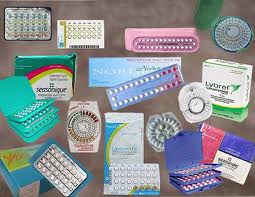
And let’s leave aside for a minute the idea that contraception is immoral.  Let’s say you believe this.  And let’s ignore the slippery slope this would create (what else could employers object to on moral grounds?  The most expensive parts of coverage?)  What about the many, many women who take birth control pills for other reasons?  Personally, my estrogen levels are too low, so I take 1/2 pill every day to raise those levels.  This does not serve as birth control one bit.  Why shouldn’t this be covered like any other medication?  And what about my friend who had a very dangerous birthing experience with her son?  Her doctors say that she shouldn’t get pregnant again, that it’s too dangerous.  Is it worse for her to use birth control than to possibly get pregnant and need an abortion?  According to these men it is.  But then, that makes sense: a woman’s life just isn’t as important as a man’s, apparently.

Why are we debating the healthcare that men think women should receive?  A small group of religious leaders think that birth control of any type is immoral.  A bunch of politicians want to do anything that makes the president look bad, and since they represent some religious constituents, this suits their purposes just fine.  And the voters?  I just hope the voters make it clear that this is not ok.  Our medical treatment is not up for debate.  Our family planning is not up for debate.

My big regret today?  That I can not tell those jerks what I really think of them in person.

If you can relate to this, it would be so awesome if you’d click on one of the social media icons below to share this.  Thanks!


Komen vs. PP: Let’s focus on what matters

February 2, 2012

My personal life is so overwhelming right now that I can’t even write anything personal.  Maybe that’ll resume in a day or two, but for now, there’s always politics.

If you’ve paid any attention to the news recently, or to health-related Twitter feeds, you must know about the big Susan G. Komen for the Cure debacle.  In a nutshell, it’s pulled funding from Planned Parenthood.  A Komen board member said that this was due to concern over a Republican congressperson’s investigation of Planned Parenthood.  We all know that the Republican party has said that public funds to Planned Parenthood should be pulled because Planned Parenthood provides abortions.  The abortions are a tiny tiny part of what Planned Parenthood does.  They are not paid for with public funds.  They are legal.  They in no way hinder the breast cancer screenings that the organization provides.  I assume those screenings are the reason Komen gave them money to begin with.  So what’s going on?

Having worked in nonprofits for many years, I believe that most people do not do sufficient research before donating to an organization.  There are many sites that can help you research a nonprofit (http://www2.guidestar.org/ and http://www.irs.gov/charities/article/0,,id=249767,00.html are two of them) and they are generally underused.  Still, where should someone go to find out if funds will be withheld because of “moral” views or “political pressure”?  I wish I knew.

I want cures for the illnesses I suffer from.  I want cures for the diseases my loved ones suffer from.  I do not want political games to slow down or stop research on or prevention of those illnesses.  

Planned Parenthood helps women detect breast cancer (and other forms of cancer, as well as other problems) early, so that they can receive immediate treatment.  I  happen to have very strong views on abortion, but those are irrelevant here.  If the funds that Komen provides are used only for breast cancer screenings (and Komen can mostly likely make that a requirement of the funding) then why on earth should the funds be withdrawn?

Interestingly, this has made people (including non-media people) more interested in Komen’s practices, and they are noticing where their money goes (what percentage to fundraising, what percentage to research, etc.)  Like I said, I believe that everyone should do this kind of research before contributing to nonprofits.  So maybe something good has come of all of this.

Still, I simply do not understand why an organization that does so much good must constantly defend itself, simply because a small part of what it does is provide legal, safe procedures for women who need them.  For everyone looking to stop funding to Planned Parenthood I must ask: are you planning to fund checkups, cancer screenings, counseling, and everything else they do yourself?  No?  Then back off.

Let’s focus on what really matters.  Let’s focus on prevention and cures.

Please share this on Facebook, Twitter, etc. This blog is new, and it would be great to have it passed along.