When even medical professionals don’t get it

March 30, 2017

There are the medical people I know in my personal life: a distant cousin, an aunt’s in-laws, friends of friends. Sometimes it’s just a random person I meet to hears about my health issues and lets me know they work in the medical field.

Some of these people are awesome: understanding, supportive, helpful. And some make me want to scream by thinking they can offer me advice. People I barely know, or maybe don’t know at all, tell me what I should do for my health. Or worse, they don’t understand that I really am sick.

But then there are the worse ones: the medical folks I see for my own treatments who Just. Don’t. Get it.

cat-1739091_1920

Usually I walk away. If they don’t understand, then I don’t want to waste my time. But this latest one is a tougher situation.

It’s my physical therapist. For one thing, she means well but she’s scatter-brained. She asked me if I’d tried a particular yoga pose. I said no, I was told not to do yoga. She was surprised. I pointed out that she told me not to do yoga just a few weeks ago. Things like that. When I walk in, she has no recollection of what we did last time, even though I know she writes notes after every visit.

She also does a good job overall. And there’s no one else to see. It took years for me to find her! I searched for ages for someone to do this particular type of treatment (easy) that my insurance would cover (almost impossible.) One of my insurances covers her and she’s giving me a break on the other. I really appreciate that. She’s been so kind about it. And she does a good job.

But then she wants me to exercise more, to make sure I build up a good sweat. I try and explain how adrenal fatigue works, how that could be dangerous. She wants me to talk to my other doctors to make sure I’m really not supposed to be doing it. You know, in case we hadn’t already had this conversation 80 bazillion times. In case I misunderstood. In case I don’t know my own body! So frustrating!

And then yesterday she grabbed my wrist for the millionth time. I know this is just a typical maneuver. I know she does this automatically because she’s done it so many times before with countless other patients. But she’s a physical therapist and she needs to take each patient’s needs into account and I don’t know how many more times I can tell her not to do this before I completely lose my shit.

Because I’ve been clear. I’ve said it hurts. I’ve explained that I have a long history of pain there. I’ve said that it upsets me. Yesterday I calmly talked about it after the appointment. I explained the emotional trauma a bit. She tried to say there was no need to explain, but I figured hearing it might help her to fucking remember! 

I don’t usually swear on this site, even though I do in real life. Not a lot, but enough. I can hold back when I think it will offend people. Usually. But not today, because this is SO UPSETTING to me!

I have 25 years of pain in my wrists. It was my first symptom. But that’s not the reason it upsets me so much. No, it’s because of how I was treated. Doctors did horrible things to that wrist and to me. I had to start off my explanation by saying, “I don’t have PTSD but….” Because while it’s not PTSD, I do have a panic response. I told her that there is no one in this world I trust to touch my wrist, and that’s true. There are some people I trust to touch near it, and some don’t make me panic as much, but I don’t trust anyone. Not even my mother, my best friends, my past lovers. And certainly not medical professionals!

So we’ll see if she listens. If not, I might have to take more drastic action. But for now, we’ll see.

I try to be patient but she’s a medical professional. She should know better.


Stairs mean I’m not welcome – even if you disagree

March 28, 2017

Last night I went to an event and I arrived to find that the only parking was down the street, and the entrance had 3 stairs. Are you kidding me!?!

This is far from the first time, but I admit it was more surprising than usual. After all, this event was big on promoting inclusivity. Apparently that covers a lot of minority groups, but not those who are disabled. I was lucky I was able to do those stairs last night. Some days I can’t. And what about everyone else who can’t? They would have shown up, only to have to turn around and go home.

I remember going to my 10 year high school reunion and arriving to find a flight of stairs. I was pissed. I almost turned around and went home. I was in so much pain that I had almost stayed home in the first place, and now stairs! They were basically saying that no one who had developed health issues that limited their use of stairs was welcome, not to mention our classmate with cerebal palsy who was in a wheelchair all through our school years together. WTF, organizers?! I know she wasn’t in your “cool” circle but that doesn’t make her any less a part of our class!

I said something to the reunion organizers at the time. Now our 20 year reunion is coming up. I should probably say something again, just to be sure. Is this really so hard?

Last night I said something, too. The organizer immediately tried to point out a tiny back door that of course I hadn’t known existed. I told him, “If there’s no sign, it’s not accessible! If there’s no parking, it’s not accessible!” Because if someone can’t walk far, they can’t get from that parking lot to the building. And how is someone supposed to know to come around to the back door? Never mind not everyone can walk that far. And I’m not sure the path is wide enough and even enough for a wheelchair. And it’s not lit. So yeah, really not accessible.

And the truth is, there was a sign. There was a big, huge, blatant sign: “Disabled People Not Welcome!” That’s the sign I saw when I looked at those stairs.

Would you go to an event that had a sign saying “No Jews” like the signs my grandparents literally saw years ago? How about a sign saying “Whites Only” with a door for racial minorities around back? No? If those aren’t ok, then why does our society feel it’s ok to have figurative “Able-bodied Only” signs? They’re everywhere, and I’m completely fed up. THIS IS NOT OK!!!

The one bright spot was that at the end of the event, I mentioned something to the other participants. It was disheartening that they hadn’t noticed something, but at least their response was better than the organizer’s. They didn’t try to justify anything. Instead, they immediately started brainstorming where next month’s event could be held that would be accessible.

That made me happy. Then again, the bar has been set super low. We need to raise it, because no one should be able to get away with that attitude unchallenged.

How do you handle these kinds of situations? Please comment!


I need help but I’m not helpless

February 13, 2017

Maybe it’s because I have a disability. Maybe it’s because I ask for help. Maybe it’s because I’m a woman. Maybe it’s all 3. Whatever the reason, it’s irritating.

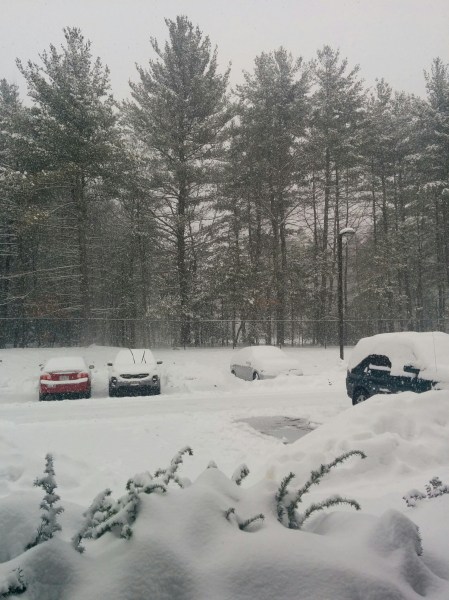
It’s winter in Boston. Winter in Boston means snow on the ground. Not every day, but enough of the time.

2017-02-12 14.06.26.jpg

It’s beautiful. It’s picturesque. And it’s a pain in the ass.

I love the snow when I’m indoors, but then I need to go out. It’s slippery, and I’m terrified of falling and further hurting myself. I’m not steady on my feet, so a fall is more likely. I need help shoveling out my car due to my back and wrist pain. Suffice to say, it’s difficult.

Luckily, friends and strangers have been kind over the years, and in my new home, that hasn’t changed. Folks have helped me shovel out my car, and for that I’m grateful.

What I could do without is the “explaining.” Today a neighbor helped to shovel out my car while I cleared the top, which thankfully I’m still able to do. It was really sweet – we’d never even met before. I was really appreciating his efforts. Then he told me to “try moving back a bit, don’t gun it, if you get stuck you’ll want to…” and he proceeded to tell me how to back out of the parking space. I’d already told him I’d grown up here and lived most of my life here while we chatted about Boston winters. So why did he think I couldn’t back out of a parking space in the snow (if you’ve never done it, yes, it’s tricky. But once you’ve done it for 20+ years, you usually know what you’re doing.)

The other day it was someone else telling me how to back out of a space. A couple weeks ago, someone warned me as I got in my car that the roads would be getting slippery soon. What the $%#@?!? I learned to drive in this stuff back in the ’90s! I know how to tell when roads are getting slippery, for crying out loud.

I need help. That’s true. I won’t deny it for a second. But I’m not entirely helpless. There’s a lot I can do and there’s a lot that I know. Driving in the snow is one of those things. So I wish people would stop condescending to me.


Because I have chronic illnesses too

June 9, 2016

I have a problem setting boundaries. I know this, and I’m working on it, but it’s still a problem. The thing is, I like helping people, and that sometimes gets in the way.

Part of it is altruistic – I like seeing others benefit. Part of it is selfish: when I feel like there’s so much I can’t do in my life, it feels so good to do something that others find useful. But whatever the motivation, I have limitations, just like anyone else. I have limitations of time, ability, and energy. But on top of those, I also have limitations because of my health.

Lately this has come up a few times, and I’m handling it poorly. I know I could do better, but I’m not sure how.

We all have differently limitations and abilities, and that includes those of us in the chronic illness community. One person has more energy, another can climb stairs, another can walk more, another has greater cognitive function. It’s easy to forget that those abilities don’t preclude other limitations. I’ve been guilty of it myself. I see someone who walks a lot, and I forget that while they don’t have fatigue, they do have pain, for example. And now I’m on the receiving end of that.

I’ve been volunteering to help people in my chronic pain support group with a few things. I want to help, but I also have to be careful of my own limitations. I try hard not to commit to doing more than I can reasonably handle. The problem is, sometimes people ask for more. And that’s where the boundary issues come in.

Several times lately, people have assumed that I would do more than I had offered to do. I think they see me having certain abilities, and they forget about my limitations. Then when I say no, they ask why.

I offered to teach an informal class on using Facebook. There are so many great Facebook groups for people with all sorts of chronic illnesses, and I’d even set up a Facebook group for our support group. I knew a lot of people struggled with it, so offering a lesson seemed like a good idea. The problem was that several people said, “I can’t make it to that lesson, so when else can we meet?” I was stunned! I couldn’t give private lessons to everyone! Just that one class was exhausting. I didn’t leave the house for two days after that. But no one saw that part.

Finally I sent around an email saying that I’d be happy to give private lessons on a schedule that worked for me if people wanted to pay me. That ended most of the discussion, though one person still said she couldn’t afford to pay me but still wanted to meet because she needed help. I get that. I often need help that I can’t afford to pay for. So I don’t do it. I simply can’t help so many people. It’s not within my abilities.

I’ve been doing a lot of other tech support for the group. One person asked me to do some things and I finally said no, but that I’d be happy to show her how to do it. She asked why I couldn’t do it. I finally was direct: “Because I also have chronic illnesses and I don’t have the energy for it.” She said she’d find someone else to help.

I wasn’t trying to be rude or difficult or uncooperative. But I think people forget that doing seemingly easy things, like typing into a computer, can be downright exhausting for some of us. It can be painful for others. For some, it’s both. And just because I can do 10 things, doesn’t mean I can handle 11. Just because I can leave the house for 1 lesson doesn’t mean I can handle 5.

Many of my friends with chronic pain and chronic illness have visible illnesses. Mine isn’t visible unless you really look. You might notice a wince, a limp, or a stumble, but most of the time, I look just fine. So in some ways I understand why people forget and expect more of me.

Then again, when it’s someone with a chronic illness who asks me why I won’t do something extra, I just want to shout: BECAUSE I HAVE CHRONIC ILLNESSES TOO! JUST LIKE YOU!

Do you encounter this? How do you handle it? Please comment and let me know your experience!