The problem with SSDI’s trial work program

July 28, 2015

When you’re on SSDI (social security disability insurance) the presumption is that your disability prevents you from working. Ok, I get that. But what if you want to return to work part time or full time? Ah, that’s and interesting process.20120809_220808
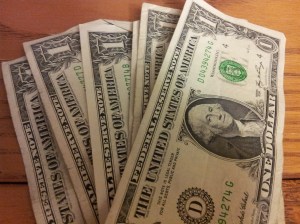
Everyone gets a different amount of money through SSDI. The formula is based on how much you paid into the system, and that in turn comes from the salary you earned and over how many months you earned it. You might be getting $900 per month or $1800 per month. If you’re on SSDI for more than 2 years then you’re eligible for Medicare, which is health insurance. You’re also more likely to be eligible for other benefits.

Now, what happens if you start doing some work? Well, at a certain point the SSA (Social Security Administration) decides that you’re able to support yourself. That point is a set number. It’s not a percentage of your benefit. Nope. It’s a set number: $1090 per month right now (this can change each year.) So if your benefit is $900 and you start earning $1100 then you lose SSDI and Medicare, but that might be ok with your extra income if you’re earning $1100 every month. You might only earn it occasionally, though (more on that in a bit.) But if your benefit is $1800 and you earn $1100, then you lose SSDI and Medicare and, unless you have unearned income from some source (like a spouse, alimony, or investments) then you’re probably screwed.

That’s how I feel now: screwed. I’m ready to do some small amounts of work, which is exciting in and of itself! I recently earned around $1100! This is very exciting! If it was all in 1 month, though, it would count towards my return to work trial period of 9 months total. Those total 9 months are spread out over 5 years, so I could work for 2 months per year, and still lose my benefits. That’s not good! Luckily for me, it was spread out over 3 months, at an average of under $400 per month. What a relief!

But wait, isn’t there something wrong with the system if I feel relieved to earn less money? Shouldn’t the goal be to get me back to work so that I don’t need benefits?

What if I make more than $1090 per month for 3 months this year? Then what if the same thing happens again next year? I’d stop working altogether so I wouldn’t risk going off benefits. I can’t afford to have 0 income, and I definitely can’t afford to lose my health insurance!

Instead, the system should encourage me to work part time with the hope that I would build up to more part time work or even full time work! The trial work period should only cover a short timeframe, like a certain number of months worked in a 1 or 2 year period. There should be a grace period for Medicare.

But with the current setup, I’m scared to attempt to go back to work. What if I try to work, lose my benefits, and then fail to continue working? Yes, there’s a grace period where I can get back on benefits, but it’s short. And I’m scared. It took me more than 2 years to get on SSDI in the first place. I can’t take a chance on losing it.

And that’s why the system doesn’t work.

Have you felt the same way about SSDI? How do you handle it? Do you hold back on the amount of work you do in order to stay on benefits?


Too much weight on the seesaw

July 27, 2015

You know those cartoons where someone jumps on one side of a seesaw and the person on the other side goes flying up in the air, over the first person’s head, and finally lands in a puddle of mud? Keep that image in mind.

Being chronically ill requires a careful balancing act. Symptoms, treatments, pills, diets, supportive friends, unsupportive friends, jobs or lack thereof, and everything else in life contributes to this. If were all placed on a seesaw, somehow it would just evenly balance, so that neither side was on the ground or up in the air. Sure, it might totter. You might feel like it was going to tip at any moment. But miraculously, it wouldn’t.

That’s how it feels, most days. Obviously, something big could throw that seesaw out of whack, just like it would for a healthy person. A car accident or death of a loved one will always disrupt life. Usually small things can be absorbed into the heap on either side of a healthy person’s seesaw without any lasting disruption to the equilibrium, and that’s great. Those of us with chronic illness know that our seesaws are a bit different. They have a lot less room for extra weight.

I was chatting with a friend yesterday. She updated me on her recent hospitalizations, then said, “I know this is going to sound silly compared to everything else, but I have an ingrown toenail….” I knew just what she meant. When we deal with severe health problems, it feels like we should let the little things get to us, but I feel like it’s the opposite: because we deal with severe health problems every single day, we just don’t have the capacity to handle anything new, even if it’s small.

I often feel the same way. I could be in excruciating pain, trying to simply breathe through it, and some small new problem sends me into a tailspin. Why? Because I’ve already used up all of my energy dealing with the pain and I just don’t have a damn bit left for anything else. That new thing, tiny though it is, adds just enough weight to one side of my seesaw that everything on the other side flies up and lands in the mud.

Have you experienced this yourself? I’m certain at least some of you have. My friend was relieved to hear that I had. We’re often told by society that we should be able to handle our health problems, and for us chronically ill folks that’s hard enough on the best days, so it feels like defeat to let a so-called “small” problem tip our seesaw. But I’m sure it’s happened to some of you. Please share in the comments; if you don’t want to share details, a simple “Me too!” will let others know that they aren’t alone.


Four years later

July 21, 2015

My physical therapist asked “How does that feel?” It took me a moment to answer, because I had to first block out of my mind the pain in my right wrist, in three toes on my left foot, in four toes on my right foot, and in my left knee. Finally, I had a sense of how my neck felt.

I started this blog 4 years ago today. It was very different then, in so many ways. I was very different.

Back then, I was amazed if 1 or 2 people read my blog each day. Today, I get at least 20-30 readers per day, sometimes over a hundred in a day, plus over 200 who get the blog emailed to them and more who read it in Feedly and other

Where readers have come from in recent months

Where readers have come from in recent months

readers. This blog has had about 33,800 page views…. That’s not much compared to some blogs, but I’m very happy with it. After all, the goal was never to win any popularity contests, but to have a small community. I have a bunch of twitter followers, too. For the first few months I blogged every single day. I still don’t know how I managed that. Now I average 2 posts each week and that feels about right, but I never pressure myself to write and I never worry about keeping any kind of schedule. Best of all, I have an active audience who often comment on what I write and on each other’s comments; that’s what I wanted from the beginning.

And then there’s me. Four years ago today I was working at a job I didn’t particularly like, going in at 9, leaving at 5, and barely surviving it. Every morning I struggled to get ready for working, have to lie down and rest for 20 minutes after my shower just so I’d have the energy to put on clothes. I came home every evening and did nothing but watch tv, eat, and write one blog post. Gone were the days of socializing after work. I started to make mistakes at work. I was always exhausted and I didn’t know why. I was in more pain than ever. I only felt decent when I was on Prednisone, but when I went off that, the fatigue and pain returned full force. So did the gastrointestinal symptoms that had gotten somewhat better while I was on the drug. I had no answers, and my doctors didn’t know what was causing my symptoms or how to help.

Now I have some answers, though probably not all of them. I have taken charge of my life. I no longer turn to doctors for all the answers; I do my own research. I still deal with fatigue and pain, but my gastrointestinal symptoms are almost entirely gone. I understand the workings of my body much better than I did before. I’m not working, or even trying to work, and that takes away so much pressure and stress. On the other hand, it also leads to less financial security, and that does have me worried. I no longer travel, but I have learned to be happy and content where I am. In fact, that’s the biggest change: despite all of my health problems and the other areas of my life they have affected (money, dating, travel, and so much more,) for the first time, I feel good about who I am and about where I am in my life. I am happy and content in a way that I never was before. I take time for introspection more than I did 4 years ago and I have learned more about myself through this long process than I ever would have expected.

If you’ve followed this blog for a while, you’ve watched me struggle to figure out which foods I couldn’t eat, to start a gluten-free diet, to deal with insensitive jerks, to find new doctors, to beg for tests, to cajole for new medications, to deal with dating, to find ways to tell friends and relatives and acquaintances and strangers about my health. You’ve read my political opinions, my frustration, my anger, my joy, my views on so many topics, and my issues with everything from sex to diarrhea. It’s been an interesting journey and I’ve been so grateful to have you here with me as I take it. It’s been rough, too. Still, I see some overall improvement. I get frustrated a lot of the time that the improvement is so slow, and that for every 3 steps forward, I end up taking 2 steps back. Still, I’m grateful for any improvement I can get.

So I’m looking back over these past 4 years and it makes me wonder: where will I be another 4 years from now? Only time will tell, but I’ll do my best to head in a healthy, safe, positive direction.

What about you? How has your situation changed over the past 4 years, 4 months, 4 weeks, or any other time period you want to think about? Are you trying to change direction? Or are you able to forget about the past and be present only in the moment? (I’m still working on that myself.) How are you doing?


Will I get dressed today?

July 18, 2015

Back in the old days, I would get dressed every weekday around 7 or 8am, and later on weekends. Occasionally I’d have a leisurely Saturday where I’d stay in pajamas all day. It was such a treat! I loved the luxury of it, but it was definitely rare.

2015-07-18 20.51.04

Today’s glamorous outfit, a.k.a. pajamas

Well, times have changed. Now I force myself to get dressed on all but my sickest days because I’m worried that not getting dressed one day will lead to not getting dressed more days and soon I won’t have the drive to do anything. I live alone, so if I don’t leave my apartment, then I don’t see anyone. And if I don’t leave my apartment, no one knows if I’m dressed or not. So staying in pajamas all day would be so easy. And that’s exactly why I know I shouldn’t do it.

The other day I found myself in my pajamas at 4pm. This was even later than usual. If I don’t have to be out of the house for a medical appointment in the morning, then I usually don’t get dressed until noon. I shower and get dressed right before lunch and I hate that I always do it so late. I try to get dressed earlier, but it never happens. But the other day I was more fatigued than usual and I just couldn’t push myself. So I watched the hours tick by and finally, by sheer willpower, I forced myself to shower and get dressed so I could go out. I didn’t want to go out, but I’d been looking forward to that party for ages, and I knew I’d have fun once I got my ass out the door. (And I did! It was so much fun!)

Today was different. Today I didn’t have to be anywhere. That’s why it took extra effort to finally, finally get dressed at 5pm. While most days I get dressed right before lunch, today I waited until right before dinner. The funny thing is, it was a more productive day than most. I didn’t spend all day on Facebook or watching tv. Instead, I cleaned out my desk drawers, going through dozens upon dozens of papers….. old handouts from presentations I’d attended over the years, financial notes, and so many health insurance letters all made their way to the recycling bin. It felt fantastic to purge all of that clutter! And yet, even with that drive and excitement, I was still in my pajamas at 5pm.

Tomorrow I’m meeting friends for lunch, so I’ll have to get my butt moving a bit earlier. I might even be dressed by 11am! Now, wouldn’t that be something?