Thankful for so much; Today: Housecleaner

September 5, 2011


There’s a lot to be thankful for in my life.  I’ve spoken before about friends and about family.  Today I’m thankful for something simpler: my ability to pay a housecleaner.  Once each month, someone cleans my apartment for me.  For some people this sounds like an unimaginable luxury.  For others, once a month would never be enough.  For me, this has been a wonderful experience.

I am perfectly willing to live a less-than-spotless home (actually, I prefer it.)  What I am not willing to do is to spend entire weekend
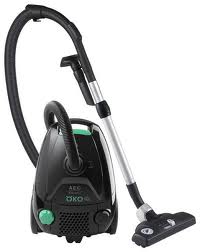
days cleaning, then resting from said cleaning.  Scrubbing the tub can wipe me out for hours.  I can’t clean all of the floors in one day.  By the time I spend 4 Saturdays getting one part of the apartment clean, the rest is disgusting.  Instead, I can save my time, energy, and joints
by having someone else do all of this.  Having someone come more often might be nice, but since I live alone with no pets, and I’m not a total slob, once a month works, and it’s more affordable.  She is coming tomorrow with her group.  They will accomplish in a couple of hours what it would take me many Saturdays to achieve, and they definitely do it better than I would.

Could I spend the money on other things?  Yep.  Do I want to?  Nope!  Sure, I could eat out more, or put the money towards a trip.  There are so many things I could spend it on.  But for less than the cost of many cell phone plans, for less than what some people spend drinking each month, for less than a fancy meal, I never have to clean.  Ever.  At all.  Sure, I wash dishes between her visits, and wipe down kitchen counters.  I do not vacuum, clean floors, scrub the toilet, clean the tub, dust, or do any of those other exhausting, pain tasks.  I don’t miss it a bit.  Do I feel guilty?  Not at all.  Sure, I used to feel some middle class guilt, but I don’t any more.  She saves me pain and exhaustion.  I pay her in a down economy.  When I do the math, I come up with 2 winners and 0 losers.  Works for me!

As I said, I am so thankful for my ability to hire someone to clean my house.  And I’m grateful for the wonderful job she does.  I’m very excited for her visit tomorrow!


Germs: Prevention or Paranoia?

September 4, 2011

When your immune system isn’t what it should be, it’s extra important to avoid germs.  Well, obviously some germs are ok.  Some are even good for you.  But then there are certain viruses and bacteria that we need to avoid.  In the next month I’ll get my flu shot.  I wash my hands a lot.  Beyond there, how much more can I do?

When someone is clearly sick, I try to keep my distance.  I try not to get too close to a sick co-worker or friend.  When people seem to be healthy, I tend to assume that they are.  Sure, they could be carrying something, but I don’t want to be paranoid.

So that takes care of the black and white, but what about the gray?  What if a person was sick, and now they feel ok, but they’re still

coughing?  What if it’s one of those hacking coughs?  Is it ok if they were sick 2 weeks ago?  What if it was 2 days ago?  And then there are still trickier situations.  What if my friend is fine, but her kid is sick?  Obviously I’ll stay away from her kid, but should I still meet her for dinner?  Maybe going out is ok, but we shouldn’t hang out at my place, in case she’s carrying around some germs.  Or maybe that’s being overly cautious.

I don’t know what the answer is.  I know I caught a “cold” a few months ago.  My friend had it for about a week.  She didn’t miss work, just felt lousy.  She was asymptomatic when we had lunch together.  Even though we weren’t that close, didn’t hug, didn’t share food, I caught it.  I was sick for two weeks.  I missed five days of work.  I felt horrible.  My immune system just couldn’t seem to fight it off.  So I know I have to avoid colds.  But I can’t live in a bubble, either.  Where’s the balance?


The dreaded look of genuine concern

September 3, 2011

I have found that there are three types of concerned looks.

First, there is the look of fake concern.  I’m sure you know what I’m talking about.  Someone doesn’t really care, but they try to look concerned because they know that’s the socially acceptable response.  I ignore those.

Next, there is the look of detached concern.  This is the one where someone really does feel bad for what I’m going through, and they want to sympathize, but they’re not close to me, so their concern is more general.  This is the concern you would feel for a stranger when you hear about something terrible they are dealing with.  The concern is real, but it’s not personal.

Finally, there’s the look of pure, honest concern.  This comes from a loved one who really cares.  Their concern is genuine.

It’s this last one that’s haunting me right now.  A friend recently asked me about my latest treatment.  I answered her with the truth, something I don’t tell many people.  She asked about other options if it doesn’t work.  Again, I told her the truth.  Now I can’t get the look on her face out of my head.  She was really concerned about me.  I wanted to reassure her that everything would be fine, but of course, I don’t know if it will be.  I love that she cares.  But that look just makes me feel bad.  I hate that I’m making people worry.  Of course, I’m not the one making them worry, it’s the illness that makes them worry.  It just doesn’t always feel that way.

She is one of my oldest friends.  We’ve known each other for 22 years.  (Wow, I guess I’m older than I thought.)  We did our elementary school science fair project together.  We’ve seen each other through divorce and dating and children and many jobs.  Of course we care about each other.  I just wish I could tell her I’ll be ok.


Why wouldn’t you use an FSA?

September 2, 2011

No, really, I’m asking, why on earth wouldn’t you use an FSA if you have access to one?  I don’t get it.  I love my FSA.

If you don’t know what I’m talking about, an FSA is a Flexible Spending Account, and this links to more info on it.  As a quick summary, it’s offered through some employers.  An employee puts aside a certain amount of money pre-tax.  This money can be spent on medical expenses.  Some offer a dependent care FSA, in which case the pre-tax dollars can be spent on dependent care.  There’s a catch, of course.  You decide at one point in the year how much money to set aside, and that gets taken out of each paycheck.  Whatever isn’t spent on medical needs/dependent care by the end of the year, you lose.  If you put aside $500 and you only spend $350, then you lose $150.  That’s a big catch, so you have to estimate very carefully.  But if you do have leftover at the end of the year, you can always use it to buy a new pair of glasses, or get an acupuncture treatment.  Still, you’re spending your money pre-tax, so that can add up to huge savings.

I started a new job last year, and it was the first time I had access to an FSA.  My main complaint about FSAs is that they are not offered to everyone.  I understand that the government depends on companies to handle the burden of managing these accounts, but it is incredibly unfair to offer this tax advantage to only a portion of the population.  Now, if you are lucky enough to be someone who does have access to an FSA, use it!

[Note: My other complaint is that the government added some crazy hurdles for nonprescription meds this year.  Now you need a doctor’s note to get reimbursed for cough drops or aspirin.  But that’s a rant for a different day.]

When I started my job last year, I asked co-workers about the process for getting reimbursements.  I was shocked by how many didn’t use it.  Yes, some people are healthy and don’t need it, but even if you’re on just one prescription, or need just one dental procedure, it’s worth it.  If you are reading this site, you likely spend more than that.  I use this money for medical visit copays, medical visit parking, prescriptions, vitamins, and random needs.  Last year I used it for physical therapy.  I use it for orthodics.  I used it to buy a new air conditioner this summer (because my health condition worsens in hot and humid weather, a/c is a medical necessity for me.)  I used it to buy new glasses, both distance and reading (yes, in my early 30s I need reading glasses.  I blame the many hours on the computer.)

So what does this mean?  I put aside $1000, and it looks like I could have put aside more.  I’ll remember that for next year.  But this year I put aside $1000, which means I’ll end up saving about $250 in taxes.  That’s huge!  That’s money that I’ve been spending every year, in addition to my health insurance premiums, and in addition to medical-type expenses that aren’t covered by the FSA (like the sneakers I buy because of my knee and back problems, but that aren’t technically a medical expense.)  What would you do with an extra $250?  Spend it on more medical stuff?  Save it?  Go to a fancy dinner?  Good, now go set up your FSA!

And if you don’t have access to an FSA, let’s brainstorm on how to get access to everyone.  It’s not right to offer this federal tax advantage to only some citizens.  It’s bad enough that health insurance is so often tied to your employer, but federal tax benefits shouldn’t be!  I know many healthy (and some not so healthy) people who think it is a waste of time to save receipts for an FSA.  For those of us who spend thousands and thousands of dollars every year on our healthcare, above and beyond premiums, those few minutes of effort can have huge payoffs.  Everyone deserves a shot at those payoffs.
