Wondering how to date in the Covid era

May 21, 2025

I’m dipping my toe back into the dating waters for the first time in a while. And I’m overwhelmed with trying to navigate this new reality.

When covid* first began, a lot of people did online dates, but those didn’t feel real enough for me. I now wish I’d done it! Eventually it felt safe to be outside with people, so I went on some dates that way. I had a bunch of first dates, and then there was one guy who seemed great, and we went on a couple of outside dates. But things fizzled because he was doing indoor athletics without a mask, so I didn’t feel comfortable being indoors with him and, let’s face it, a relationship can only get so far if you’re never going to feel comfortable being indoors and maskless with someone, and/or kissing them.

Then 2023 came along, and with it, a lot of added fatigue. Dating was out of the question. Just getting by day-to-day was all I could manage. It took a year and a half to feel somewhat better. I’m still struggling with added fatigue, but at least things aren’t as bad as they had been before. So, after a lot of procrastinating over the past several months, I finally set up an online dating profile yesterday.

Now the question is, how do I navigate covid-related risks? I don’t think I need to mention my concerns in my profile, or even in an initial chat – I can suggest a walk for a first date. Honestly, I can’t do coffee dates well anyway, since I worry about gluten in most coffee shops. But then I need to find a way to bring up my concerns. As it is, for many years I’ve had to find a way to mention on first or second dates that I can’t kiss anyone who has been eating or drinking gluten. That’s already sort of awkward, but at least it’s straightforward: if you’ve been eating or drinking gluten, or wearing lipstick or lip balm, then I won’t kiss you. But covid risk is much less direct. Everyone has some risk, including me.

Most people aren’t wearing masks indoors anymore. Should I only limit myself to dating people who mask? Probably. But talk about a small dating pool! Or what if someone doesn’t mask indoors much, but they work from home and don’t have kids and don’t go to big events? Or what if someone masks at home but they have kids who don’t mask at school? The possibilities are endless, and I’m not sure how to navigate them in a way that’s reasonable for myself. And if I don’t know what’s reasonable for myself, then I can’t possibly communicate my needs to someone else. Which makes me feel like I shouldn’t be dating.

I know that figuring things out as I go is probably reasonable in this situation, but it feels unfair to myself and to the other person (whoever that may eventually be.) Sometimes I just want to give up altogether, to stop masking, to stop trying to avoid it. But then, I think about the many people I know with long covid, and I think that I’m better off trying to avoid that.

In the past five years I have managed to not get covid even once. I’m sure that has been good for my physical health, but what about the toll on my mental health? What about the missed parties, the missed outings, the stress, the worry? Has it been worth it? Probably, but maybe it isn’t any more? How much longer can I live like this? I’ve gotten to the point where it’s fairly manageable most of the time, but dating throws a wrench in the works and I just don’t know how to handle it.

If you’ve dated in the covid era, how have you managed it? I’d love some advice!

*I made the decision not to capitalize COVID throughout this post. This is both because it’s easier to type it lower case, and also (mostly) because I find it jarring to read it capitalized in articles and didn’t want that to be a distraction.


A dozen years later…

July 21, 2023

Today is the anniversary of this blog. It’s a simple sentence with a lot of meaning behind it.

Back when I started this blog in 2011, I had ideas about what it would be and what it would mean. A lot of that worked out, some didn’t, and a lot I honestly can’t even remember. What I do know is that 12 years ago today, while I worked at a job but struggled to do anything else, I committed to this blog. I promised myself I would write every day to start, and I did. I wrote daily, even if it was just a small blurb. It was good for me to have that commitment. While I struggled so much, this was something I could do for myself.

This blog has helped more than I can say. The community and support here have been invaluable. Yet, you may have noticed that I’ve been writing less. While I no longer write every day, or even every month, this blog is not forgotten. In fact, in the two months since my last post, I have jotted down several ideas, and have wanted to write quite a few times. So why don’t I?

First, during the years of writing this blog, I also wrote a book. I published it under my real name, yet I want this blog to stay anonymous. I often post something on social media or in a newsletter that relates to my health. Later, I think about writing on that topic for this blog but I realize I can’t, because it would be too easy to link the two.

Second, I’ve been writing this blog for 12 years! Chronic illness is never-ending (that’s the whole chronic part, right?) so there’s always more to say, but it doesn’t always feel fresh and new. This particular post is #802. After more than 800 posts, it’s hard to feel original.

And finally, I’m tired. Just so tired. My medications have been off for a long time, and I have been trying to find a new doctor to fix things. (Side note: I’m seeing someone new in another month, and hoping that maybe this will be the one.) Meanwhile, I have fatigue. I also have to care for my own health, do the stuff of life (groceries, cooking, laundry), take care of my pup (yay, I have a pup! I’ll talk about him separately), and try to do small amounts of work in addition to, you know, trying to have some fun and see family and friends and DO THINGS. Something’s gotta give. Too often, this blog is one of those things. It’s not that I don’t care, just that I feel overwhelmed and because I take this blog and you for granted, I let it slide. But I shouldn’t take you for granted. You have been amazing. You have shown me support and provided so much great advice. I should offer more in return.

I want to say that I’ll start writing regularly again, but I don’t think I can make that promise. What I can promise, though, is that I’ll continue to think about things I want to write and that I’ll make more of an effort to write at least some of them. Because today marks 12 years of writing about a journey that still has a very long way to go. And I definitely have more to say about it.


I’m ok but not really

July 15, 2022

Maybe it’s my imagination, but lately it seems that people are asking, “How are you?” more than usual. I’ve hated this question for decades. I feel stuck when people ask: do they really want to know? If so, how much should I share? This issue isn’t new to anyone with chronic illness. I’ve written about it before, as have a lot of other folks. But these days, I’m dealing with something else: normalizing my own not-okay-ness.

Let’s start with my real answer to “How are you?”, what I’d say if I were being honest with them and with myself, and then I’ll break things down.

I’m fine. Ok, I’m not really fine, but I’m fine enough, you know? I’m getting by. I’m surviving day-to-day and it’s good enough. I mean, sure, it’s not really good enough, but it’s as good enough as it can be right now, you know? It’s doable. I’m overwhelmed. I’m exhausted. I’m doing an elimination diet that is stressful and overwhelming. I’ve going to in-person occupational therapy twice a week which is a lot logistically, and that’s before you account for doing the exercises at home every day. It’s supposed to be twice a day but I. Just. Can’t. I’m still trying to do my physical therapy every day. I’m exhausted, did I mention that? I haven’t slept well these last few… days? weeks? And I’ve been having nightmares since the pandemic began, too. I’m anemic and my thyroid levels are off. Those two are probably related. I’ve waited months and I’m finally getting an iron infusion next week, since supplements don’t work (no, I don’t know why I can’t seem to absorb certain nutrients) and I’ve had bad experiences with the infusions in the past so I’m really nervous. The last two times I brought someone with me but with the pandemic, I can’t do that this time. I wish I could bring a dog to cuddle. Anyway, I’ll be glad to get that over-with, but it can take weeks, or even months, to feel the effects. Oh, and I got my period this week so I was extra emotional and I lost a lot of blood. I had to spend time washing blood out of clothes and going to the bathroom every hour or two to deal with it. I’m sure that’s not helping with the anemia, either. Did I mention the new pain I’m having? And the two new diagnoses I got this week? I might have forgotten that. And it’s summer and while for some reason I hoped it would be different this time, it’s not. The heat and humidity bring additional pain, and it sucks. And Covid cases are soaring and people still aren’t wearing masks which is so damn disrespectful. Plus several friends have told me big secrets recently and I really want to talk those things through with someone but I can’t because they’re not my secrets and eventually it’ll all come out but it could be a long time and meanwhile I keep worry about these people that I love so much. All I want to do is sit on my couch and read a good book, watch movies, and crochet. But I can’t. I have to do my occupational therapy and physical therapy and prepare meals and go to appointments and do housework and try to do at least a little bit of volunteer and paid work. But you know, I’m fine. Because I feel like I have to be. I’m getting by, one day at a time, and that’s enough, right?

That’s what I want to say. But I never do. Some people hear bits and pieces. I’ll tell a friend that my heavy period is probably making my anemia worse and is probably why I’m extra fatigued this week. Several folks know about the stress around the elimination diet. A few know about this and others know about that and some don’t know anything because I just don’t even want to deal with answering a bunch of follow-up questions. And through it all, when a good friend who also has chronic illness asked this week how I was doing, my answer was still to say that I was fine. Sure, this was partly because I just didn’t want to talk about all of the crap I’m dealing with. It was partly because I didn’t want to bother her with everything. But it was also partly because I truly believed for a moment that I was fine, or at least fine enough.

Even I can tell that I’m really not fine. Come on, look at that answer above. That is not a “fine” answer. But I’m continuing to live my life, and it’s giving me the illusion that I’m ok. I’m so tired that I’m not processing my feelings, I’m just pushing them aside. It’s the exact opposite of what I’ve been learning in therapy but at the same time, even my therapist agrees that sometimes I need to compartmentalize. Sometimes it’s helpful for self-preservation.

And maybe that’s what believing I’m “fine” is all about right now: self-preservation. Because if I think too much about the many ways that I am so obviously not at all “fine” then I may loose my shit. And frankly, I’m too tired to have the really good crying session that I probably need right now.

I think that sometimes we need to give ourselves the illusion that we’re doing okay as a way of surviving it all. I feel like it’s ok to do this, as long as it doesn’t last too long, and as long as I recognize what it is that I’m doing. At first I really believed I was ok. Now I see it for the facade it always was, but I’m still using it, holding up the shield of fine-ness while knowing the shield is fake. Eventually everything will break through (probably at my therapy session next week, the first in several weeks due to my therapist’s vacation) and then I can hopefully go back to seeing the truth. But until then, I’ll keep hiding behind my fake shield, because at least it’s helping me to get through each day.

Does anyone else do this? Do you ever truly believe you’re fine, even for a minute, when it’s obvious that you’re really not? Does it help? I’m curious to hear others’ perspectives and experiences.


The problem with the “don’t make events about food” advice

February 22, 2022

Maybe you have celiac disease or another food restriction like me, or maybe you have another limitation that causes issues for you at social gatherings. If so, you’ll relate to this. And if that’s not you, this may put things in a slightly different perspective for you.

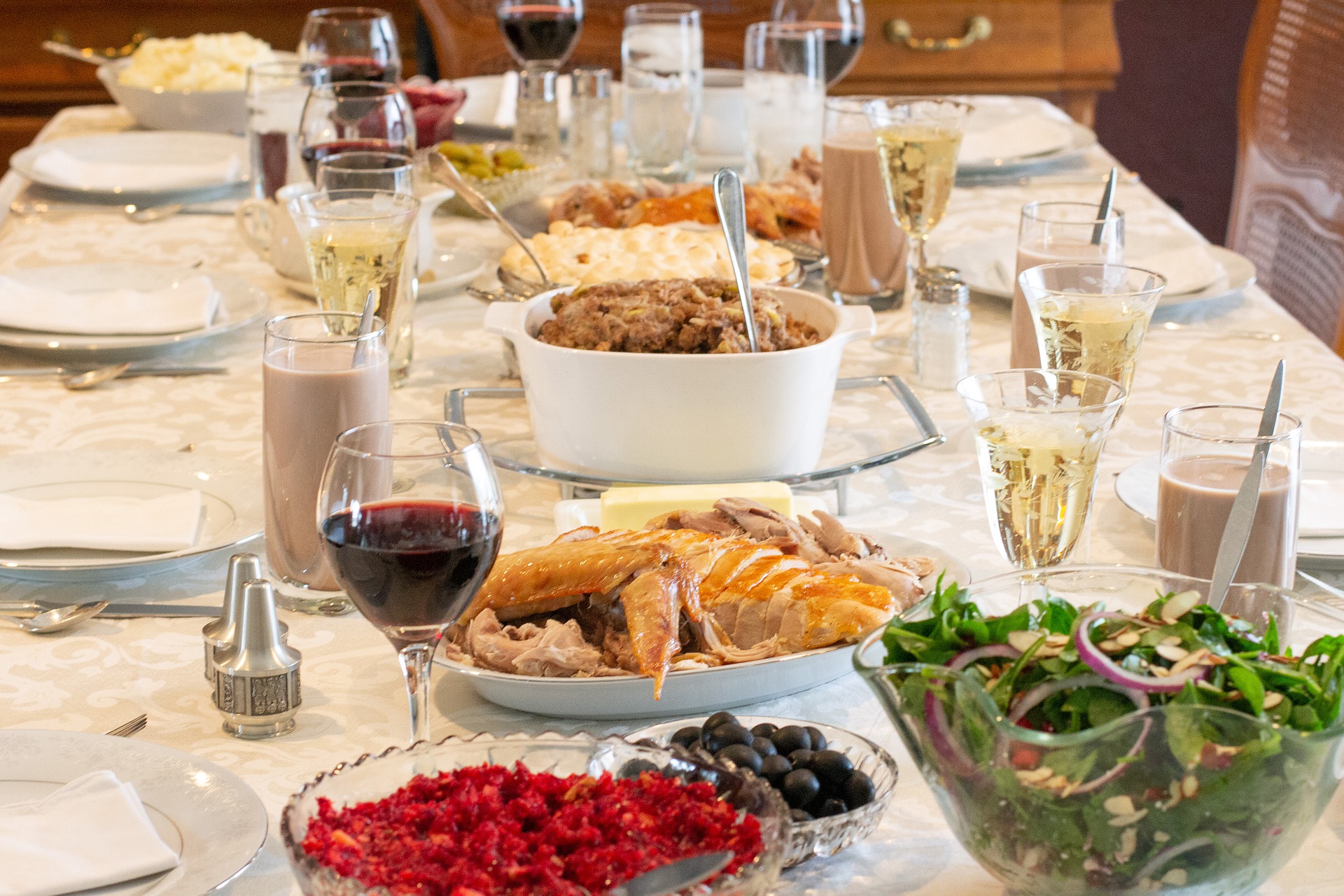
I grew up in a family that made a big deal out of food. Holidays, were always about food. I get it, that’s how Jewish holidays are. Challah, hamentaschen, wine, matzo ball soup, latkes, and kugels were all staples. Thanksgiving had turkey, pies, potatoes, and kugels. When we visited family out of state or they visited us, it was all about the food. We thought about it, talked about it, spent lots of time preparing it, and of course, enjoyed eating it. As I grew up, I often felt sick after (or during) these events, but I often felt sick after (or during) a normal meal anyway, so it’s not like these were any better or worse. It wasn’t until my 30s that I stopped eating gluten.

Image credit Heartland Mom on Pixabay

I have often wondered how my grandmother would have handled things if she’d still been alive when I went gluten-free. She was the stereotypical Jewish grandmother, always cooking and baking, expressing her love through food. We would arrive at her house after a several hours long drive, having stopped for lunch on the way. She would ask if we wanted food when we arrived and we’d say no, we’d already eaten, so she would put out a “snack”. It was a large snack! Then a few hours later dinner would consist of chicken, brisket, at least 2 kugels, challah, salad, and more, along with multiple desserts – for only 6 people! I’d like to think she’d have found a way to adapt her meals for me, but I know she wouldn’t have stopped focusing on them.

The surprising (at first) thing with eliminating gluten is that it doesn’t only effect what we eat, it effects our social lives. Dates are tricky when I can only eat at certain restaurants. Going out with friends is tough when we can’t spontaneously grab food while we’re out. Attending weddings, bar mitzvahs, and other events is frustrating when I can’t eat the food provided. Multiple surveys have shown that the social aspects are the hardest part of living with celiac disease. So the advice that we hear over and over is logical: don’t make events about food, make them about people. And after all, shouldn’t we all be doing that anyway?

I get it. If the focus at Thanksgiving is the people instead of the table of food, then the people who can’t eat all of the food, and who might be nervous about the food, can still have a great time. If the Passover sedar is about the people and the prayers and we let the matzo ball soup and brisket be secondary (or even tertiary) incidentals, anyone with food restrictions will have a better time. It makes sense.

People > Food.

It took me many years to figure out why that advice felt off to me.

I remember a family vacation. We were in a big rented house, and I had been careful to cook food in advance. It was annoying to have to do this, and definitely took away from some of the fun, but it was fine. There was one night when everyone wanted to eat at a fancy restaurant. The family had been to this city many times over many years and loved this place. I’d only been once and, frankly, I hadn’t thought it was so wonderful, but whatever, I’d have been willing to go back. The thing is, they didn’t have anything gluten-free. My choices were to go there and not eat, or not go. I chose to not go. I found another restaurant in town that had gluten-free food and my mom chose to join me. My mom and I had a fantastic time, actually. We walked around town and had one of the best meals we’d ever had together. The food was amazing, the ambience gorgeous, the company perfect. My dad, aunt, uncle, cousins, and cousin’s wife all went to the other restaurant, and I won’t pretend I wasn’t hurt. I understand they liked this place and wanted to go, but it hurt me that they didn’t place my feelings and their desire to be with me above their desire to eat at a specific restaurant. They talked about it a lot in advance and a lot afterwards, too.

Holidays and family gatherings have been different since I went gluten-free. When my mother hosts, she makes sure the meal is either completely or mostly gluten-free, with any gluten foods kept separate and reminders to all to keep their serving spoons away from other foods. Accommodations vary when others host. But either way, it’s still about the food, and food is still stressful. Even when the meal is 100% gluten free, I no longer get any joy from focusing on food. It’s simply associated too much with negative things for me. Plus, the talk about the food isn’t limited to the food on the table, and that’s even more stressful. I am immensely grateful that my mother goes out of her way to make me feel comfortable eating the food at her events, but I still wish we could focus less on the food altogether.

As for me hosting a family event, that’s not likely to happen. For one thing, my apartment is small and I don’t have a lot of space. But for another, I have no desire to host. Some people love to cook, decorate, and have lots of people over for a party. That’s not me, and it never has been. Plus, even if I wanted to do that, I don’t have the energy for it. I can cook a meal OR attend a gathering, but I certainly can’t do both, never mind hosting duties. When I go to someone else’s home and bring food with me, it’s always something that can be prepared a day or two in advance because doing it the same day is too exhausting for me.

But let’s be realistic. Even if I could find a way to host, there would still be the issue that the gathering would be all about the food because I might be able to change the circumstances, but I can’t change the people. As soon as they walked in they would ask what we were eating, and the conversation would often turn back to food throughout the gathering. If I made all of the food then I wouldn’t be worried about that food in particular, but I still don’t like these conversations. Inevitably people talk about other foods and about restaurants, and at best none of this is enjoyable to me, at worst it upsets me, triggering all sorts of past trauma.

I don’t have a solution. This is something I’m continuing to work on for the sake of my own mental health. I can talk to my family about it and maybe they will occasionally make an effort, at least some of them would, but I know that most would not even try, or they would soon forget. This is ingrained and it’s something they enjoy. I just wish the thing they enjoy so much wasn’t the thing that brings me the most grief.